

½ krone – Denmark
Add to wishlist
Denmark
Context
Material
References
KM: #
Numista: #148397
Value
Bullion value: $17.30
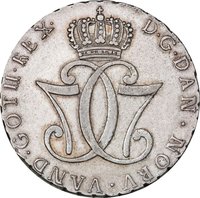
Obverse
Description:
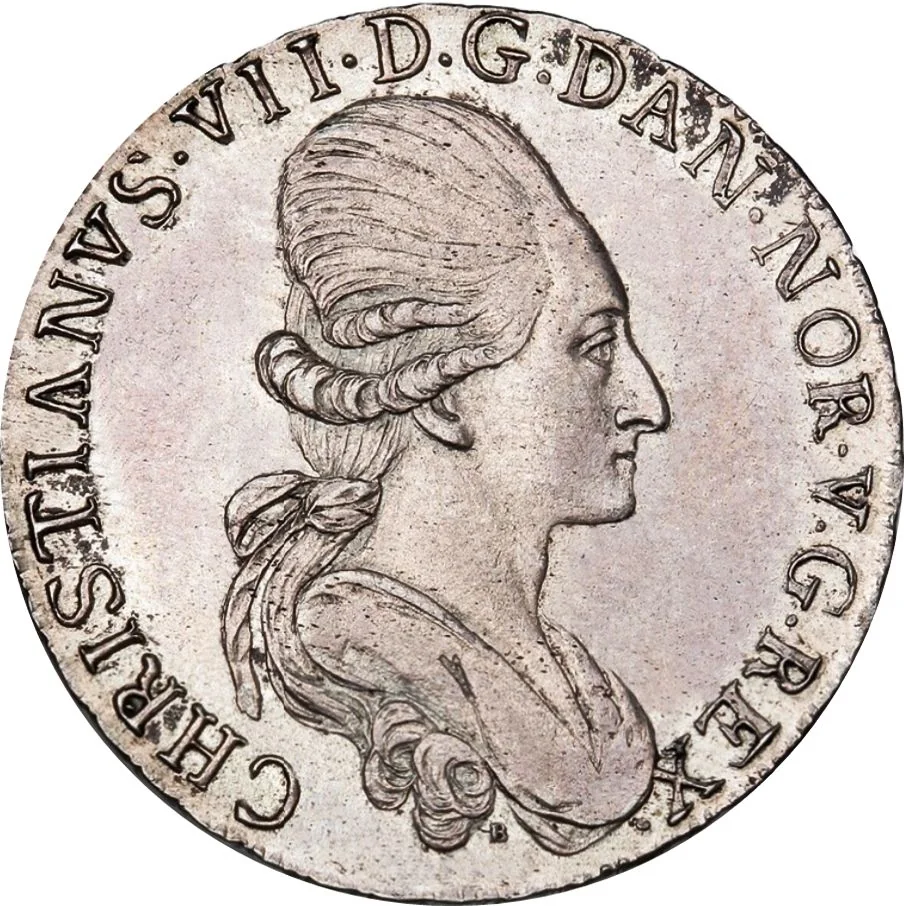
King Christian VII, right-facing draped bust.
Inscription:
CHRISTIANVS • VII • D • G • DAN • NOR • V • G • REX •
B
B
Script: Latin
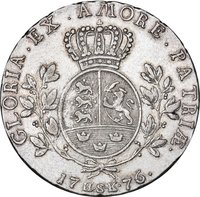
Reverse
Description:
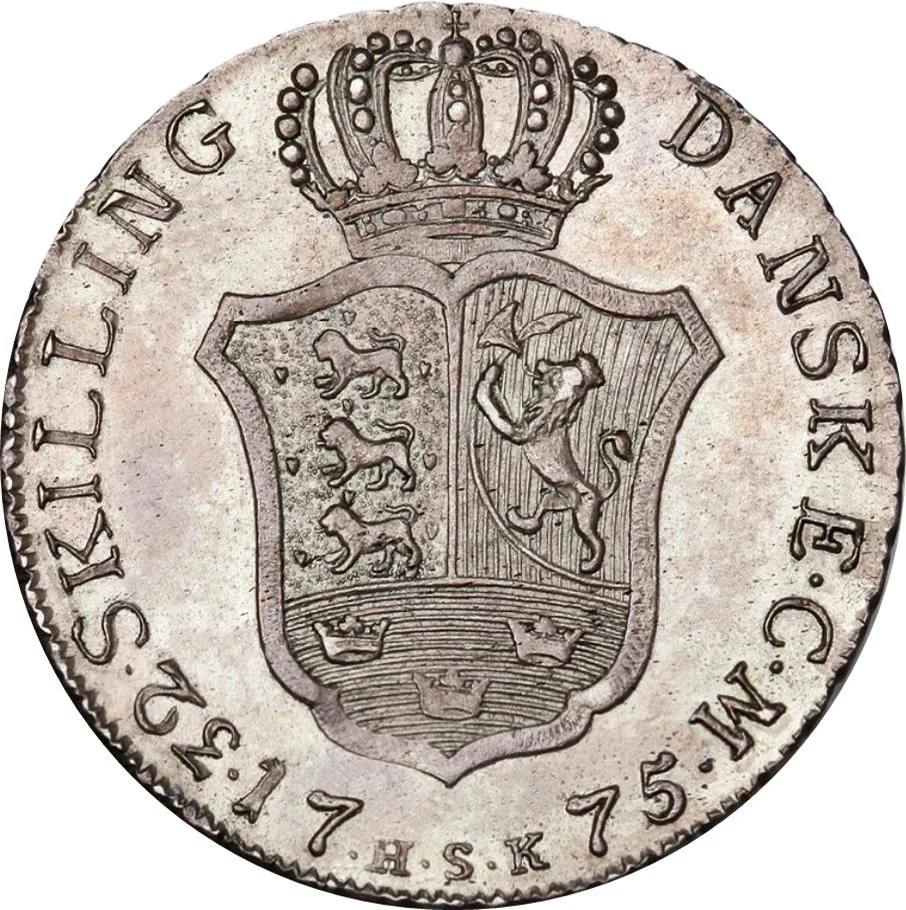
Shield with Danish, Norwegian, and Swedish arms divides value. Date below, split by mintmaster initials.
Inscription:
• 32 • SKILLING | DANSKE • C • M •
• 17 H.S.K. 75 •
• 17 H.S.K. 75 •
Script: Latin
Edge
Embossed lettering (King's motto)
Legend:
* GLORIA • EX • AMORE • PATRIÆ *
Categories
| Symbols> Coat of Arms |
Mints
| Name | Mark |
|---|---|
| Royal Danish Mint | — |
Mintings
| Year | Mint Mark | Mintage | Quality | Collection |
|---|---|---|---|---|
| 1775 | — | — |
Historical background
In 1775, Denmark operated under a complex and strained monetary system, a legacy of its absolutist monarchy and costly wars of the previous century. The official currency was the rigsdaler, divided into 96 skilling, but the reality was a chaotic mix of circulating media. Alongside full-weight silver rigsdaler coins, there existed a vast array of depreciated paper money, known as kurantdaler, and a separate system of "bankdaler" used for large transactions. This created a dual-system where prices and accounts were often kept in the stable "species" rigsdaler, while everyday transactions used the less valuable kurant notes, leading to confusion and frequent exchange calculations.
The root of this instability lay in the state's finances. To fund military ventures, especially during the Great Northern War (1700-1721), the Danish crown had issued excessive amounts of paper currency without sufficient silver backing, leading to significant inflation and loss of public trust. By 1775, the kurantdaler had lost roughly half its value against the silver rigsdaler. This devaluation strained the economy, burdened debtors and creditors differently, and complicated both domestic trade and international commerce, upon which the mercantile Danish state heavily relied.
Consequently, the 1770s were a period of active, if difficult, monetary reform under the guidance of Finance Minister Count Johann Friedrich Struensee and, following his fall, Ove Høegh-Guldberg. The state aimed to stabilize the currency, restore confidence, and eventually unify the dual system. Efforts included calling in old debased coins and notes, but a full restoration to a stable, silver-based standard would remain an ongoing challenge for decades, with the situation in 1775 representing a critical point in this long struggle to achieve monetary order.
The root of this instability lay in the state's finances. To fund military ventures, especially during the Great Northern War (1700-1721), the Danish crown had issued excessive amounts of paper currency without sufficient silver backing, leading to significant inflation and loss of public trust. By 1775, the kurantdaler had lost roughly half its value against the silver rigsdaler. This devaluation strained the economy, burdened debtors and creditors differently, and complicated both domestic trade and international commerce, upon which the mercantile Danish state heavily relied.
Consequently, the 1770s were a period of active, if difficult, monetary reform under the guidance of Finance Minister Count Johann Friedrich Struensee and, following his fall, Ove Høegh-Guldberg. The state aimed to stabilize the currency, restore confidence, and eventually unify the dual system. Efforts included calling in old debased coins and notes, but a full restoration to a stable, silver-based standard would remain an ongoing challenge for decades, with the situation in 1775 representing a critical point in this long struggle to achieve monetary order.
✨ Legendary