

1 piastre – Denmark
Add to wishlist
Denmark
Context
Material
References
KM: #
Numista: #325428
Value
Bullion value: $62.40
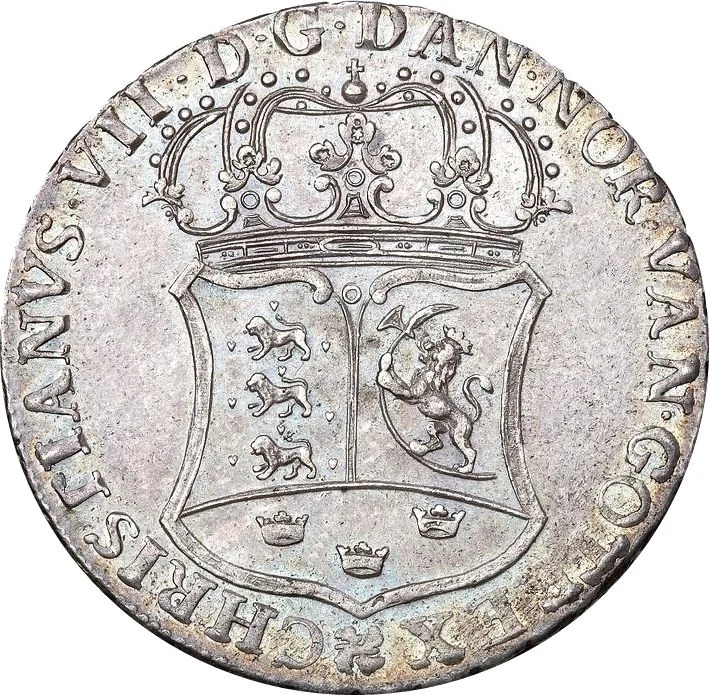
Obverse
Description:
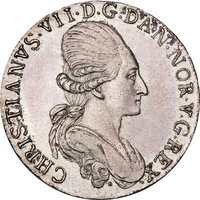
Three-part shield with Danish, Norwegian, and Swedish arms, encircled by legend.
Inscription:
CHRISTIANVS • VII • D • G • DAN • NOR • VAN • GOT • REX •
Script: Latin
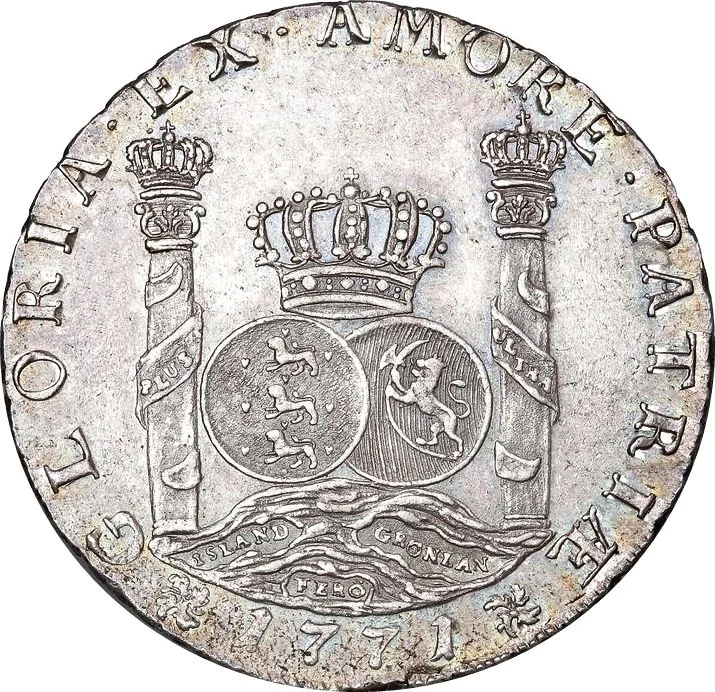
Reverse
Description:
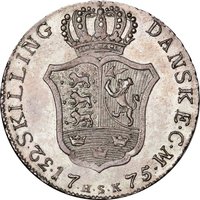
Danish and Norwegian crowned globes between pillars, inspired by Spanish 8 reales. Below, a mound with three banners represents Greenland, Iceland, and the Faroe Islands. King's motto around rim, date below mound.
Inscription:
GLORIA • EX • AMORE • PATRIÆ
PLUS ULTRA
ISLAN GRÖNLAN FERÖ
1774
PLUS ULTRA
ISLAN GRÖNLAN FERÖ
1774
Script: Latin
Edge
Mints
| Name | Mark |
|---|---|
| Royal Danish Mint | — |
Mintings
| Year | Mint Mark | Mintage | Quality | Collection |
|---|---|---|---|---|
| 1774 | — | — |
Historical background
In 1774, the Kingdom of Denmark-Norway was grappling with a severe and complex currency crisis rooted in decades of monetary mismanagement. The state had long financed its expenditures, including costly wars and ambitious building projects, by debasing the coinage—reducing the silver content in coins while mandating they retain their face value. This practice, combined with the circulation of overvalued foreign coins and a proliferation of credit notes, led to a classic situation of bad money driving out good. Silver specie was hoarded or exported, leaving the economy dependent on an unstable and depreciating currency, which eroded public trust and disrupted trade.
The immediate trigger for the crisis in the early 1770s was a speculative bubble and credit collapse in Copenhagen, which exposed the fragility of the entire monetary system. In response, the government, under the guidance of Minister Johann Friedrich Struensee and later the administration of Ove Høegh-Guldberg, enacted a radical monetary reform in 1774. This reform aimed at a drastic deflation by officially devaluing the paper currency by half and calling in old debased coins for reminting. The intent was to restore confidence by pegging the currency to a fixed silver standard and eliminating the confusing multiplicity of circulating mediums.
The short-term consequences were socially devastating, as the sudden devaluation effectively halved the nominal value of savings, wages, and contracts, leading to widespread bankruptcies, merchant losses, and public outcry. While the reform succeeded in its long-term goal of stabilizing the currency and establishing a more trustworthy system, the brutal adjustment process inflicted significant economic pain. This episode remains a pivotal case study in Danish economic history, illustrating the perils of currency debasement and the severe social costs often associated with abrupt monetary stabilization.
The immediate trigger for the crisis in the early 1770s was a speculative bubble and credit collapse in Copenhagen, which exposed the fragility of the entire monetary system. In response, the government, under the guidance of Minister Johann Friedrich Struensee and later the administration of Ove Høegh-Guldberg, enacted a radical monetary reform in 1774. This reform aimed at a drastic deflation by officially devaluing the paper currency by half and calling in old debased coins for reminting. The intent was to restore confidence by pegging the currency to a fixed silver standard and eliminating the confusing multiplicity of circulating mediums.
The short-term consequences were socially devastating, as the sudden devaluation effectively halved the nominal value of savings, wages, and contracts, leading to widespread bankruptcies, merchant losses, and public outcry. While the reform succeeded in its long-term goal of stabilizing the currency and establishing a more trustworthy system, the brutal adjustment process inflicted significant economic pain. This episode remains a pivotal case study in Danish economic history, illustrating the perils of currency debasement and the severe social costs often associated with abrupt monetary stabilization.
✨ Legendary