

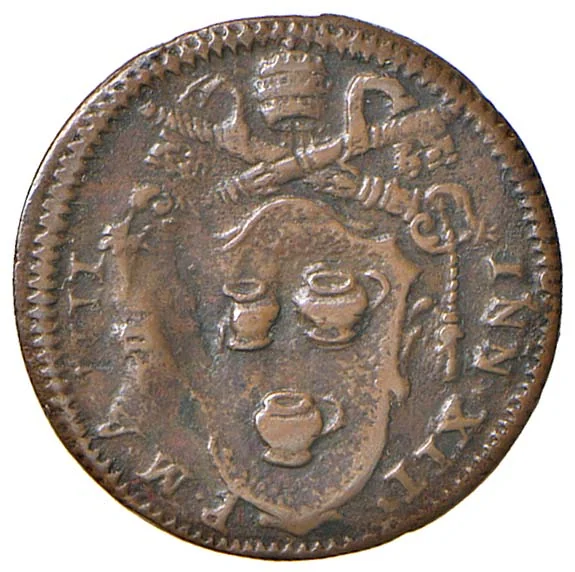
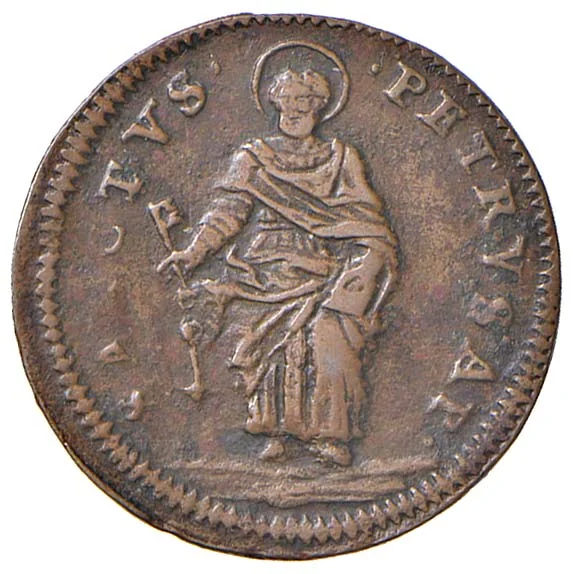
1 quattrino – Gubbio
Add to wishlist
Italy
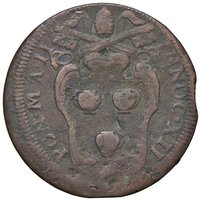
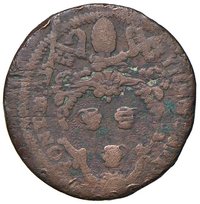
Obverse
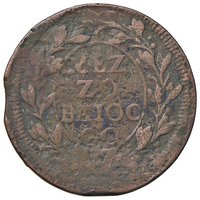
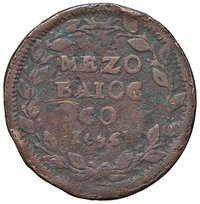
Reverse
Edge
Plain
Categories
| Symbol> Crown |
| Person> Religious figure |
| Object> Container or tableware |
| Symbols> Coat of Arms |
Mints
| Name | Mark |
|---|---|
| Gubbio | — |
Mintings
| Year | Mint Mark | Mintage | Quality | Collection |
|---|---|---|---|---|
| 1693 | — | — | ||
| 1694 | — | — | ||
| 1695 | — | — | ||
| 1696 | — | — | ||
| 1698 | — | — | ||
| 1699 | — | — | ||
| 1700 | — | — |
Historical background
In 1693, the Italian city-state of Gubbio, like much of the Papal States, operated within a complex and often chaotic monetary system. Officially, it used a bimetallic system based on the Papal scudo (gold) and giulio (silver), but in practice, a bewildering array of coins circulated. These included older local issues, currencies from neighbouring duchies like Tuscany and Urbino, and Spanish silver reales from global trade, all with fluctuating values and metal purity. This proliferation made everyday commerce difficult, requiring constant reference to exchange lists and inviting rampant clipping and counterfeiting.
The year itself was one of profound crisis, marked by a catastrophic earthquake on September 11th that devastated towns across the Umbria-Marche region, including Gubbio. The physical destruction severely disrupted economic activity and likely damaged or destroyed local cash reserves and minting facilities, if any were operational. In the aftermath, the urgent need for vast sums to fund reconstruction and relief would have placed immense strain on the already fragile currency supply, potentially leading to hoarding and localized inflation for essential goods.
Furthermore, Gubbio's monetary policy was not autonomous; it was ultimately controlled by the Papal Treasury in Rome under Pope Innocent XII. The central authorities were increasingly focused on standardizing currency to combat debasement and simplify tax collection across their territories. Therefore, while Gubbio's immediate situation in 1693 was defined by post-earthquake emergency, its longer-term currency trajectory was toward greater integration into a reformed Papal monetary system, a process that sought to override the historic jumble of local and foreign coins that characterized its daily market life.
The year itself was one of profound crisis, marked by a catastrophic earthquake on September 11th that devastated towns across the Umbria-Marche region, including Gubbio. The physical destruction severely disrupted economic activity and likely damaged or destroyed local cash reserves and minting facilities, if any were operational. In the aftermath, the urgent need for vast sums to fund reconstruction and relief would have placed immense strain on the already fragile currency supply, potentially leading to hoarding and localized inflation for essential goods.
Furthermore, Gubbio's monetary policy was not autonomous; it was ultimately controlled by the Papal Treasury in Rome under Pope Innocent XII. The central authorities were increasingly focused on standardizing currency to combat debasement and simplify tax collection across their territories. Therefore, while Gubbio's immediate situation in 1693 was defined by post-earthquake emergency, its longer-term currency trajectory was toward greater integration into a reformed Papal monetary system, a process that sought to override the historic jumble of local and foreign coins that characterized its daily market life.
💎 Extremely Rare