

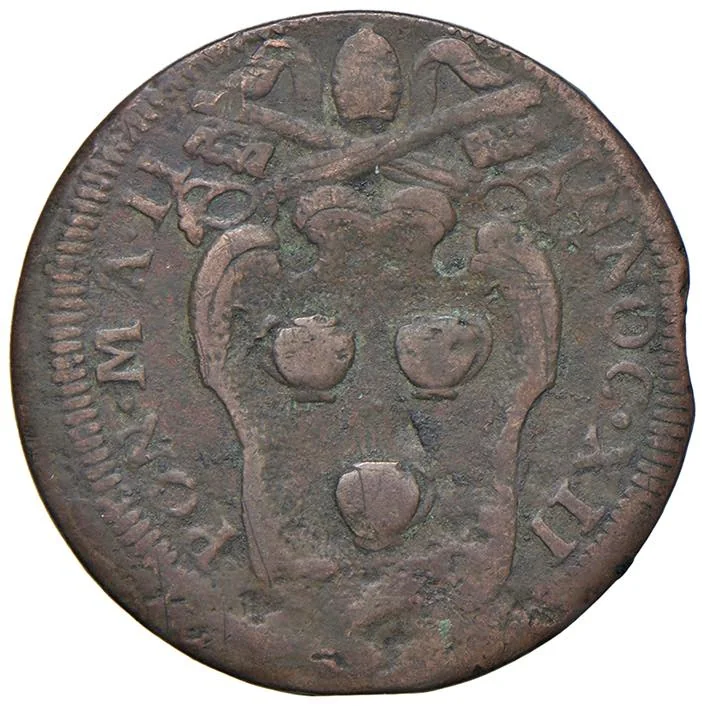
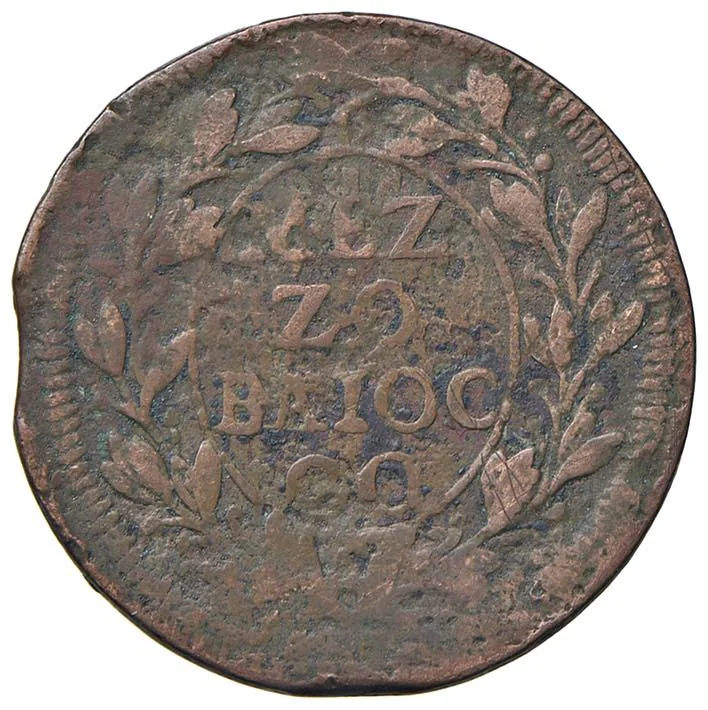
½ baiocco – Gubbio
Add to wishlist
Italy
Context
Years: 1691–1700
Country: Italy
Issuer: Gubbio
Ruler: Innocent XII
Currency:
(1534—1835)
Demonetized: Yes
Material
References
KM: #
Numista: #100224
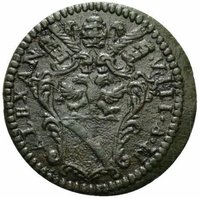
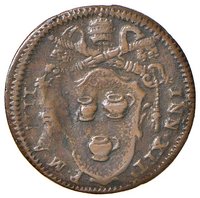
Obverse
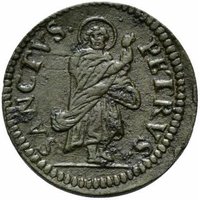
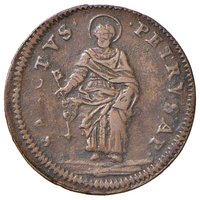
Reverse
Edge
Categories
| Object> Container or tableware |
| Symbol> Crown |
| Symbol> Wreath |
| Symbols> Coat of Arms |
Mints
| Name | Mark |
|---|---|
| Gubbio | — |
Mintings
| Year | Mint Mark | Mintage | Quality | Collection |
|---|---|---|---|---|
| 1693 | — | — | ||
| 1695 | — | — | ||
| — | — | — | ||
| 1692 | — | — | ||
| 1697 | — | — |
Historical background
In 1691, the Italian city-state of Gubbio, like much of the Papal States under Pope Alexander VIII, was navigating a complex and deteriorating monetary environment. The broader region suffered from a chronic shortage of small-denomination coinage for daily transactions, a problem exacerbated by the widespread clipping and debasement of existing silver coins. This scarcity forced local economies to rely heavily on moneta nera ("black money")—low-value copper and billon coins—which were prone to rapid inflation and created significant friction in marketplace exchanges.
Locally, Gubbio’s monetary system was a fragmented patchwork. While official papal scudi and giuli held value for larger trade and state payments, the circulation of older, regional issues from neighboring duchies and a flood of underweight foreign coins created confusion. The city’s authorities faced the constant challenge of setting and enforcing equitable exchange rates between these myriad coin types, a task made nearly impossible by the fluid and often clandestine market in precious metals. This instability directly harmed artisans, laborers, and merchants, who bore the brunt of fluctuating prices and uncertain values.
The underlying cause was a structural crisis within the Papal States' minting policy, which failed to produce sufficient quality small coin. Consequently, Gubbio in 1691 was caught in a cycle of inflationary pressure driven by bad money, hindering commerce and sowing distrust in the currency system. This local microcosm reflected the wider European "crisis of small change" of the era, where the disconnect between official monetary standards and the practical needs of the populace created persistent economic strain at the grassroots level of city-states like Gubbio.
Locally, Gubbio’s monetary system was a fragmented patchwork. While official papal scudi and giuli held value for larger trade and state payments, the circulation of older, regional issues from neighboring duchies and a flood of underweight foreign coins created confusion. The city’s authorities faced the constant challenge of setting and enforcing equitable exchange rates between these myriad coin types, a task made nearly impossible by the fluid and often clandestine market in precious metals. This instability directly harmed artisans, laborers, and merchants, who bore the brunt of fluctuating prices and uncertain values.
The underlying cause was a structural crisis within the Papal States' minting policy, which failed to produce sufficient quality small coin. Consequently, Gubbio in 1691 was caught in a cycle of inflationary pressure driven by bad money, hindering commerce and sowing distrust in the currency system. This local microcosm reflected the wider European "crisis of small change" of the era, where the disconnect between official monetary standards and the practical needs of the populace created persistent economic strain at the grassroots level of city-states like Gubbio.
💎 Extremely Rare