

100 francs – Tunisia
Add to wishlist
Tunisia
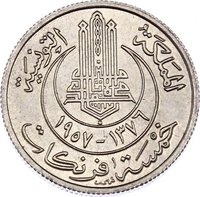
Obverse
Description:
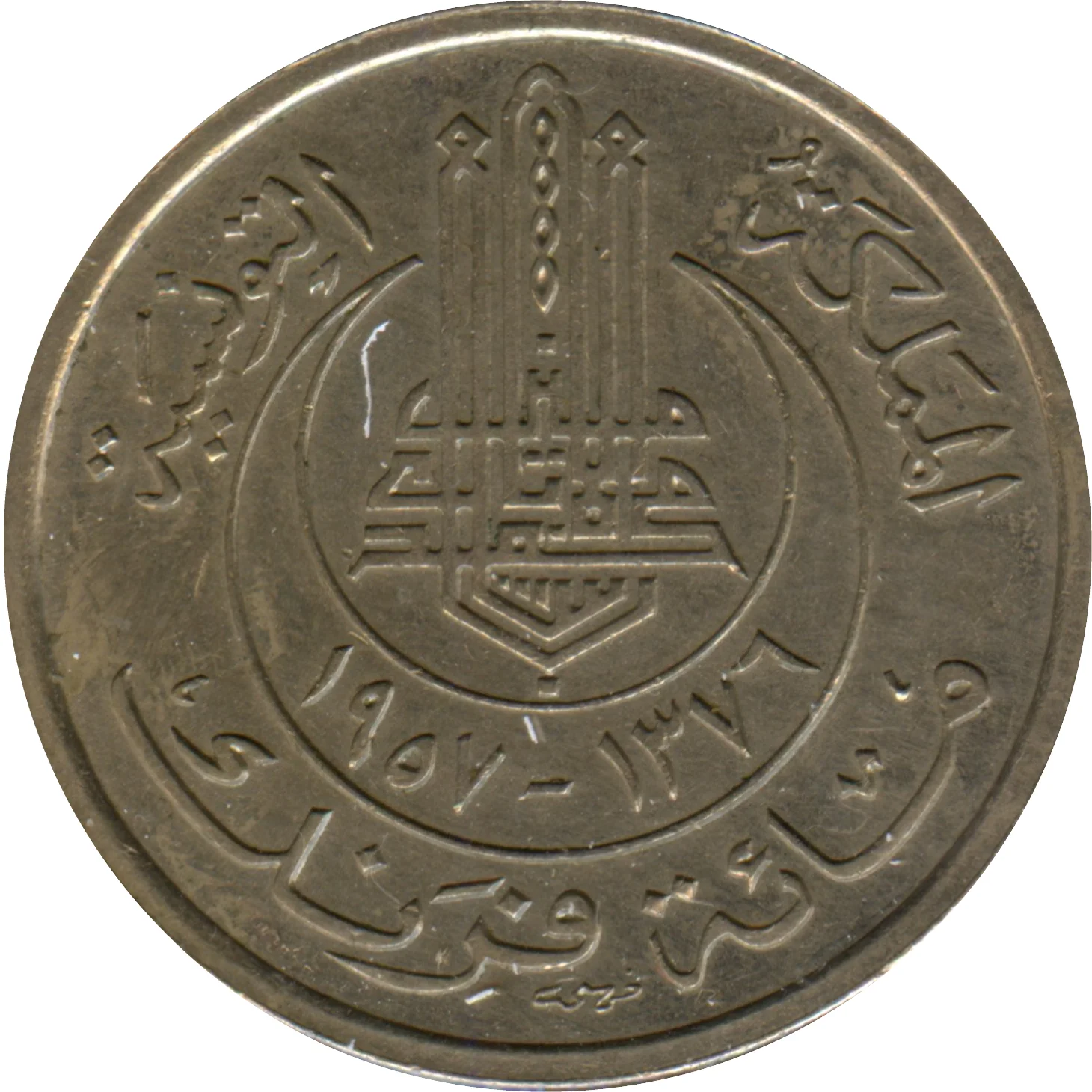
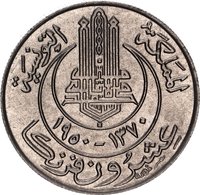
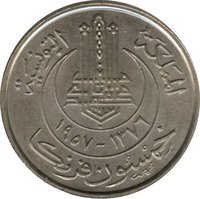
Crescent design encloses the dates.
Inscription:
المَملكَة التونسيَة
١٣٧٦ - ١٩٥٧
مائة فرَنك
١٣٧٦ - ١٩٥٧
مائة فرَنك
Translation:
The Tunisian Kingdom
1376 - 1957
One Hundred Francs
1376 - 1957
One Hundred Francs
Script: Arabic
Language: Arabic
Engraver: Lucien Georges Bazor
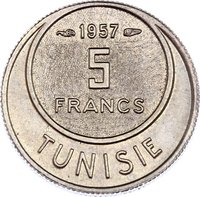
Reverse
Description:
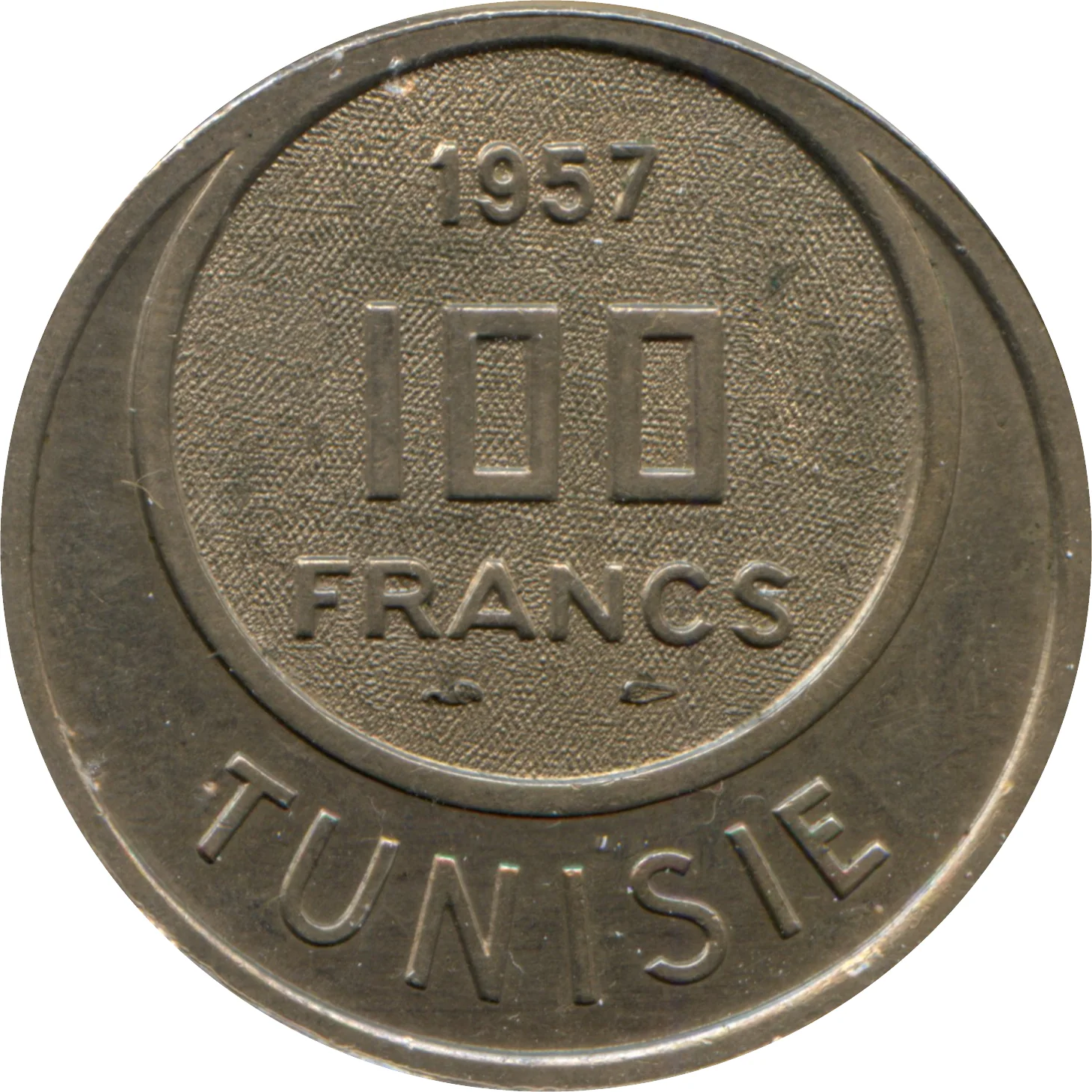
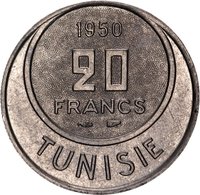
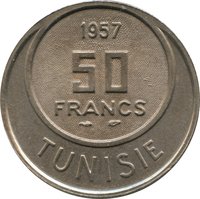
Value and date in top circle
Inscription:
1957
100
FRANCS
TUNISIE
100
FRANCS
TUNISIE
Translation:
1957
100
FRANCS
TUNISIA
100
FRANCS
TUNISIA
Script: Latin
Engraver: Lucien Georges Bazor
Edge
Reeded
Mints
| Name | Mark |
|---|---|
| Monnaie de Paris | — |
Mintings
| Year | Mint Mark | Mintage | Quality | Collection |
|---|---|---|---|---|
| 1950 | — | 8,000,000 | ||
| 1957 | — | 1,000,000 |
Historical background
In 1950, Tunisia's currency situation was fundamentally shaped by its status as a French protectorate, established in 1881. The monetary system was fully integrated into the French franc zone, with the Tunisian franc (also called the franc tunisien) serving as the official currency. It was pegged at par with the French franc, and its issuance was controlled by a French-dominated institution, the Banque de l’Algérie et de la Tunisie, which acted as the central bank. This arrangement ensured that Tunisia's economy and trade were tightly bound to France, facilitating colonial economic interests but limiting Tunisian monetary sovereignty.
Economically, the post-World War II period saw rising inflation and economic strain, influenced by global conditions and local factors. While the fixed parity provided some stability for trade with France, it also meant Tunisia imported France's inflationary pressures. The economy was heavily oriented towards agricultural exports (like olive oil and wine) and phosphate mining, with earnings in francs. However, a growing nationalist movement, embodied by the Neo-Destour party, was beginning to challenge the colonial economic structure, arguing that it served French settlers and metropolitan interests at the expense of Tunisian development.
Thus, the currency situation in 1950 was one of colonial control and mounting tension. The monetary system was a technical instrument of the protectorate, symbolizing economic dependence. As nationalist demands for internal autonomy intensified—culminating in the autonomy conventions of 1955 and full independence in 1956—the future of the franc-based currency became a point of contention. The stage was being set for the eventual creation of a truly national currency, the Tunisian dinar, which would be introduced in 1958 to assert the new nation's economic independence.
Economically, the post-World War II period saw rising inflation and economic strain, influenced by global conditions and local factors. While the fixed parity provided some stability for trade with France, it also meant Tunisia imported France's inflationary pressures. The economy was heavily oriented towards agricultural exports (like olive oil and wine) and phosphate mining, with earnings in francs. However, a growing nationalist movement, embodied by the Neo-Destour party, was beginning to challenge the colonial economic structure, arguing that it served French settlers and metropolitan interests at the expense of Tunisian development.
Thus, the currency situation in 1950 was one of colonial control and mounting tension. The monetary system was a technical instrument of the protectorate, symbolizing economic dependence. As nationalist demands for internal autonomy intensified—culminating in the autonomy conventions of 1955 and full independence in 1956—the future of the franc-based currency became a point of contention. The stage was being set for the eventual creation of a truly national currency, the Tunisian dinar, which would be introduced in 1958 to assert the new nation's economic independence.
🌱 Common