

8 skilling – Denmark
Add to wishlist
Denmark
Context
Material
Diameter: 22 mm
Weight: 3.06 g
Silver Weight:: 1.72 g
Shape: Round
Composition: 56.2% Silver
Standard: Gold tenth ounce
Magnetic: No
References
KM: #
Numista: #147173
Value
Bullion value: $4.19
Obverse
Description:
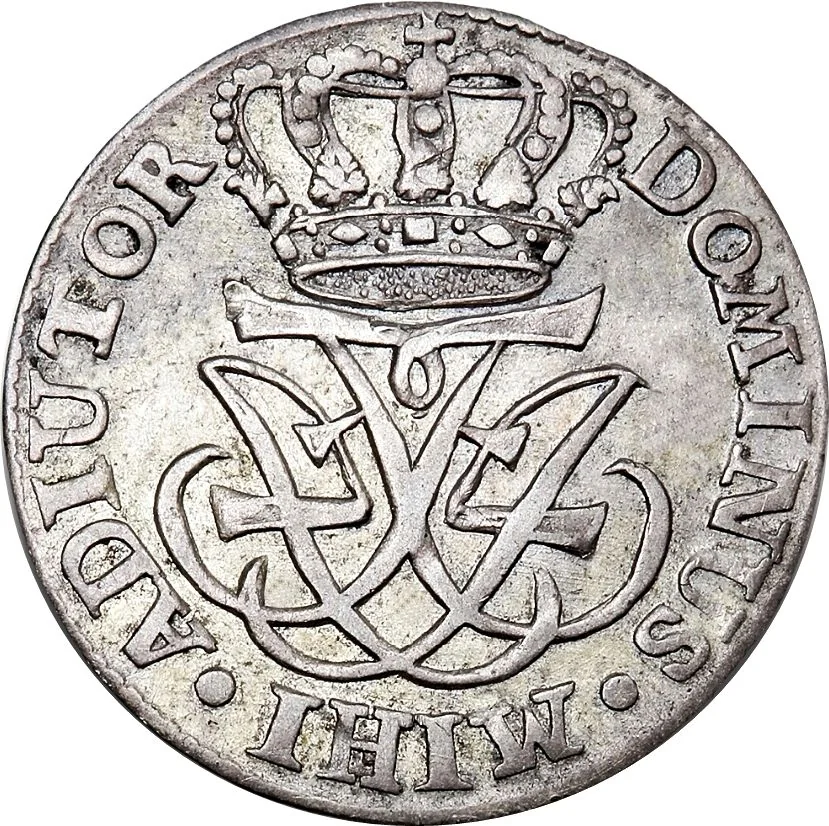
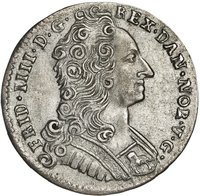
Double crowned royal cipher; motto encircling.
Inscription:
DOMINVS · MIHI · ADIVTOR ·
Script: Latin
Reverse
Description:
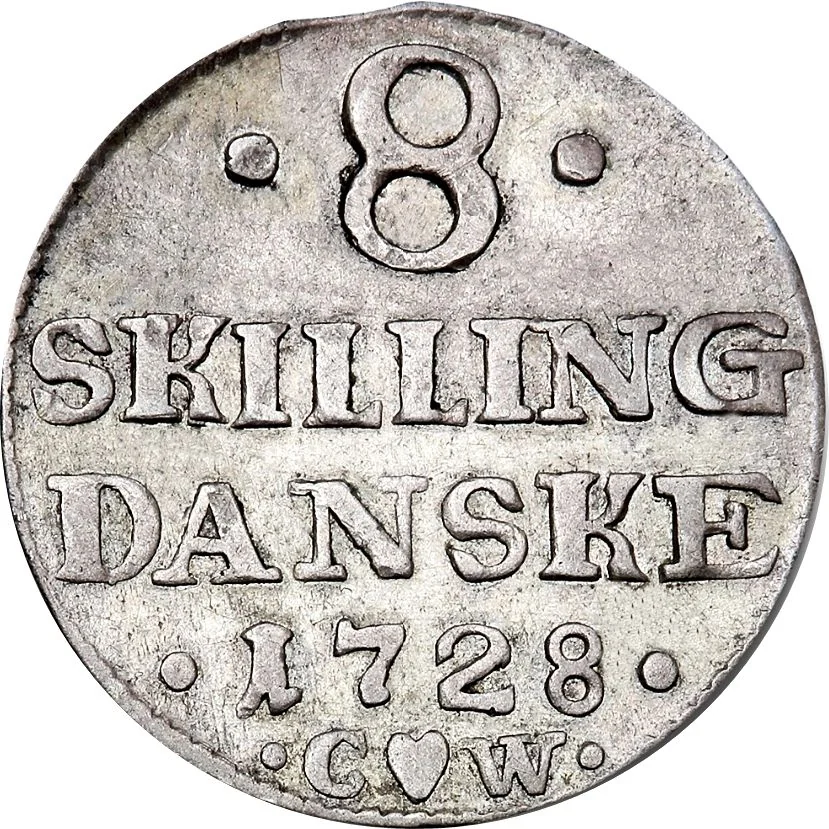
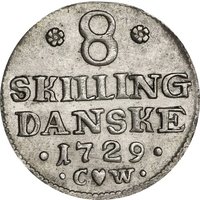
Value, date, mintmark.
Four lines, heart center.
Four lines, heart center.
Inscription:
• 8 •
SKILLING
DANSKE
• 1728 •
C ♥ W
SKILLING
DANSKE
• 1728 •
C ♥ W
Script: Latin
Edge
Mints
| Name | Mark |
|---|---|
| Copenhagen | ♥ |
Mintings
| Year | Mint Mark | Mintage | Quality | Collection |
|---|---|---|---|---|
| 1728 | CW | — |
Historical background
In 1728, Denmark operated under a silver-based monetary system, but it was a period of significant strain and transition. The official currency was the rigsdaler, subdivided into marks and skilling. However, the state treasury, deeply indebted from the Great Northern War (1700-1721), faced a severe shortage of precious metal. This led to the circulation of vastly depreciated paper money, known as kreditosedler, which were not properly backed by silver reserves and had lost much of their value, creating a problematic dual-currency system.
The situation was exacerbated by a catastrophic event: the Great Fire of Copenhagen in October 1728, which destroyed nearly a third of the capital. The immense costs of reconstruction further drained the royal coffers and disrupted economic activity, increasing pressure on the already fragile currency. Confidence in the paper notes plummeted, leading to widespread hoarding of silver coins and a widening gap between the face value and the actual market value of the currency.
Consequently, 1728 stands as a year highlighting profound monetary instability within the Danish-Norwegian realm. The government, under King Frederick IV, was caught between the urgent financial demands of post-war recovery and disaster rebuilding, and the need to restore trust in the currency. This precarious environment set the stage for subsequent, more systematic monetary reforms later in the 18th century aimed at stabilizing the rigsdaler and addressing the crown's chronic financial woes.
The situation was exacerbated by a catastrophic event: the Great Fire of Copenhagen in October 1728, which destroyed nearly a third of the capital. The immense costs of reconstruction further drained the royal coffers and disrupted economic activity, increasing pressure on the already fragile currency. Confidence in the paper notes plummeted, leading to widespread hoarding of silver coins and a widening gap between the face value and the actual market value of the currency.
Consequently, 1728 stands as a year highlighting profound monetary instability within the Danish-Norwegian realm. The government, under King Frederick IV, was caught between the urgent financial demands of post-war recovery and disaster rebuilding, and the need to restore trust in the currency. This precarious environment set the stage for subsequent, more systematic monetary reforms later in the 18th century aimed at stabilizing the rigsdaler and addressing the crown's chronic financial woes.
✨ Legendary