

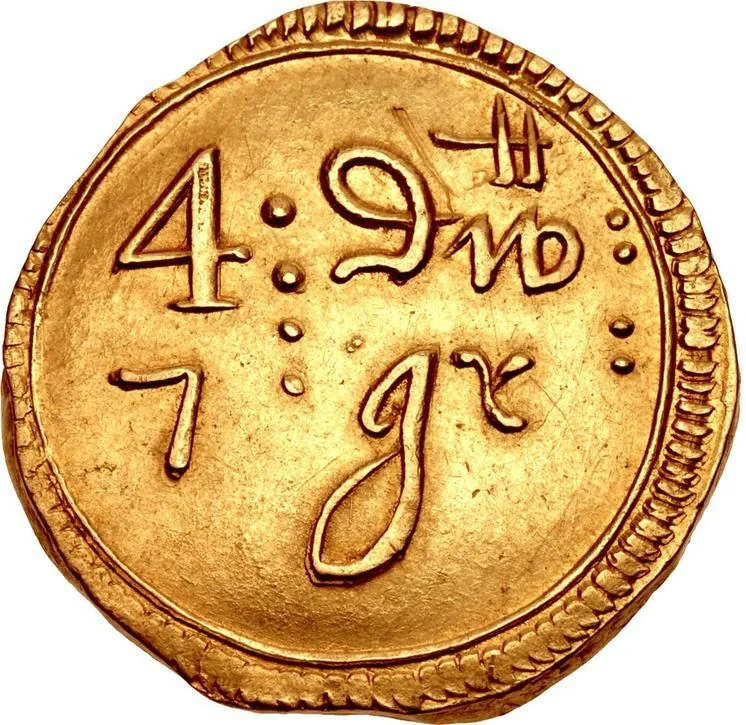
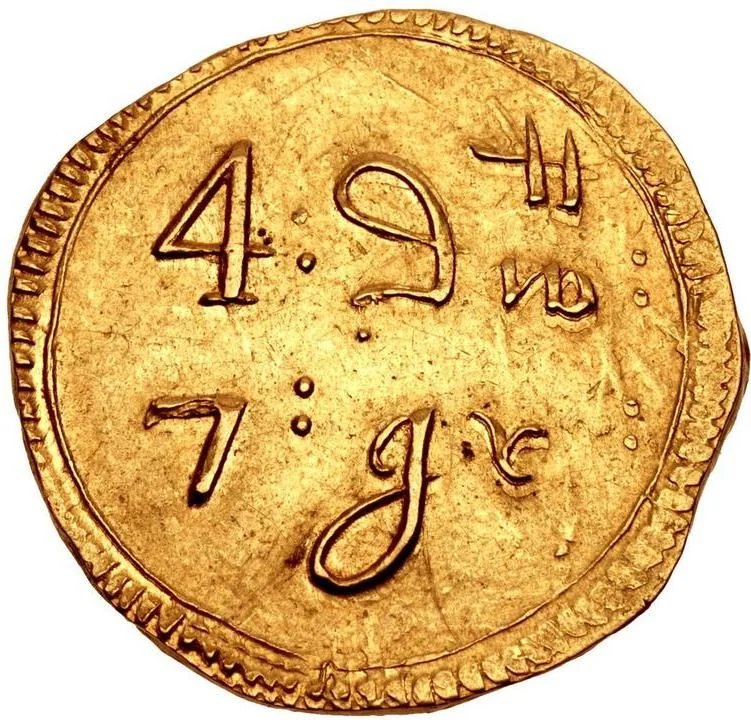
1 pistole – Ireland
Add to wishlist
Ireland
Context
Material
Diameter: 22 mm
Weight: 6.61 g
Gold Weight:: 5.88 g
Shape: Irregular round
Composition: 89% Gold
Magnetic: No
References
KM: #
Numista: #147059
Value
Bullion value: $915.89
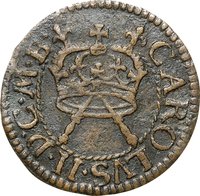
Obverse
Description:
4 DWTT. 7 GR.
Script: Latin (cursive)
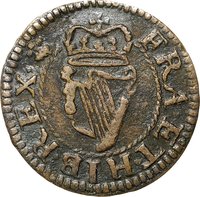
Reverse
Description:
4 DWTT. 7 GR.
Script: Latin (cursive)
Edge
Mintings
| Year | Mint Mark | Mintage | Quality | Collection |
|---|---|---|---|---|
| 1646 | — | 12 |
Historical background
In 1646, Ireland’s currency was in a state of profound crisis and complexity, a direct consequence of the ongoing Confederate Wars (1641-1653). The conflict, which pitted Irish Catholic Confederates against English Protestant Royalists and Parliamentarians, had shattered the normal economy and coinage system. Official royal coinage was scarce and hoarded, leading to a severe shortage of acceptable circulating medium for trade and, crucially, for paying armies.
To meet this need, both the Confederate Catholic administration in Kilkenny and various local military commanders resorted to issuing emergency coinage, most infamously in the form of "siege money" or "coin of necessity." The most common form was crude silver coins minted from melted-down plate, such as silverware and church treasures, often stamped with simple designs and their weight in value. These included the "Inchiquin money" issued by the Royalist commander Murrough O'Brien, and coins produced under Confederate authority. Their value was highly unstable, fluctuating with the military fortunes of their issuers and the intrinsic, often variable, silver content.
This monetary fragmentation reflected the broader political disintegration of the time. Multiple currencies of dubious and competing value circulated in a patchwork across the island, undermining commerce and creating widespread economic uncertainty. The situation was a microcosm of the war itself: a struggle for control where the legitimacy and worth of currency were as contested as the territory, setting the stage for the sweeping monetary and land reforms that would follow the Cromwellian conquest in the ensuing decade.
To meet this need, both the Confederate Catholic administration in Kilkenny and various local military commanders resorted to issuing emergency coinage, most infamously in the form of "siege money" or "coin of necessity." The most common form was crude silver coins minted from melted-down plate, such as silverware and church treasures, often stamped with simple designs and their weight in value. These included the "Inchiquin money" issued by the Royalist commander Murrough O'Brien, and coins produced under Confederate authority. Their value was highly unstable, fluctuating with the military fortunes of their issuers and the intrinsic, often variable, silver content.
This monetary fragmentation reflected the broader political disintegration of the time. Multiple currencies of dubious and competing value circulated in a patchwork across the island, undermining commerce and creating widespread economic uncertainty. The situation was a microcosm of the war itself: a struggle for control where the legitimacy and worth of currency were as contested as the territory, setting the stage for the sweeping monetary and land reforms that would follow the Cromwellian conquest in the ensuing decade.
✨ Legendary