

1 crown – Ireland
Add to wishlist
Ireland
Context
Material
Diameter: 44 mm
Weight: 23.34 g
Silver Weight:: 23.34 g
Shape: Irregular round
Composition: Silver
Magnetic: No
References
KM: #
Numista: #332394
Value
Bullion value: $58.48
Obverse
Description:
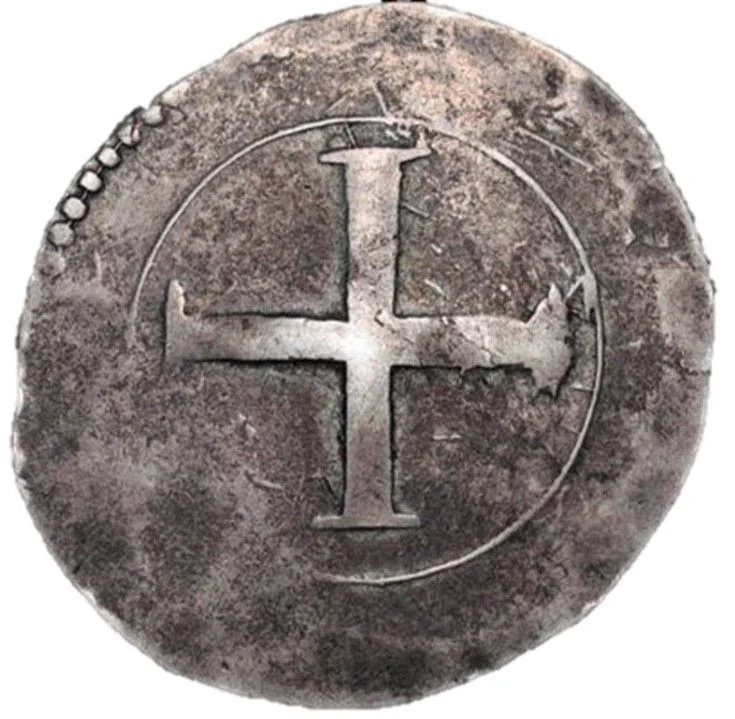
Cross within a thin circle, beaded border.
Reverse
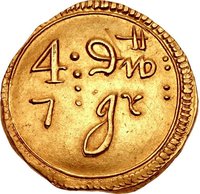
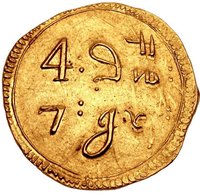
Description:
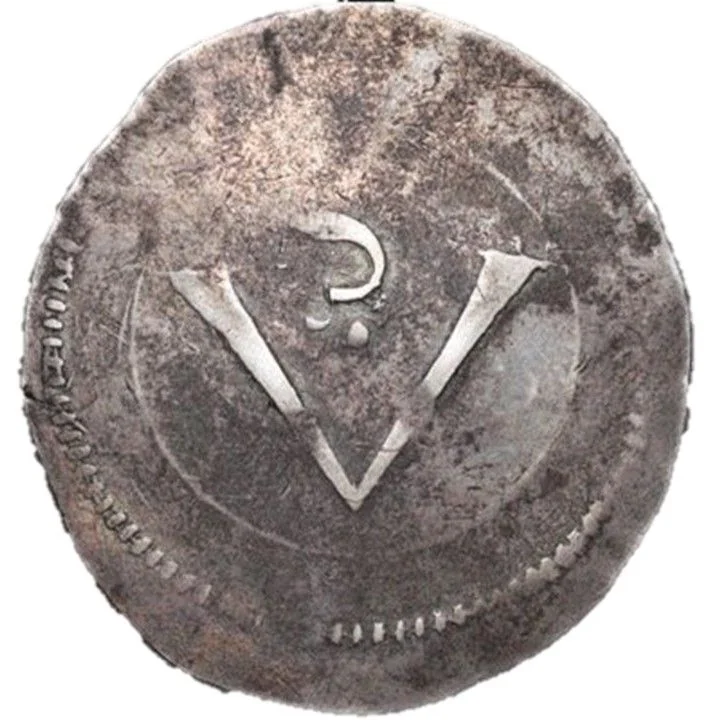
Two lines divided by pellet, inside thin circle. Reeded border.
Inscription:
S
·
V
·
V
Script: Latin
Edge
Mintings
| Year | Mint Mark | Mintage | Quality | Collection |
|---|---|---|---|---|
| — | — | — |
Historical background
In 1643, Ireland was engulfed in the complex and brutal conflict of the Irish Confederate Wars, part of the wider Wars of the Three Kingdoms. The collapse of central authority following the 1641 Rebellion had fractured the island into competing territories: the Catholic Confederate Association controlled most of the country, Royalist and Parliamentarian forces held key ports and garrisons, and a Scottish Covenanter army was present in Ulster. This political fragmentation directly caused a severe monetary crisis, as the competing authorities lacked the specie (gold and silver coin) to pay and supply their armies, leading to a proliferation of emergency currencies.
The primary currency in circulation became "siege money" – crude coins and tokens minted not from a central treasury, but by individual cities and garrison commanders under duress. Towns like Cork, Youghal, and Kinsale, held by Parliamentarian forces, struck their own copper coinage to facilitate local trade and soldier pay. Simultaneously, the Confederate Catholic administration in Kilkenny, facing a critical shortage of precious metals, began minting coins from melted-down church plate and loot. These included the iconic "Ormonde money" (named for the Royalist Lord Lieutenant, the Marquis of Ormonde), which was made of debased silver and copper and often stamped with the Confederate cross and harp.
This monetary fragmentation severely disrupted the economy. The value and acceptance of these various coins were highly localized and unstable, depending entirely on the military fortunes of the issuing authority. Counterfeiting was rampant, and distrust of the debased coinage was widespread. The situation created a reversion to barter in many areas and placed immense hardship on the civilian population, for whom the collapsing currency system compounded the devastation of warfare, famine, and plague. Thus, the currency of 1643 Ireland was not a tool of unified commerce but a stark symbol of a kingdom divided by war.
The primary currency in circulation became "siege money" – crude coins and tokens minted not from a central treasury, but by individual cities and garrison commanders under duress. Towns like Cork, Youghal, and Kinsale, held by Parliamentarian forces, struck their own copper coinage to facilitate local trade and soldier pay. Simultaneously, the Confederate Catholic administration in Kilkenny, facing a critical shortage of precious metals, began minting coins from melted-down church plate and loot. These included the iconic "Ormonde money" (named for the Royalist Lord Lieutenant, the Marquis of Ormonde), which was made of debased silver and copper and often stamped with the Confederate cross and harp.
This monetary fragmentation severely disrupted the economy. The value and acceptance of these various coins were highly localized and unstable, depending entirely on the military fortunes of the issuing authority. Counterfeiting was rampant, and distrust of the debased coinage was widespread. The situation created a reversion to barter in many areas and placed immense hardship on the civilian population, for whom the collapsing currency system compounded the devastation of warfare, famine, and plague. Thus, the currency of 1643 Ireland was not a tool of unified commerce but a stark symbol of a kingdom divided by war.
✨ Legendary