

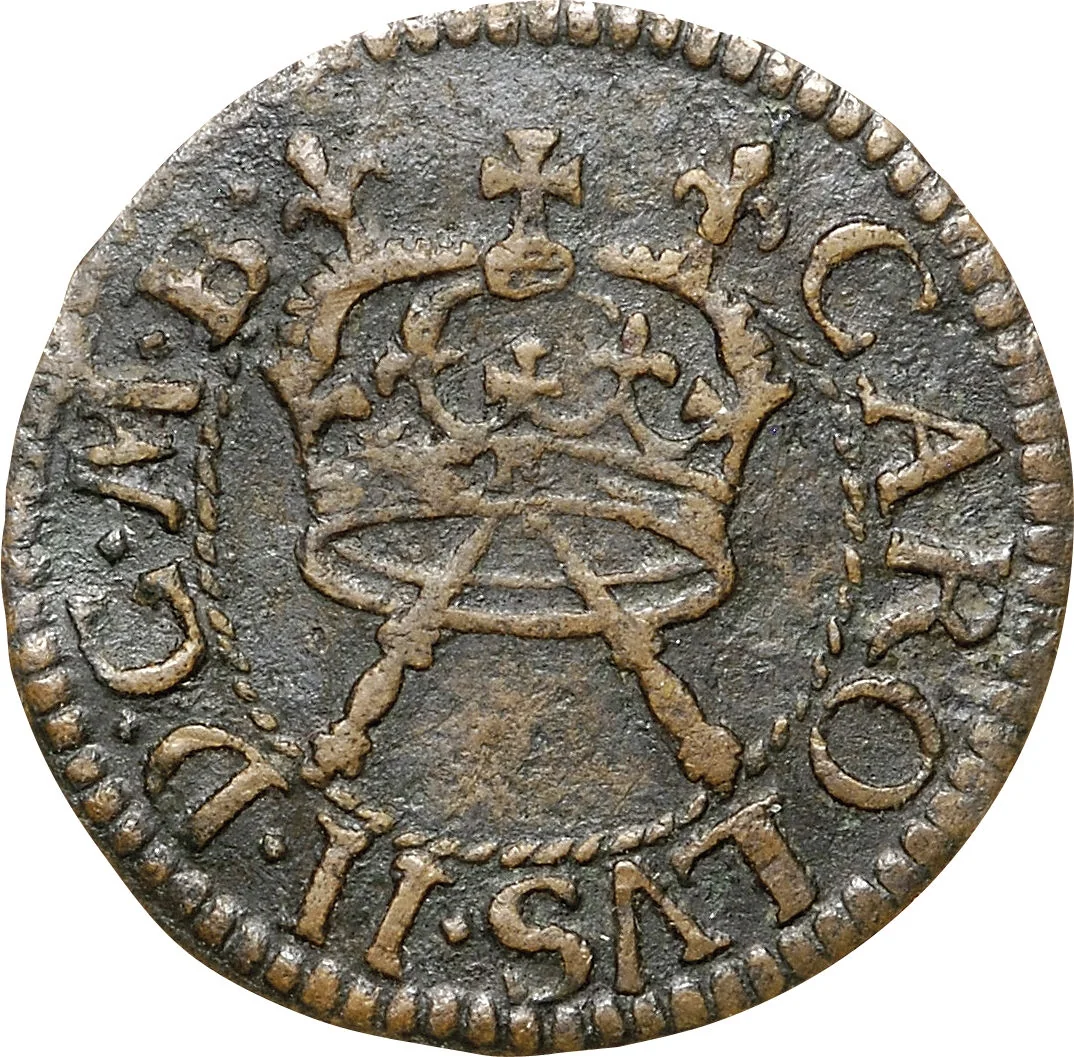
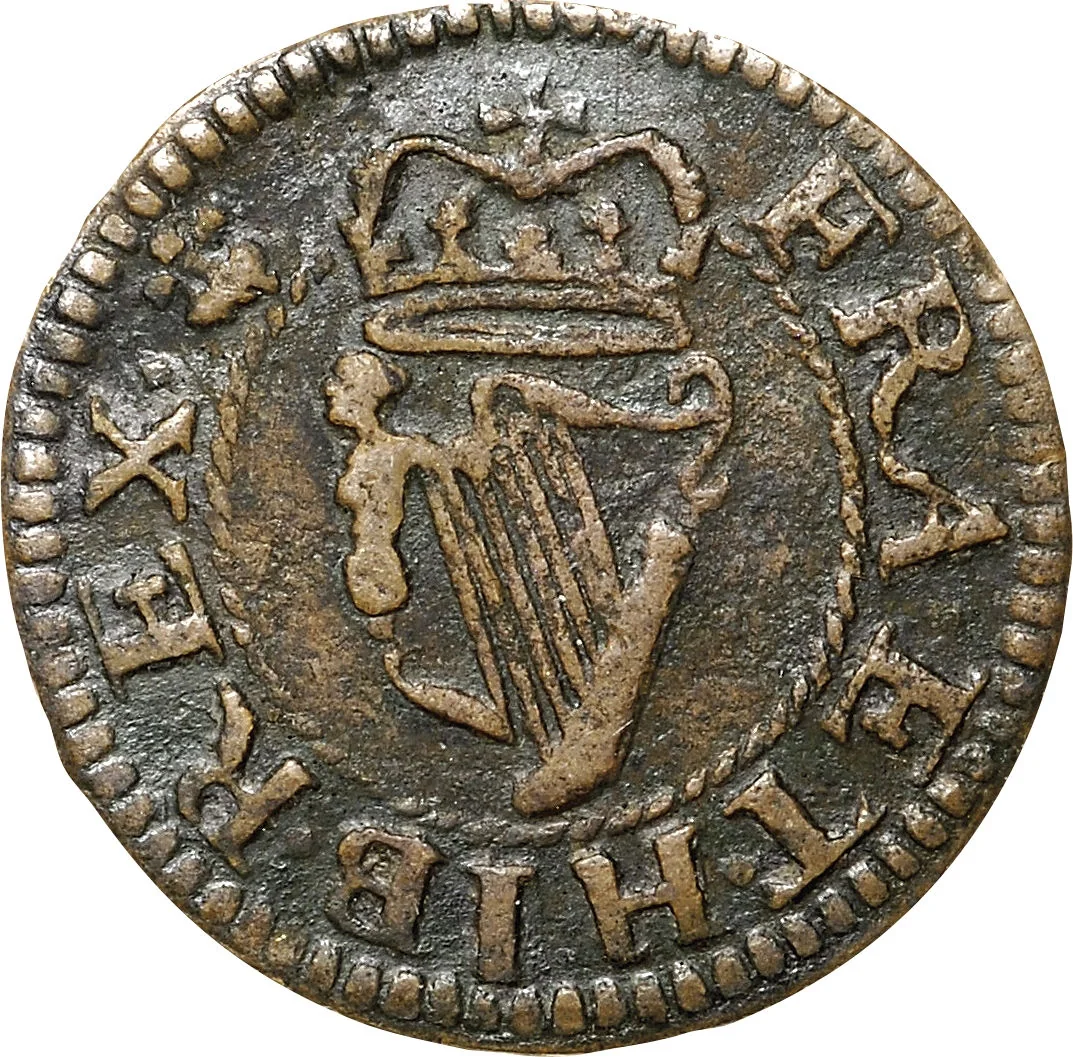
1 Farthing – Ireland
Ireland
Context
Material
Diameter: 17 mm
Weight: 1.5 g
Shape: Irregular round
Composition: Copper
Magnetic: No
Technique: Hammered
Alignment: Medal alignment
flip
References
KM: #Click to copy to clipboard85
Numista: #63837
Obverse
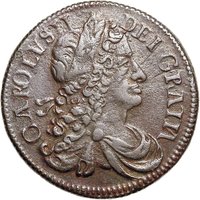
Inscription:
CAROLVS · II · D · C · M · B ·
Script: Latin
Reverse
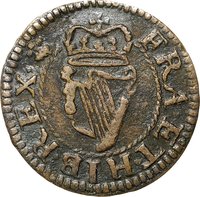
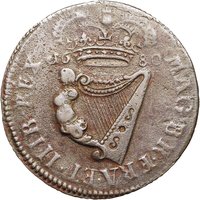
Inscription:
FRA ET HIB · REX ·
Script: Latin
Edge
Mintings
| Year | Mint Mark | Mintage | Quality | Collection |
|---|---|---|---|---|
| — | — | — |
Historical background
In 1660, Ireland’s currency was in a state of significant disorder and debasement, a legacy of the turbulent Civil Wars and Cromwellian period. The primary circulating coins were the silver shillings and half-crowns of the Stuart monarchy, but these were heavily worn and clipped, reducing their intrinsic silver content and value. Furthermore, vast quantities of inferior foreign coins, particularly Spanish reales and Portuguese crusados, circulated at fluctuating and often arbitrary rates, creating a chaotic and unreliable monetary environment for daily trade.
This instability was compounded by the official over-valuation of certain coins. To facilitate trade with England and the continent, Irish monetary values were pegged to English sterling, but the Irish pound was valued at a discount—approximately 13 Irish shillings to the English pound. This official "crying up" of coin values, intended to keep specie in the kingdom, often failed in practice. It encouraged the export of full-weight silver to England, where it was worth more by weight, leaving Ireland with a diminished and degraded coinage, a process known as Gresham’s Law where "bad money drives out good."
The restoration of Charles II in 1660 brought hope for monetary reform, but immediate change was slow. The government recognised the problem, understanding that a sound currency was essential for economic recovery and tax revenue. However, the pressing demands of re-establishing royal authority and addressing complex land settlements meant that a comprehensive recoinage would not be achieved until the 1680s. Thus, in 1660, Ireland continued to operate with a compromised and heterogeneous currency, which stifled commerce and remained a persistent challenge for the newly restored monarchy.
This instability was compounded by the official over-valuation of certain coins. To facilitate trade with England and the continent, Irish monetary values were pegged to English sterling, but the Irish pound was valued at a discount—approximately 13 Irish shillings to the English pound. This official "crying up" of coin values, intended to keep specie in the kingdom, often failed in practice. It encouraged the export of full-weight silver to England, where it was worth more by weight, leaving Ireland with a diminished and degraded coinage, a process known as Gresham’s Law where "bad money drives out good."
The restoration of Charles II in 1660 brought hope for monetary reform, but immediate change was slow. The government recognised the problem, understanding that a sound currency was essential for economic recovery and tax revenue. However, the pressing demands of re-establishing royal authority and addressing complex land settlements meant that a comprehensive recoinage would not be achieved until the 1680s. Thus, in 1660, Ireland continued to operate with a compromised and heterogeneous currency, which stifled commerce and remained a persistent challenge for the newly restored monarchy.
✨ Legendary