

10 stuivers – Netherlands East Indies
Add to wishlist
Indonesia
Context
Year: 1791
Country: Indonesia
Issuer: Netherlands East Indies
Period:
(1602—1800)
Currency:
(1726—1854)
Demonetized: Yes
Material
References
KM: #
Numista: #146204
Value
Bullion value: $11.97
Obverse
Description:
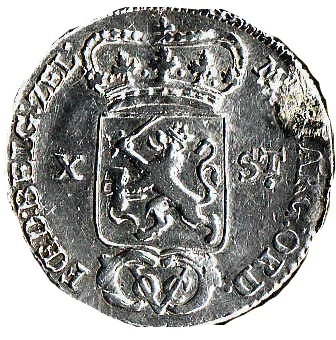
Crowned VOC coat of arms with flanking values.
Inscription:
MO:AR G:ORD:FOED:BELG:ZEL:
X ST.
VOC
X ST.
VOC
Script: Latin
Reverse
Description:
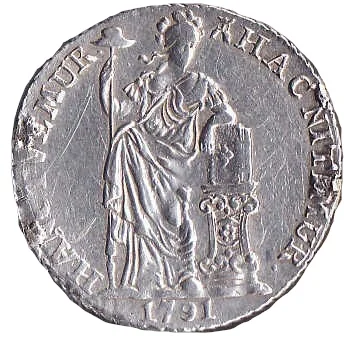
Armored figure leaning on a cross-topped book. Year below.
Inscription:
HAC NITIMVR
HANC TVEMVR
1791
HANC TVEMVR
1791
Script: Latin
Edge
Reeded
Mintings
| Year | Mint Mark | Mintage | Quality | Collection |
|---|---|---|---|---|
| 1791 | — | — |
Historical background
In 1791, the currency system of the Netherlands East Indies (NEI) was a complex and problematic bazaar of competing monies, fundamentally strained by a chronic shortage of official coinage. The Dutch East India Company (VOC), which governed the archipelago, officially valued transactions in the Dutch guilder (florin). However, the physical supply of these coins from Europe was insufficient for the vast colonial economy. This scarcity was exacerbated by the VOC's own mercantilist policies, which demanded the repatriation of silver and gold to the Netherlands, systematically draining the colony of sound money.
To fill the void, a multitude of foreign coins circulated as de facto legal tender, creating a chaotic exchange environment. Spanish American silver pesos (often called "pieces of eight") were the most important and trusted large-denomination currency, alongside Japanese koban gold coins, Indian rupees, and various local imitations. The VOC attempted to control this system by periodically issuing official valuation placards, fixing exchange rates for these foreign coins against the imaginary guilder account. However, these rates often failed to reflect market realities, leading to widespread hoarding of undervalued coins, smuggling, and arbitrage that further destabilized the money supply.
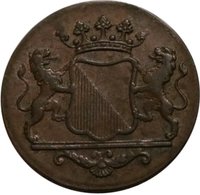
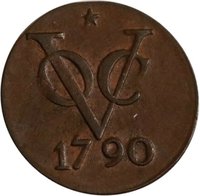
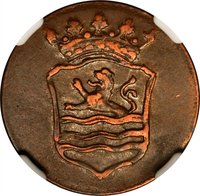
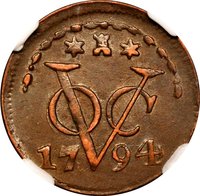
This monetary instability directly served the interests of the financially troubled VOC, which was by 1791 only eight years from bankruptcy and dissolution. The Company profited from seigniorage by minting inferior-quality lower-denomination coins, like copper doits, for local use. More critically, the complex system forced merchants and planters to rely heavily on credit and bills of exchange issued by the VOC and private financiers, cementing the Company's control over commerce. Thus, the currency situation of 1791 was not merely an economic inconvenience but a deliberate instrument of a weakening colonial monopoly, one that would leave a legacy of monetary confusion for the Dutch state administration that followed.
To fill the void, a multitude of foreign coins circulated as de facto legal tender, creating a chaotic exchange environment. Spanish American silver pesos (often called "pieces of eight") were the most important and trusted large-denomination currency, alongside Japanese koban gold coins, Indian rupees, and various local imitations. The VOC attempted to control this system by periodically issuing official valuation placards, fixing exchange rates for these foreign coins against the imaginary guilder account. However, these rates often failed to reflect market realities, leading to widespread hoarding of undervalued coins, smuggling, and arbitrage that further destabilized the money supply.
This monetary instability directly served the interests of the financially troubled VOC, which was by 1791 only eight years from bankruptcy and dissolution. The Company profited from seigniorage by minting inferior-quality lower-denomination coins, like copper doits, for local use. More critically, the complex system forced merchants and planters to rely heavily on credit and bills of exchange issued by the VOC and private financiers, cementing the Company's control over commerce. Thus, the currency situation of 1791 was not merely an economic inconvenience but a deliberate instrument of a weakening colonial monopoly, one that would leave a legacy of monetary confusion for the Dutch state administration that followed.
✨ Legendary