

1 Duit – Netherlands East Indies
Indonesia
Context
Years: 1792–1794
Country: Indonesia 
Issuer: Netherlands East Indies
Period:
(1602—1800)
Currency:
(1726—1854)
Demonetized: Yes
Material
References
KM: #Click to copy to clipboard159
Numista: #11332
Obverse
Description:
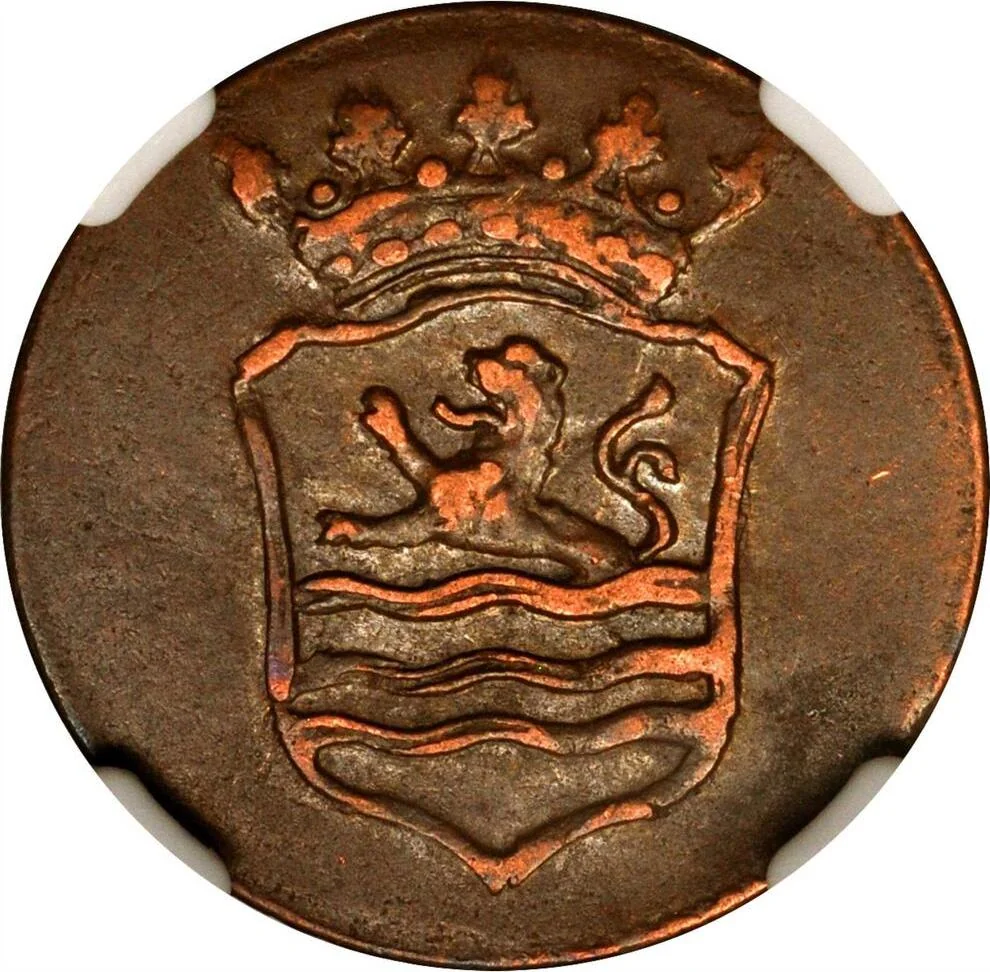
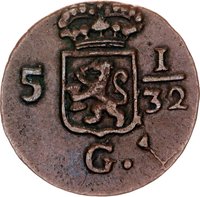
Zeeland lion crowned over waves.
Reverse
Description:
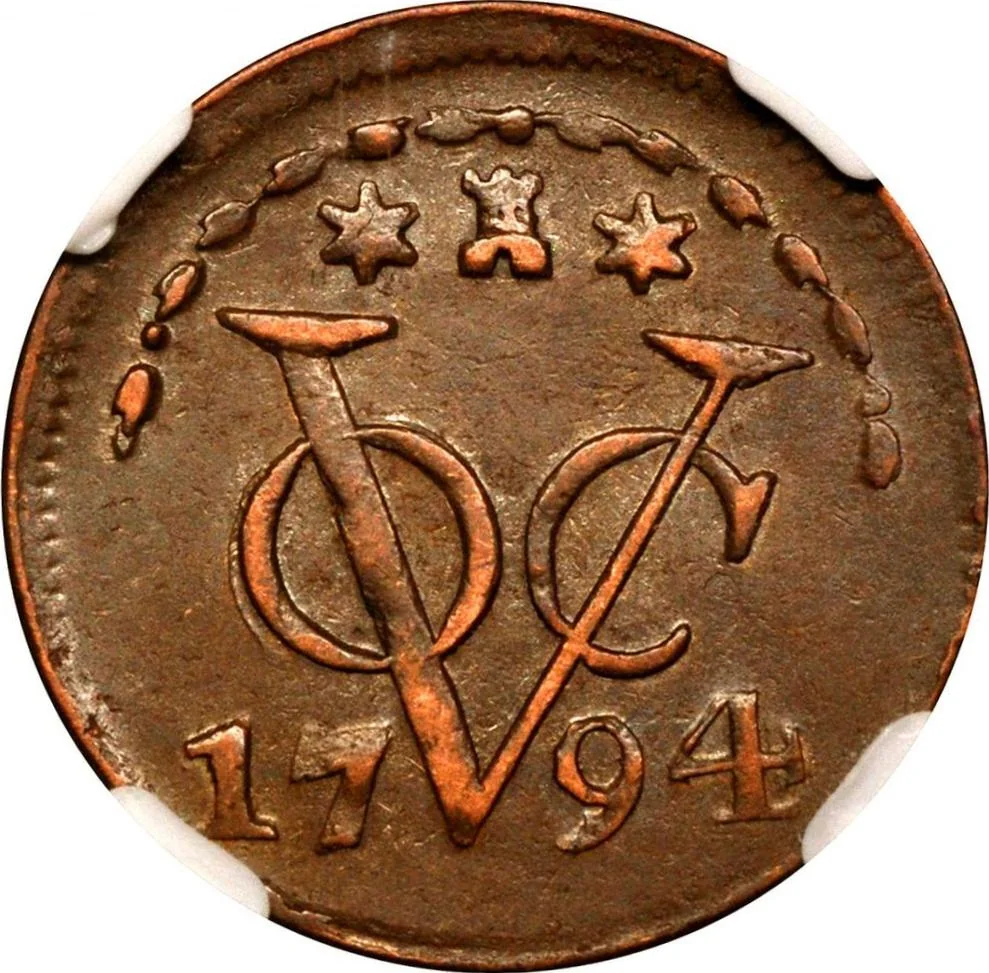
VOC monogram centered, privy mark (castle) above between stars under a leaf semicircle, date below.
Inscription:
VOC
1794
1794
Script: Latin
Edge
Mintings
| Year | Mint Mark | Mintage | Quality | Collection |
|---|---|---|---|---|
| 1792 | — | — | ||
| 1793 | — | — | ||
| 1794 | — | — |
Historical background
In 1792, the currency system of the Netherlands East Indies (NEI) was a complex and often chaotic amalgamation of official and unofficial monies, reflecting its status as the cornerstone of Dutch colonial wealth. The official currency was based on the Dutch guilder, but the chronic shortage of minted specie from Europe meant that the primary circulating coins were not Dutch but Spanish-American silver reales, particularly the popular 8-real piece (the Spanish dollar or "piece of eight"). These were supplemented by a variety of other foreign coins, including Indian rupees and Japanese koban, all trading at fluctuating, government-mandated rates. The Batavian government attempted to control this system by regularly issuing valuation decrees (plakkaten) that set exchange rates, but these often struggled to keep pace with market realities.
Alongside this patchwork of physical coinage, a vast and unstable system of paper credit operated. The most critical instrument was the assignatie, a form of government promissory note first issued in 1782 to cover the colony's soaring deficits, especially from costly military campaigns on Java. By 1792, these notes were severely depreciated due to over-issuance and a lack of public confidence, trading at a significant discount to their face value in silver. This created a two-tiered economy where transactions in scarce silver commanded a premium, while daily business was conducted in a confusing mix of under-valued paper and assorted foreign coins.
This fragile monetary environment existed under the shadow of impending geopolitical upheaval. In Europe, the French Revolutionary Wars were intensifying, and by 1795, the French would invade the Dutch Republic, establishing the Batavian Republic as a client state. This imminent disruption to the mother country would soon sever vital economic and administrative links, exacerbating the NEI's currency crises. Therefore, the situation in 1792 was one of precarious tension, with a colonial administration trying to manage an inherently unstable multi-currency system and a failing paper credit scheme, all while the foundations of Dutch authority were about to be profoundly shaken.
Alongside this patchwork of physical coinage, a vast and unstable system of paper credit operated. The most critical instrument was the assignatie, a form of government promissory note first issued in 1782 to cover the colony's soaring deficits, especially from costly military campaigns on Java. By 1792, these notes were severely depreciated due to over-issuance and a lack of public confidence, trading at a significant discount to their face value in silver. This created a two-tiered economy where transactions in scarce silver commanded a premium, while daily business was conducted in a confusing mix of under-valued paper and assorted foreign coins.
This fragile monetary environment existed under the shadow of impending geopolitical upheaval. In Europe, the French Revolutionary Wars were intensifying, and by 1795, the French would invade the Dutch Republic, establishing the Batavian Republic as a client state. This imminent disruption to the mother country would soon sever vital economic and administrative links, exacerbating the NEI's currency crises. Therefore, the situation in 1792 was one of precarious tension, with a colonial administration trying to manage an inherently unstable multi-currency system and a failing paper credit scheme, all while the foundations of Dutch authority were about to be profoundly shaken.
🌟 Uncommon