

2 duits – Netherlands East Indies
Add to wishlist
Indonesia
Context
Year: 1790
Country: Indonesia
Issuer: Netherlands East Indies
Period:
(1602—1800)
Currency:
(1726—1854)
Demonetized: Yes
Material
References
KM: #
Numista: #6603
Obverse
Description:
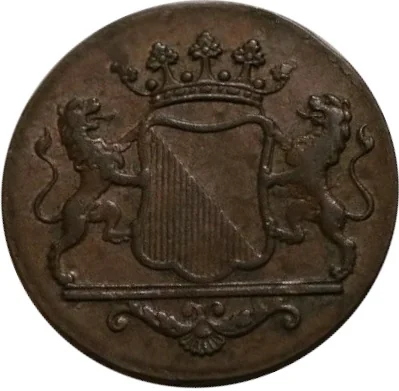
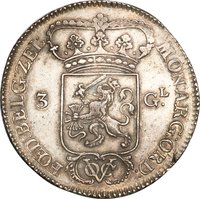
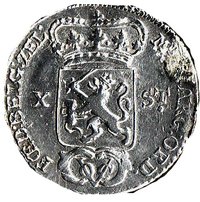
Shield with lion supporters, crown above, exergue below: the coat of arms of Utrecht.
Reverse
Edge
Plain
Categories
| Symbols> Coat of Arms |
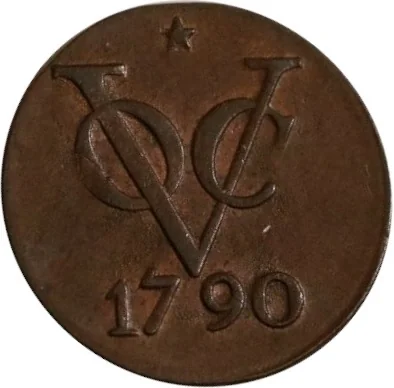
| Symbols> Monogram |
Mints
| Name | Mark |
|---|---|
| Royal Dutch Mint | — |
Mintings
| Year | Mint Mark | Mintage | Quality | Collection |
|---|---|---|---|---|
| 1790 | — | — |
Historical background
In the late 18th century, the currency system of the Netherlands East Indies (NEI) was a complex and chaotic patchwork, reflecting both its colonial status and its position as a hub of Asian trade. The official currency, as decreed by the Dutch East India Company (VOC), was the Netherlands Indies gulden, but its circulation was limited and its value unstable. The VOC, nearing bankruptcy by 1790, struggled to maintain a sufficient supply of standardized coinage, leading to chronic shortages of acceptable money for daily transactions.
This vacuum was filled by a bewildering array of foreign coins, which circulated freely and formed the de facto monetary system. Spanish American silver dollars (pieces of eight), Dutch rijksdaalders, Japanese koban gold coins, and various Indian and Malay currencies all circulated simultaneously. Their value was not fixed but fluctuated based on weight, silver content, and local market demand, requiring moneychangers (wisselaars) at every port to assess and exchange them. This proliferation of foreign specie was a direct result of the VOC's own trade practices, as it used imported bullion and coins to pay for spices and other commodities.
Consequently, the monetary landscape was one of confusion and inefficiency, hampering both local commerce and the VOC's own administration. The Company attempted to exert control by setting official exchange rates (agio) between these coins and the official gulden, but these rates often conflicted with market realities, leading to arbitrage and further instability. This dysfunctional system, a symptom of the VOC's broader financial and administrative decay, would persist until the British interregnum (1811-1816) and subsequent Dutch colonial reforms began to impose a more uniform currency.
This vacuum was filled by a bewildering array of foreign coins, which circulated freely and formed the de facto monetary system. Spanish American silver dollars (pieces of eight), Dutch rijksdaalders, Japanese koban gold coins, and various Indian and Malay currencies all circulated simultaneously. Their value was not fixed but fluctuated based on weight, silver content, and local market demand, requiring moneychangers (wisselaars) at every port to assess and exchange them. This proliferation of foreign specie was a direct result of the VOC's own trade practices, as it used imported bullion and coins to pay for spices and other commodities.
Consequently, the monetary landscape was one of confusion and inefficiency, hampering both local commerce and the VOC's own administration. The Company attempted to exert control by setting official exchange rates (agio) between these coins and the official gulden, but these rates often conflicted with market realities, leading to arbitrage and further instability. This dysfunctional system, a symptom of the VOC's broader financial and administrative decay, would persist until the British interregnum (1811-1816) and subsequent Dutch colonial reforms began to impose a more uniform currency.
🌱 Fairly Common