

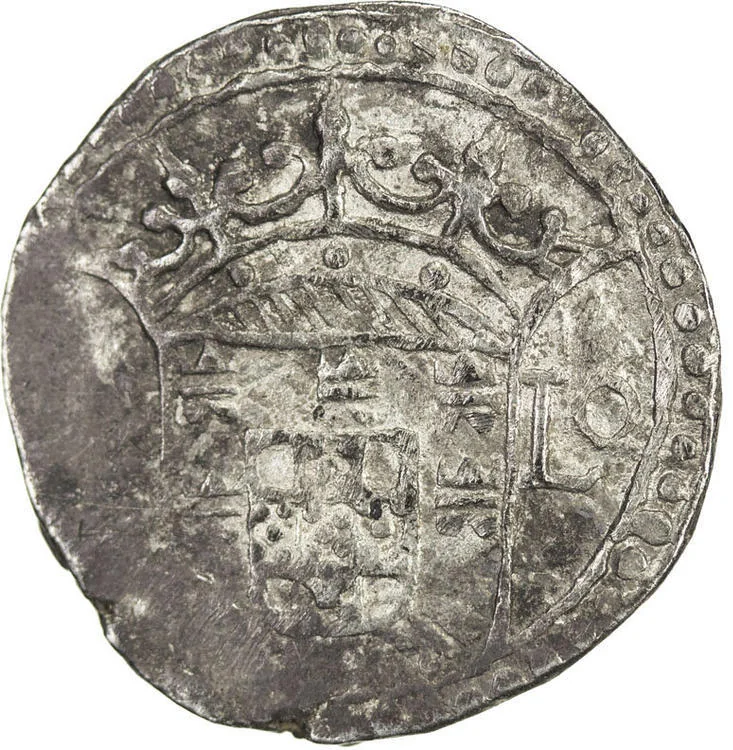
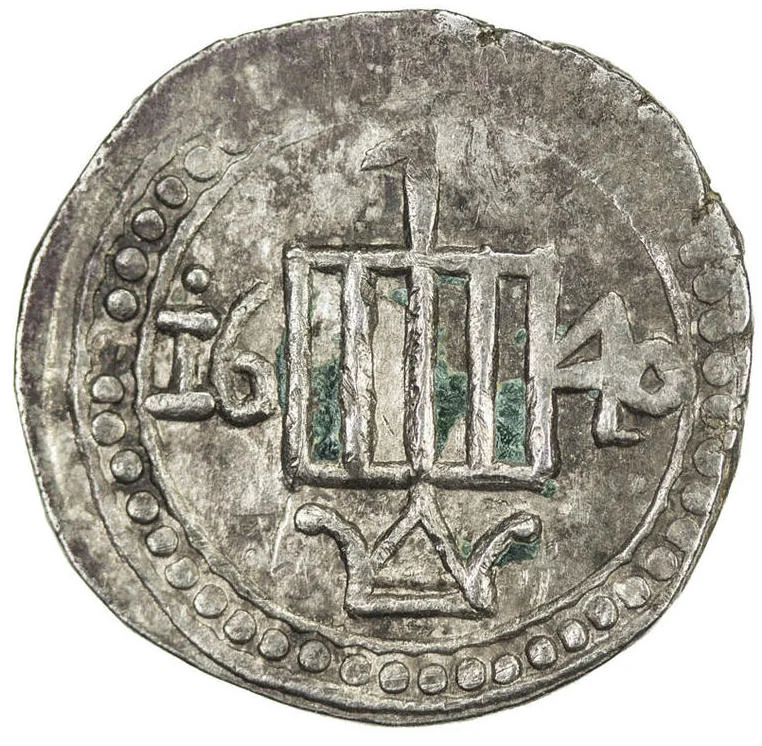
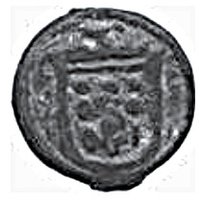
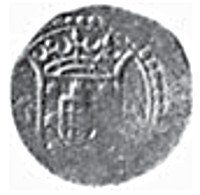
Obverse
Description:
Heraldic emblem
Inscription:
C Lo
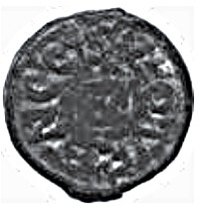
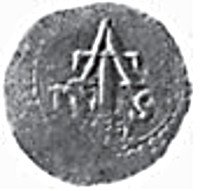
Reverse
Description:
Football
Inscription:
16 40
Edge
Plain
Mintings
| Year | Mint Mark | Mintage | Quality | Collection |
|---|---|---|---|---|
| 1640 | — | — | ||
| — | — | — | ||
| 1631 | — | — |
Historical background
In 1621, the island of Ceylon (modern Sri Lanka) was a focal point of intense economic and political rivalry, primarily between the Portuguese, who controlled much of the coastal lowlands, and the Kingdom of Kandy, which held the mountainous interior. The Portuguese administration, centered in Colombo, sought to impose its economic will by officially promoting a currency system based on Portuguese tangas (silver coins) and reis. However, their control was contested and uneven, leading to a complex monetary environment where various older forms of value persisted alongside European coinage.
The actual currency situation on the ground was one of fragmentation and hybridity. While Portuguese coins circulated in ports and territories under their direct control, the traditional Sinhalese economy still relied heavily on older systems. These included kahapanas (old local coins), commodity money like rice and cloth, and most notably, cauries (cowrie shells), which remained a vital medium for small-scale and inland trade, especially in the Kandyan territories. This created a dual economy: European coin for state taxes and long-distance trade, and indigenous forms for local markets and tribute.
This monetary disarray was exacerbated by the ongoing warfare, which disrupted trade routes and economic stability. The Kingdom of Kandy, resisting Portuguese domination, often obstructed the flow of goods and currency between the coast and the interior. Consequently, the value and acceptance of any currency in 1621 were highly localized and unstable, reflecting the island's deeper political fracture. The currency situation was less a unified system and more a patchwork of competing mediums of exchange, symbolizing the struggle for sovereignty over the island itself.
The actual currency situation on the ground was one of fragmentation and hybridity. While Portuguese coins circulated in ports and territories under their direct control, the traditional Sinhalese economy still relied heavily on older systems. These included kahapanas (old local coins), commodity money like rice and cloth, and most notably, cauries (cowrie shells), which remained a vital medium for small-scale and inland trade, especially in the Kandyan territories. This created a dual economy: European coin for state taxes and long-distance trade, and indigenous forms for local markets and tribute.
This monetary disarray was exacerbated by the ongoing warfare, which disrupted trade routes and economic stability. The Kingdom of Kandy, resisting Portuguese domination, often obstructed the flow of goods and currency between the coast and the interior. Consequently, the value and acceptance of any currency in 1621 were highly localized and unstable, reflecting the island's deeper political fracture. The currency situation was less a unified system and more a patchwork of competing mediums of exchange, symbolizing the struggle for sovereignty over the island itself.


✨ Legendary