

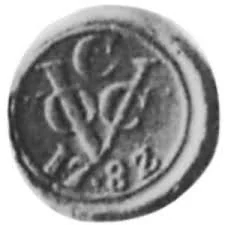
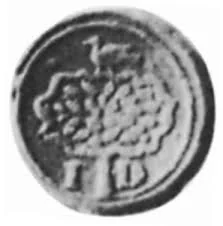
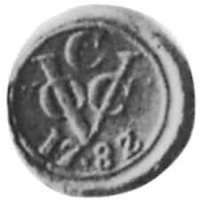
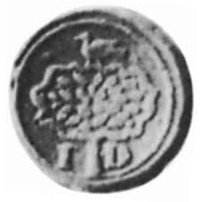
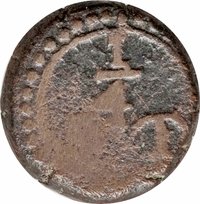
Obverse
Reverse
Edge
Plain
Mintings
| Year | Mint Mark | Mintage | Quality | Collection |
|---|---|---|---|---|
| 1782 | — | — | ||
| 1785 | — | — | ||
| 1786 | — | — |
Historical background
In 1782, Ceylon (modern Sri Lanka) was a contested colonial possession, a factor that fundamentally shaped its currency situation. The island was nominally under the control of the Dutch East India Company (VOC), which administered the lucrative coastal provinces, while the Kingdom of Kandy held the interior highlands. However, this year fell within the Fourth Anglo-Dutch War (1780-1784), and the British had successfully captured the major Dutch strongholds, including Trincomalee in 1782. This military upheaval created monetary instability, as the occupying British forces and the retreating Dutch administration vied for economic control, disrupting established trade and currency systems.
The circulating medium was a complex and often chaotic mixture of physical currencies. The VOC operated on a monometallic silver standard, with the Dutch rijksdaalder and its fractional coins being official. However, in practice, a wide variety of foreign silver and gold coins circulated, including Spanish American dollars (pieces of eight), Indian pagodas, and fanams. The VOC also issued low-value copper doits for local transactions. A critical problem was the chronic shortage of official small-change coinage, leading to the widespread practice of cutting larger silver coins into fragments to make change. This fragmentation, along with the circulation of worn and clipped coins, made transactions cumbersome and fostered uncertainty.
Furthermore, the VOC's financial health was in severe decline, and its paper money—credit notes issued in Batavia—faced deep distrust. The war with Britain severed supply lines and further strained the Company's ability to manage its finances. In this climate of political uncertainty and metallic currency scarcity, barter remained a significant method of exchange, especially in rural areas and for everyday goods. Therefore, the currency situation in 1782 Ceylon was defined by fragmentation, scarcity, and the instability of wartime transition between two competing colonial powers.
The circulating medium was a complex and often chaotic mixture of physical currencies. The VOC operated on a monometallic silver standard, with the Dutch rijksdaalder and its fractional coins being official. However, in practice, a wide variety of foreign silver and gold coins circulated, including Spanish American dollars (pieces of eight), Indian pagodas, and fanams. The VOC also issued low-value copper doits for local transactions. A critical problem was the chronic shortage of official small-change coinage, leading to the widespread practice of cutting larger silver coins into fragments to make change. This fragmentation, along with the circulation of worn and clipped coins, made transactions cumbersome and fostered uncertainty.
Furthermore, the VOC's financial health was in severe decline, and its paper money—credit notes issued in Batavia—faced deep distrust. The war with Britain severed supply lines and further strained the Company's ability to manage its finances. In this climate of political uncertainty and metallic currency scarcity, barter remained a significant method of exchange, especially in rural areas and for everyday goods. Therefore, the currency situation in 1782 Ceylon was defined by fragmentation, scarcity, and the instability of wartime transition between two competing colonial powers.
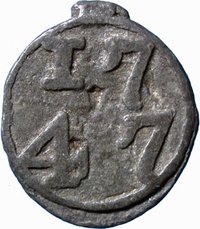
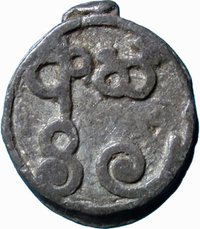
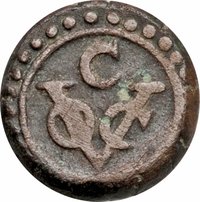
✨ Legendary