

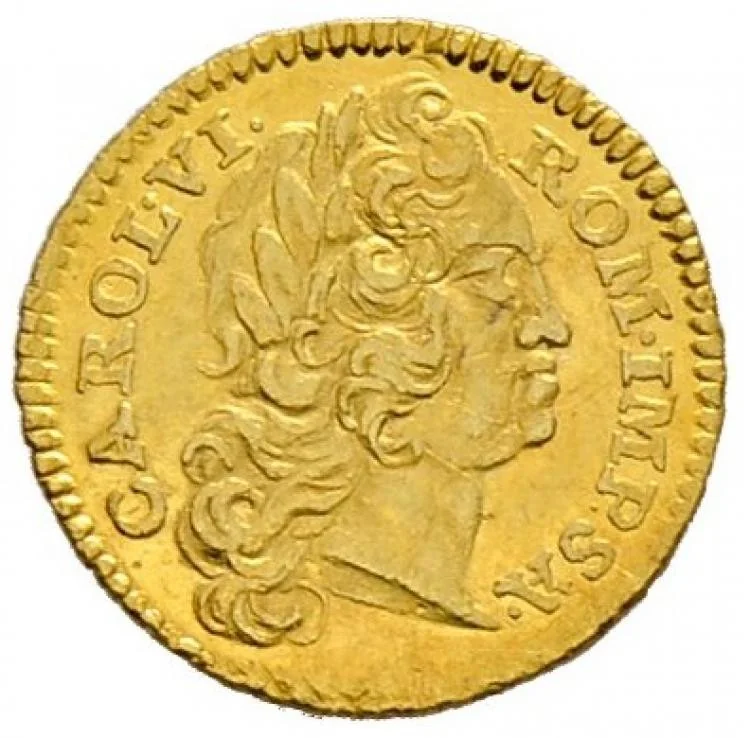
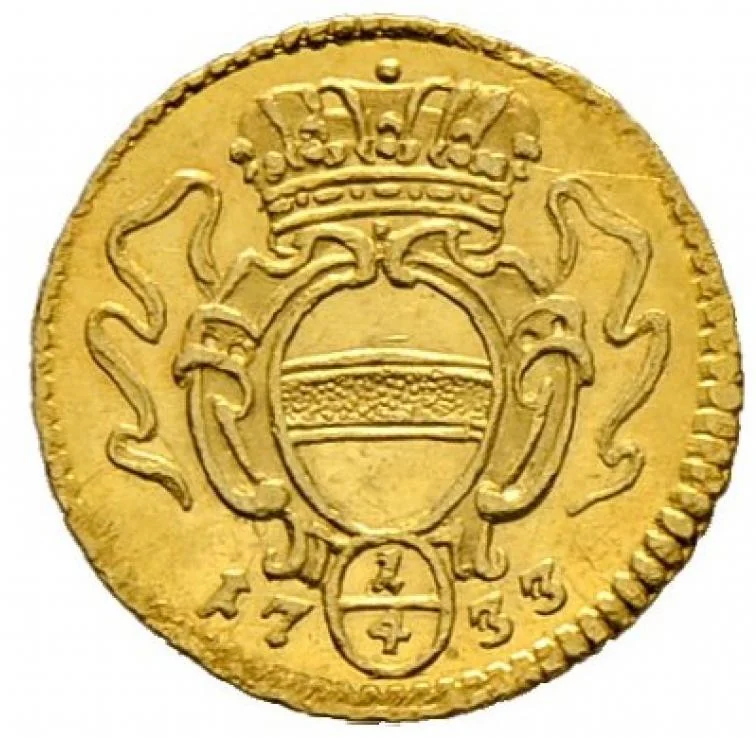
¼ ducat – Austrian Empire
Add to wishlist
Austria
Context
Year: 1733
Country: Austria
Issuer: Austrian Empire
Ruler: Charles VI
Currency:
(1520—1754)
Demonetized: Yes
Material
References
KM: #
Numista: #140851
Value
Bullion value: $129.28
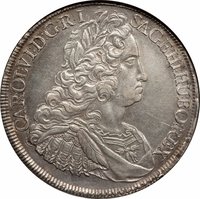
Obverse
Description:
Right-facing portrait, legend begins at 8 o'clock.
Inscription:
CAROL VI // ROM IMP S A
Script: Latin
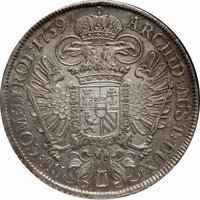
Reverse
Edge
Mints
| Name | Mark |
|---|---|
| Münze Österreich | — |
Mintings
| Year | Mint Mark | Mintage | Quality | Collection |
|---|---|---|---|---|
| 1733 | — | — |
Historical background
In 1733, the currency situation within the Habsburg-ruled Austrian Empire was complex and strained, a legacy of decades of near-continuous warfare. The state's finances were heavily burdened by the costs of the War of the Spanish Succession (1701-1714) and the recent War of the Polish Succession (1733-1735), in which the Empire was actively engaged. To meet these colossal expenses, the government frequently resorted to debasing the coinage—reducing the precious metal content in coins while maintaining their face value. This practice, particularly with the ubiquitous silver thaler and smaller kreuzer, generated short-term revenue but eroded public trust and sparked inflation, as more coins of lower intrinsic value chased available goods.
The monetary landscape was further complicated by significant regional fragmentation. While the Habsburgs exerted central control in the Austrian and Bohemian crown lands, the Kingdom of Hungary maintained considerable autonomy, including its own minting traditions. Furthermore, within the German territories of the Empire, a plethora of regional currencies circulated alongside imperial coinage, creating a chaotic exchange environment. This lack of uniformity hindered trade and economic integration, as merchants and officials constantly had to navigate varying exchange rates and metal standards.
Despite these challenges, the period also saw early attempts at stabilization. The government was aware of the detrimental effects of currency debasement on long-term economic health and state credit. Efforts were made to standardize and control minting output, though these were often undermined by fiscal emergencies. The situation in 1733 thus represents a tense equilibrium: an empire operating a fragile and inflationary monetary system out of wartime necessity, while laying the hesitant groundwork for the more comprehensive reforms that would characterize the later reign of Empress Maria Theresa.
The monetary landscape was further complicated by significant regional fragmentation. While the Habsburgs exerted central control in the Austrian and Bohemian crown lands, the Kingdom of Hungary maintained considerable autonomy, including its own minting traditions. Furthermore, within the German territories of the Empire, a plethora of regional currencies circulated alongside imperial coinage, creating a chaotic exchange environment. This lack of uniformity hindered trade and economic integration, as merchants and officials constantly had to navigate varying exchange rates and metal standards.
Despite these challenges, the period also saw early attempts at stabilization. The government was aware of the detrimental effects of currency debasement on long-term economic health and state credit. Efforts were made to standardize and control minting output, though these were often undermined by fiscal emergencies. The situation in 1733 thus represents a tense equilibrium: an empire operating a fragile and inflationary monetary system out of wartime necessity, while laying the hesitant groundwork for the more comprehensive reforms that would characterize the later reign of Empress Maria Theresa.
✨ Legendary