

1 Thaler – Austrian Empire
Austria
Context
Years: 1735–1740
Country: Austria 
Issuer: Austrian Empire
Ruler: Charles VI
Currency:
(1520—1754)
Demonetized: Yes
References
KM: #Click to copy to clipboard1579.3
Numista: #70563
Obverse
Description:
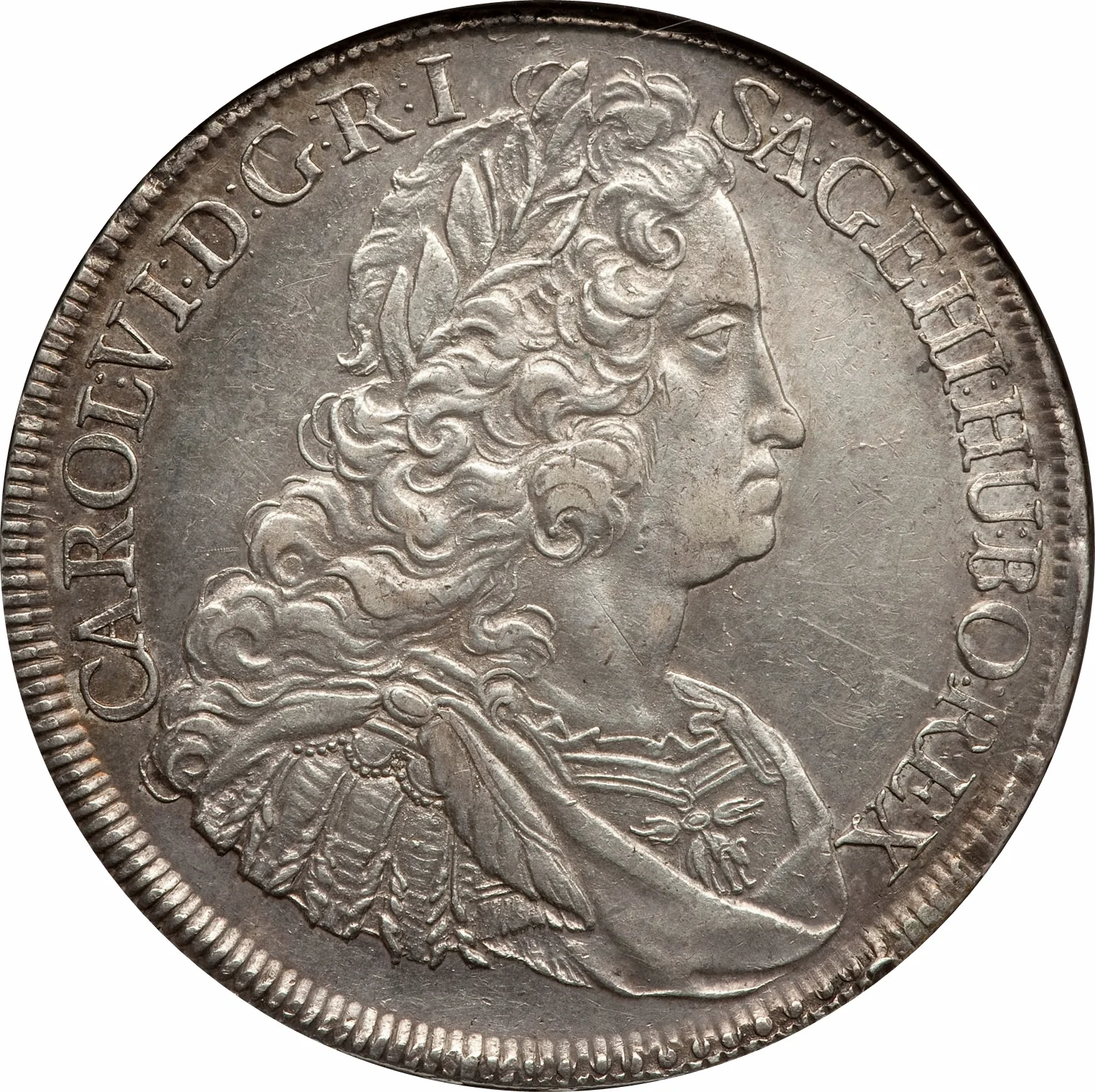
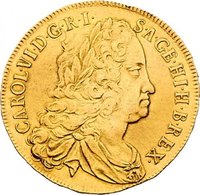
Older Charles VI bust (Type III). Simple shoulder brooch. Legend begins at 8 o'clock.
Inscription:
CAROL:VI:D:G:R:I: S:A:GE:HI:HU:BO:REX:
Script: Latin
Reverse
Description:
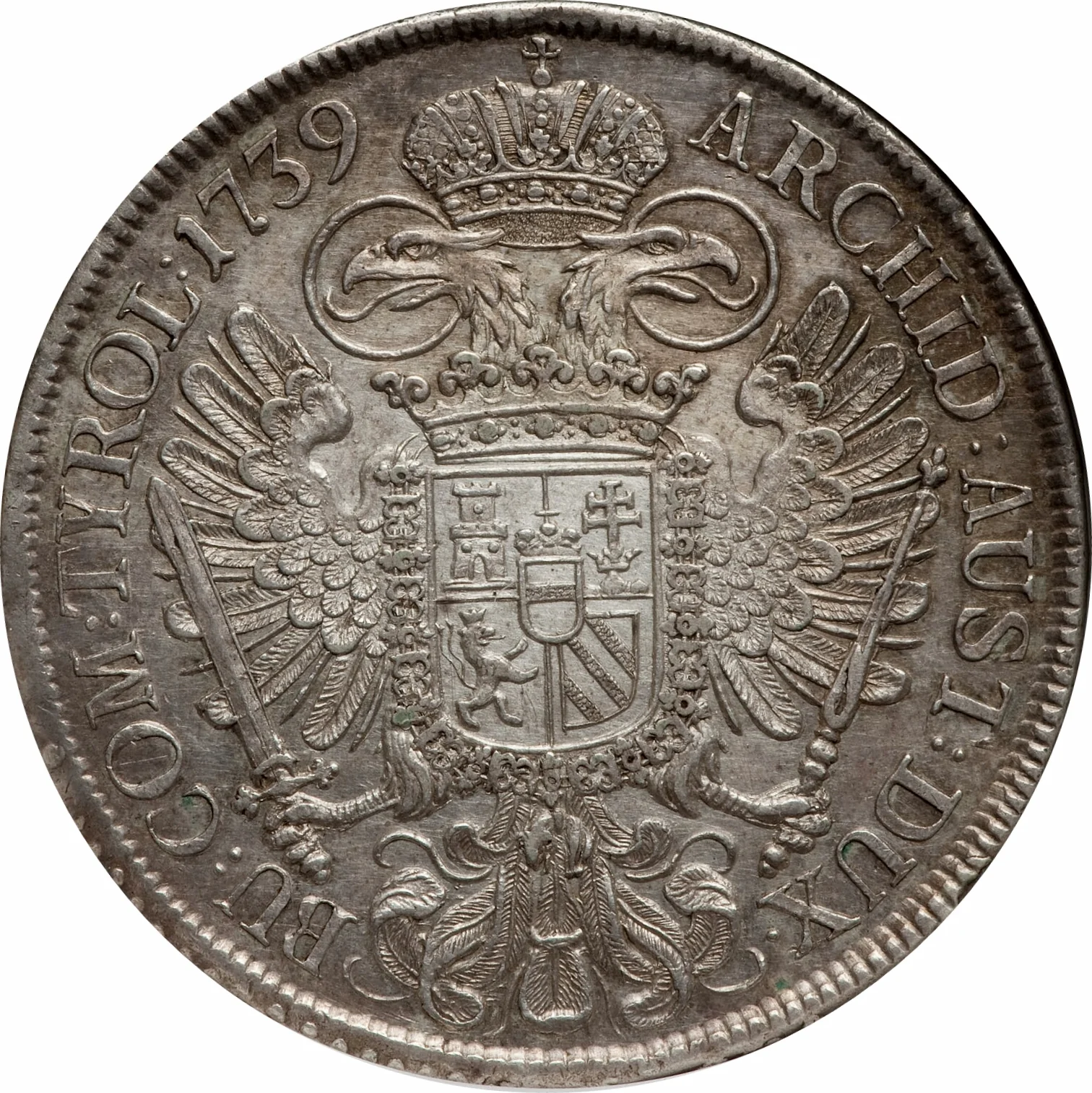
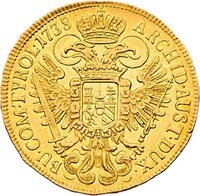
Imperial double-headed eagle with central shield of Austria, encircled by the arms of Castile, Hungary, Bohemia, and Burgundy, and surrounded by the Golden Fleece chain. Legend around, divided by tail feathers, with date at end.
Inscription:
ARCHID:AUST:DUX • BU:COM:TYROL:1739
Script: Latin
Edge
Mints
| Name | Mark |
|---|---|
| Münze Österreich | — |
Mintings
| Year | Mint Mark | Mintage | Quality | Collection |
|---|---|---|---|---|
| 1735 | — | — | ||
| 1736 | — | — | ||
| 1737 | — | — | ||
| 1738 | — | — | ||
| 1739 | — | — | ||
| 1740 | — | — |
Historical background
In 1735, the Habsburg Monarchy, often referred to as the Austrian Empire, operated under a complex and strained monetary system. The core unit was the Conventionsthaler, a large silver coin introduced in 1753 (so not yet in existence in 1735), but the landscape in the early 18th century was defined by the legacy of the Wiener Münzvertrag (Vienna Coinage Treaty) of 1703. This treaty established the Reichsthaler as a standard accounting unit across the German states, including Habsburg lands, with a defined silver content. However, the reality was a chaotic mix of circulating coins from various Habsburg territories (like Bohemia and Hungary), German states, and neighboring countries like the Netherlands, all valued against this notional standard.
The period was marked by chronic fiscal pressure due to the costs of the War of the Polish Succession (1733-1738) and ongoing military preparations against the Ottoman Empire. To meet these enormous expenses, the state frequently resorted to debasement—reducing the precious metal content in coins while maintaining their face value. This practice, often executed through the Münzämter (mints) in Vienna, Graz, and elsewhere, generated short-term revenue but led to severe inflation, a loss of public trust, and Gresham's Law in action, where "bad" debased money drove "good" full-weight money out of circulation or into hoards.
Consequently, the Austrian economy in 1735 suffered from monetary instability, with a wide discrepancy between the official Banco money used for large-scale trade and government finance and the depreciated Courant money used in everyday transactions. This dual system created confusion for merchants and hardship for the populace. The situation was a significant administrative and economic weakness, prompting ongoing but often ineffective discussions about reform, which would eventually lead to the more standardized Convention monetary system two decades later under Empress Maria Theresa.
The period was marked by chronic fiscal pressure due to the costs of the War of the Polish Succession (1733-1738) and ongoing military preparations against the Ottoman Empire. To meet these enormous expenses, the state frequently resorted to debasement—reducing the precious metal content in coins while maintaining their face value. This practice, often executed through the Münzämter (mints) in Vienna, Graz, and elsewhere, generated short-term revenue but led to severe inflation, a loss of public trust, and Gresham's Law in action, where "bad" debased money drove "good" full-weight money out of circulation or into hoards.
Consequently, the Austrian economy in 1735 suffered from monetary instability, with a wide discrepancy between the official Banco money used for large-scale trade and government finance and the depreciated Courant money used in everyday transactions. This dual system created confusion for merchants and hardship for the populace. The situation was a significant administrative and economic weakness, prompting ongoing but often ineffective discussions about reform, which would eventually lead to the more standardized Convention monetary system two decades later under Empress Maria Theresa.
✨ Legendary