

1 Ducat – Teutonic Order
Germany
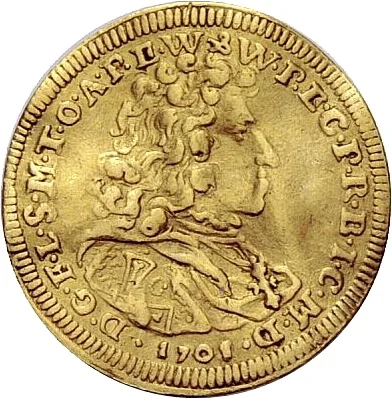
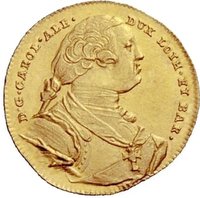
Obverse
Description:
Armored bust facing right.
Script: Latin
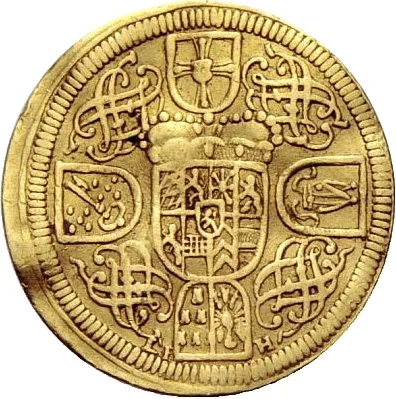
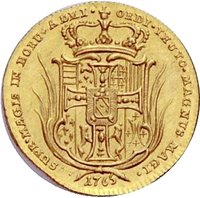
Reverse
Description:
Cross-shaped arms.
Edge
Mintings
| Year | Mint Mark | Mintage | Quality | Collection |
|---|---|---|---|---|
| 1699 | LPH | — | ||
| 1701 | — | — | ||
| 1701 | LPH | — |
Historical background
In 1699, the Teutonic Order State, a monastic territory centered in Bad Mergentheim after its secularization in Prussia in 1525, operated within the complex monetary landscape of the Holy Roman Empire. It no longer minted its own significant currency but relied on a circulation of hundreds of different coins from neighboring and imperial states. The most important of these were the large silver Reichsthaler and its fractional Gulden, which were used for larger transactions and state finance. However, daily commerce was conducted in a bewildering array of smaller coins like Kreuzers and Groschen from various German principalities, bishoprics, and free cities, leading to chronic confusion over exchange rates and intrinsic metal values.
This monetary fragmentation was a source of economic weakness and administrative headache for the Order. As a relatively small territory, it lacked the power to enforce a uniform currency, making trade cumbersome and tax collection inefficient. The constant inflow of debased or underweight coins from elsewhere posed the risk of driving good money out of circulation (Gresham's Law), further destabilizing local commerce. The Order's finances, dependent on its scattered Komtureien (bailiwicks) across Germany, were thus vulnerable to the fluctuating quality and value of the myriad coins in which its revenues were paid.
Consequently, the Teutonic Order's monetary policy in this period was largely reactive and defensive. Its officials focused on regulating and assessing the acceptable rates for the most common foreign coins within its borders, publishing periodic Münztarife (currency valuation lists) to provide a legal standard. The situation underscored the Order's diminished political stature, transforming it from a major Baltic power into a minor German principality struggling with the same monetary disunity that plagued the entire Empire until the Napoleonic reforms a century later.
This monetary fragmentation was a source of economic weakness and administrative headache for the Order. As a relatively small territory, it lacked the power to enforce a uniform currency, making trade cumbersome and tax collection inefficient. The constant inflow of debased or underweight coins from elsewhere posed the risk of driving good money out of circulation (Gresham's Law), further destabilizing local commerce. The Order's finances, dependent on its scattered Komtureien (bailiwicks) across Germany, were thus vulnerable to the fluctuating quality and value of the myriad coins in which its revenues were paid.
Consequently, the Teutonic Order's monetary policy in this period was largely reactive and defensive. Its officials focused on regulating and assessing the acceptable rates for the most common foreign coins within its borders, publishing periodic Münztarife (currency valuation lists) to provide a legal standard. The situation underscored the Order's diminished political stature, transforming it from a major Baltic power into a minor German principality struggling with the same monetary disunity that plagued the entire Empire until the Napoleonic reforms a century later.
✨ Legendary