

3 Pfennigs – Teutonic Order
Germany
Context

Material
References
KM: #Click to copy to clipboard123
Numista: #139151
Obverse
Description:
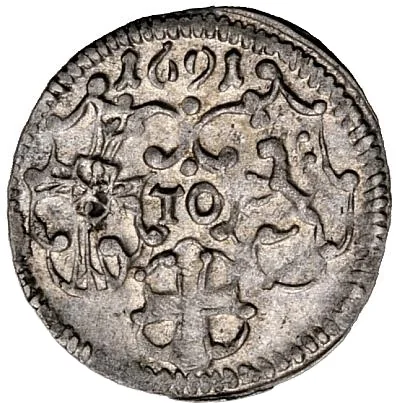
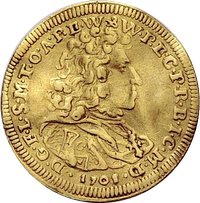
Three shields, two over one, central TO, date above.
Script: Latin
Reverse
Description:
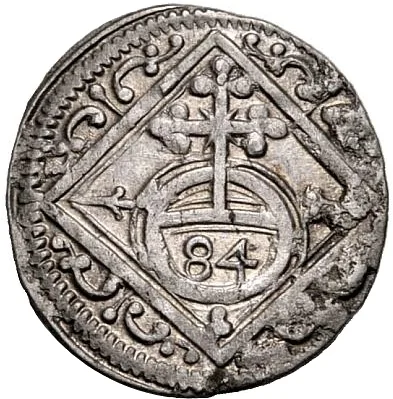
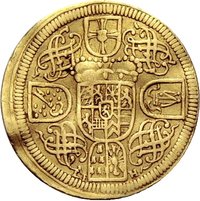
Imperial orb with 84 rhombus ornaments.
Script: Latin
Edge
Mintings
| Year | Mint Mark | Mintage | Quality | Collection |
|---|---|---|---|---|
| 1689 | — | — | ||
| 1690 | — | — | ||
| 1690 | B | — | ||
| 1691 | — | — | ||
| 1692 | — | — |
Historical background
In 1689, the Teutonic Order State, a rump territory centered on the Bishopric of Warmia and the Duchy of Prussia (held as a Polish fief), operated within a complex and fragmented monetary landscape. It no longer minted its own significant currency, having lost its economic and political zenith centuries prior. Instead, the region was awash with a multitude of foreign coins, a situation typical of the Polish-Lithuanian Commonwealth, of which it was a peripheral part. The primary circulating coins included Polish złotys and groszes, Prussian schillings minted by the Hohenzollern Elector (who was also the Duke of Prussia), and a steady influx of thalers from the German states and the Dutch Republic. This created constant challenges for trade and taxation, as values had to be constantly calculated based on metal content and fluctuating exchange rates.
The monetary situation was further complicated by the ongoing Great Turkish War (1683-1699), which had significant economic repercussions across Central Europe. While the war did not directly ravage Prussian lands, it strained the Polish Commonwealth's finances and disrupted broader trade networks. The demand for silver to fund military campaigns could lead to a scarcity of high-value coinage, while an influx of debased coinage from neighboring regions was a perpetual risk. For the Teutonic Order's administration, whose remaining wealth was tied to landed estates, this environment made reliable revenue collection and financial planning difficult.
Ultimately, the currency situation in 1689 reflected the Order's diminished sovereignty. Real monetary authority lay with the Polish crown, which governed the broader monetary union, and with the rising Hohenzollern dynasty, which controlled the mint in Königsberg. The Teutonic Knights, by this late date, were a minor political entity managing local affairs amidst a turbulent sea of external currencies, their economic autonomy a distant memory of their medieval crusading past. This financial dependency underscored their impending obsolescence, which would culminate just over a decade later with the formal dissolution of the order's Prussian territory in 1701.
The monetary situation was further complicated by the ongoing Great Turkish War (1683-1699), which had significant economic repercussions across Central Europe. While the war did not directly ravage Prussian lands, it strained the Polish Commonwealth's finances and disrupted broader trade networks. The demand for silver to fund military campaigns could lead to a scarcity of high-value coinage, while an influx of debased coinage from neighboring regions was a perpetual risk. For the Teutonic Order's administration, whose remaining wealth was tied to landed estates, this environment made reliable revenue collection and financial planning difficult.
Ultimately, the currency situation in 1689 reflected the Order's diminished sovereignty. Real monetary authority lay with the Polish crown, which governed the broader monetary union, and with the rising Hohenzollern dynasty, which controlled the mint in Königsberg. The Teutonic Knights, by this late date, were a minor political entity managing local affairs amidst a turbulent sea of external currencies, their economic autonomy a distant memory of their medieval crusading past. This financial dependency underscored their impending obsolescence, which would culminate just over a decade later with the formal dissolution of the order's Prussian territory in 1701.
✨ Legendary