


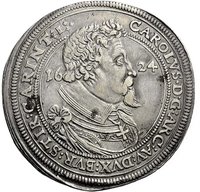
Obverse
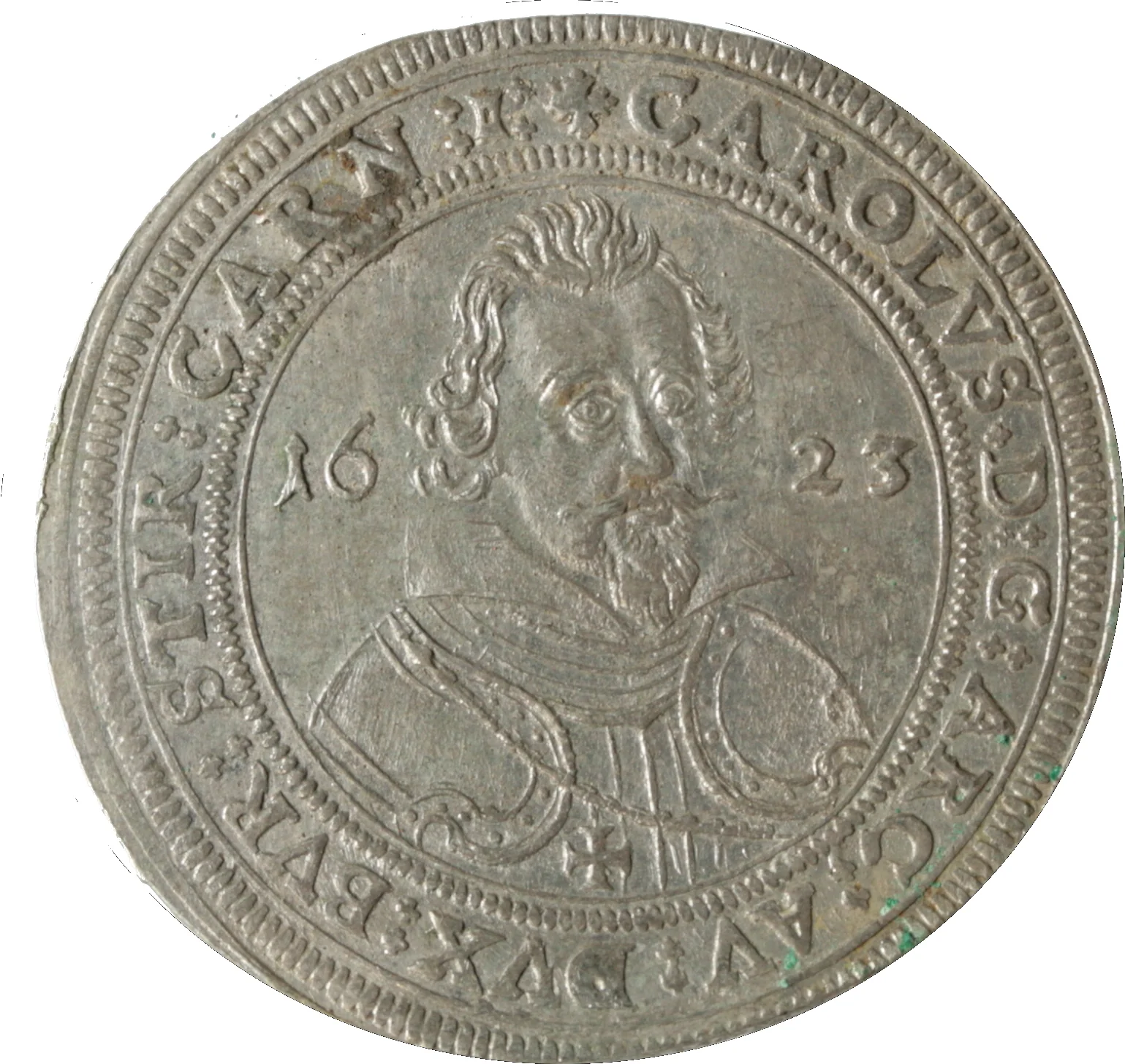
Description:
Armored bust divides date.
Inscription:
CAROLUS . D : G :ARC : AV : DUX : BUR : STIR : CARN :I:
Script: Latin
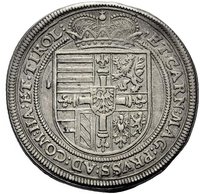
Reverse
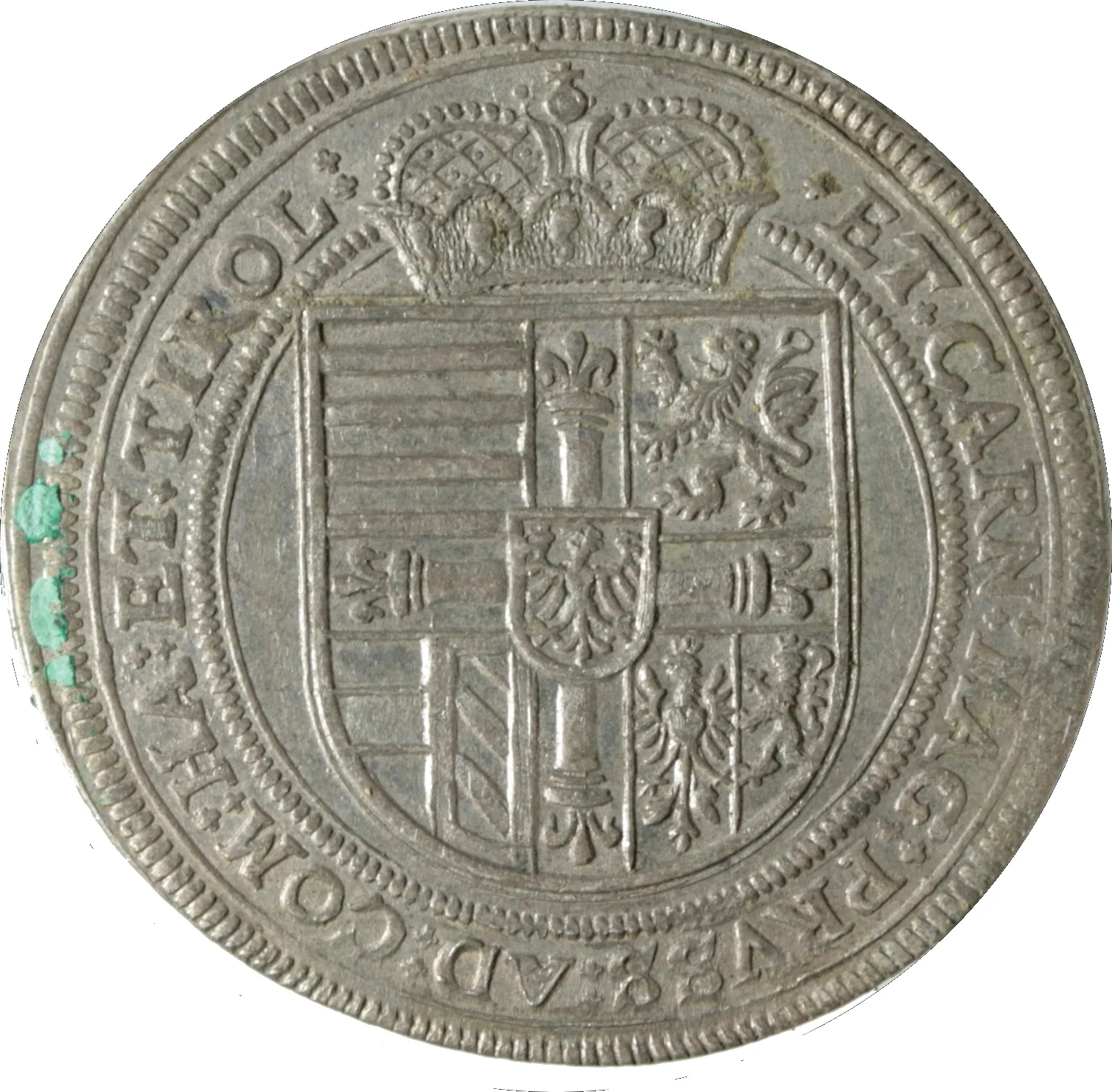
Description:
Crowned coat of arms.
Inscription:
ET . CARN : MAG : PRUSS : AD : COM : HA : ET . TIROL :
Script: Latin
Edge
Mintings
| Year | Mint Mark | Mintage | Quality | Collection |
|---|---|---|---|---|
| 1623 | — | — |
Historical background
In 1623, the Teutonic Order State, a monastic territory encompassing lands in the Holy Roman Empire, most notably in the regions of Franconia and along the Rhine, was grappling with the severe monetary instability sweeping Central Europe. This period, known as the Kipper- und Wipperzeit (approximately 1618–1623), was a crisis of coinage debasement triggered by the immense financial demands of the early stages of the Thirty Years' War. State mints, including those operated by the Order, were under pressure to generate revenue by reducing the precious metal content of coins while maintaining their face value, leading to rampant inflation and a collapse of public trust in currency.
The Order's administration, headquartered in Bad Mergentheim, faced a dual challenge: managing its own fiscal needs for defense and governance while navigating the chaotic monetary policies of neighboring princes and imperial cities. As "bad" debased coins flooded the market, "good" full-weight coins were hoarded or melted down, disrupting local economies within the Order's territories. This environment of competitive currency debasement made trade and tax collection unpredictable, threatening the economic foundations of the already decentralized and geographically scattered Teutonic lands.
By 1623, the crisis had become so destabilizing that imperial intervention was necessary. Emperor Ferdinand II, seeking to restore economic order, enacted the Münzrezess (Coinage Recess) of 1623. This decree aimed to end the Kipper- und Wipperzeit by standardizing coinage values and shutting down rogue mints. For the Teutonic Order, this meant aligning its monetary policy with imperial standards, a move that promised greater stability but also curtailed its independent ability to generate seigniorage revenue, forcing a renewed reliance on its landed estates and traditional incomes in a time of escalating conflict.
The Order's administration, headquartered in Bad Mergentheim, faced a dual challenge: managing its own fiscal needs for defense and governance while navigating the chaotic monetary policies of neighboring princes and imperial cities. As "bad" debased coins flooded the market, "good" full-weight coins were hoarded or melted down, disrupting local economies within the Order's territories. This environment of competitive currency debasement made trade and tax collection unpredictable, threatening the economic foundations of the already decentralized and geographically scattered Teutonic lands.
By 1623, the crisis had become so destabilizing that imperial intervention was necessary. Emperor Ferdinand II, seeking to restore economic order, enacted the Münzrezess (Coinage Recess) of 1623. This decree aimed to end the Kipper- und Wipperzeit by standardizing coinage values and shutting down rogue mints. For the Teutonic Order, this meant aligning its monetary policy with imperial standards, a move that promised greater stability but also curtailed its independent ability to generate seigniorage revenue, forcing a renewed reliance on its landed estates and traditional incomes in a time of escalating conflict.
✨ Legendary