

3 Pfennigs – Teutonic Order
Germany

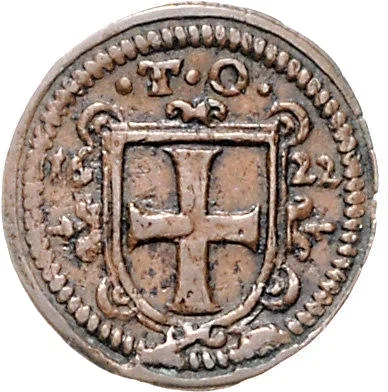
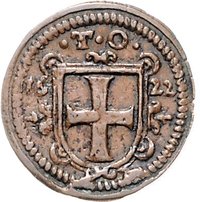
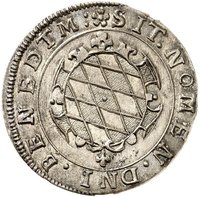
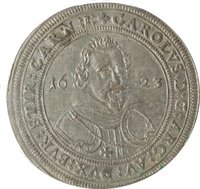
Obverse
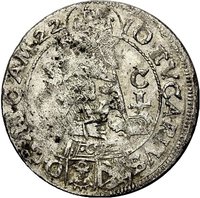
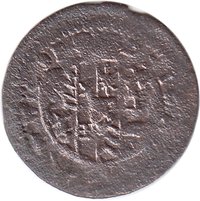
Description:
Order arms split date, T.O. top.
Script: Latin
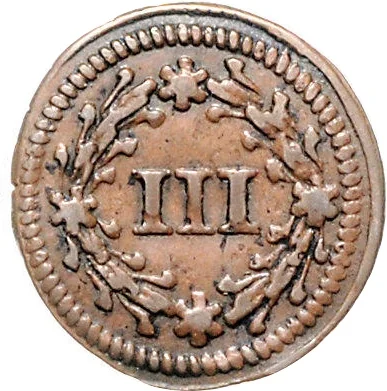
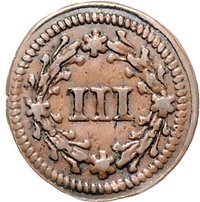
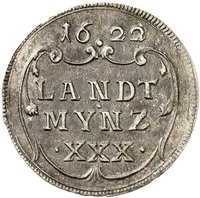
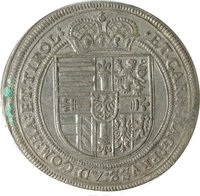
Reverse
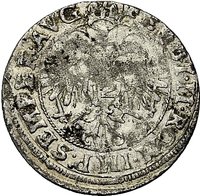
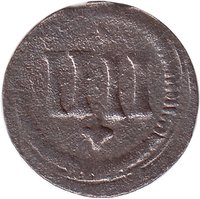
Description:
III wreathed.
Script: Latin
Edge
Mintings
| Year | Mint Mark | Mintage | Quality | Collection |
|---|---|---|---|---|
| 1622 | — | — |
Historical background
In 1622, the Teutonic Order State, a monastic territory in the Holy Roman Empire encompassing lands in Prussia and Livonia, faced severe monetary instability typical of the wider German "Kipper und Wipper" crisis. This period, named for the practice of "tipping" bad coins from scales and "wheezing" them away, was characterized by rampant currency debasement. Various German princes, including the Grand Masters of the Teutonic Order, engaged in minting vast quantities of lightweight, low-silver coins to finance their expenditures, particularly for maintaining military forces during the early stages of the Thirty Years' War.
The Order’s own mints, such as those in Riga and possibly in Prussian territories, actively participated in this debasement to generate seigniorage profit. This flooded the economy with unstable currency, leading to a collapse in public trust. Good, high-value coins were hoarded or melted down, while the debased coins circulated at rapidly depreciating values, causing rampant price inflation and economic hardship for the common population who found their purchasing power evaporating.
Ultimately, the situation in 1622 represented a failure of monetary sovereignty and contributed to the weakening of the Teutonic Order's economic foundations. The crisis eroded internal stability and underscored the Order's financial and political vulnerabilities as it navigated the pressures of a major European war. While efforts to stabilize the currency would follow in subsequent years, the 1622 episode highlighted the destructive short-termism of debasement as a fiscal tool.
The Order’s own mints, such as those in Riga and possibly in Prussian territories, actively participated in this debasement to generate seigniorage profit. This flooded the economy with unstable currency, leading to a collapse in public trust. Good, high-value coins were hoarded or melted down, while the debased coins circulated at rapidly depreciating values, causing rampant price inflation and economic hardship for the common population who found their purchasing power evaporating.
Ultimately, the situation in 1622 represented a failure of monetary sovereignty and contributed to the weakening of the Teutonic Order's economic foundations. The crisis eroded internal stability and underscored the Order's financial and political vulnerabilities as it navigated the pressures of a major European war. While efforts to stabilize the currency would follow in subsequent years, the 1622 episode highlighted the destructive short-termism of debasement as a fiscal tool.
Series: Kipper and Wipper

✨ Legendary