

¼ Thaler – Teutonic Order
Germany
Context
Material
References
KM: #Click to copy to clipboard16
Numista: #138916
Value
Bullion value: $20.69
Obverse
Description:
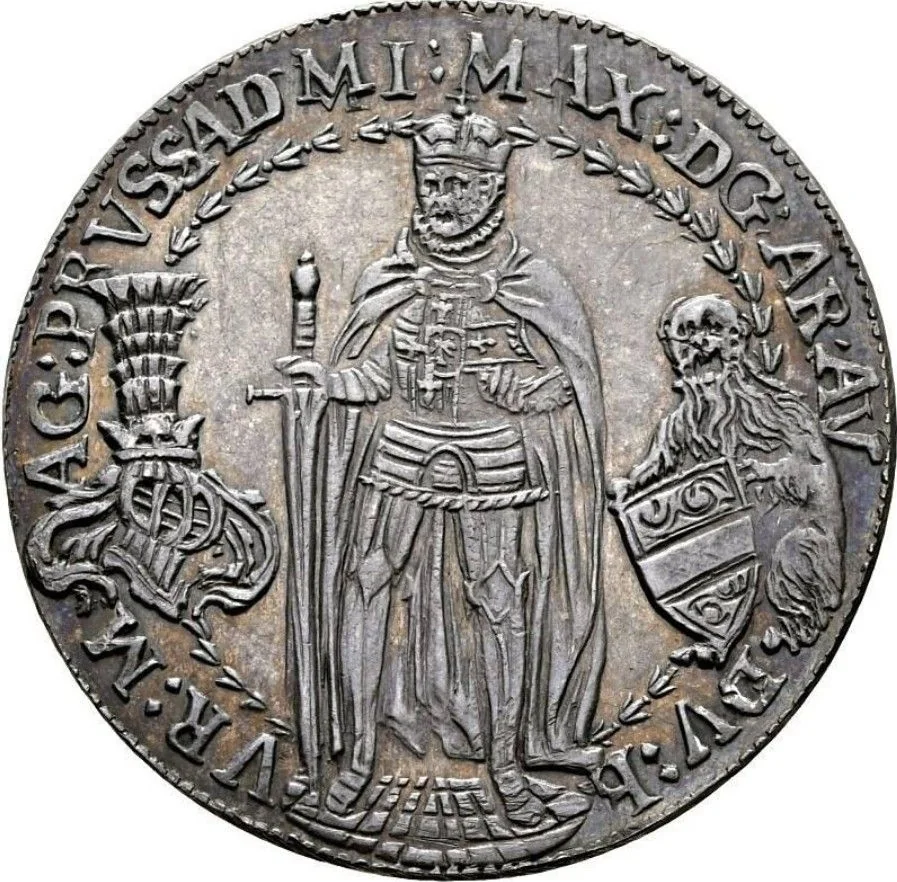
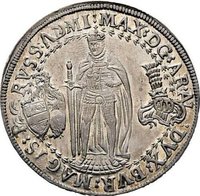
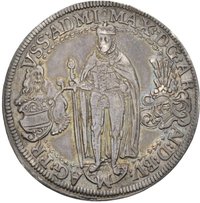
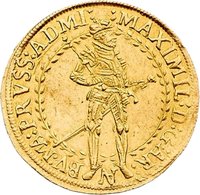
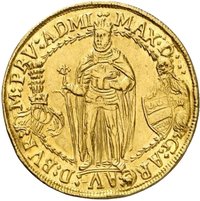
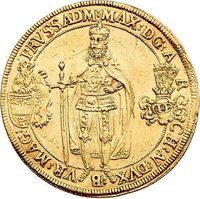
Portrait of Maximilian III in armor, facing slightly left. He wears a mantle and helmet, holds a sword, and displays the Teutonic Order cross. A great helm and a lion-held Austrian shield flank him inside a leaved circle. The feet, helm, and lion interrupt the surrounding legend.
Inscription:
MAX:DG:AR:AV DV:B VR:M AG:PRVSS:ADMI:
Script: Latin
Reverse
Description:
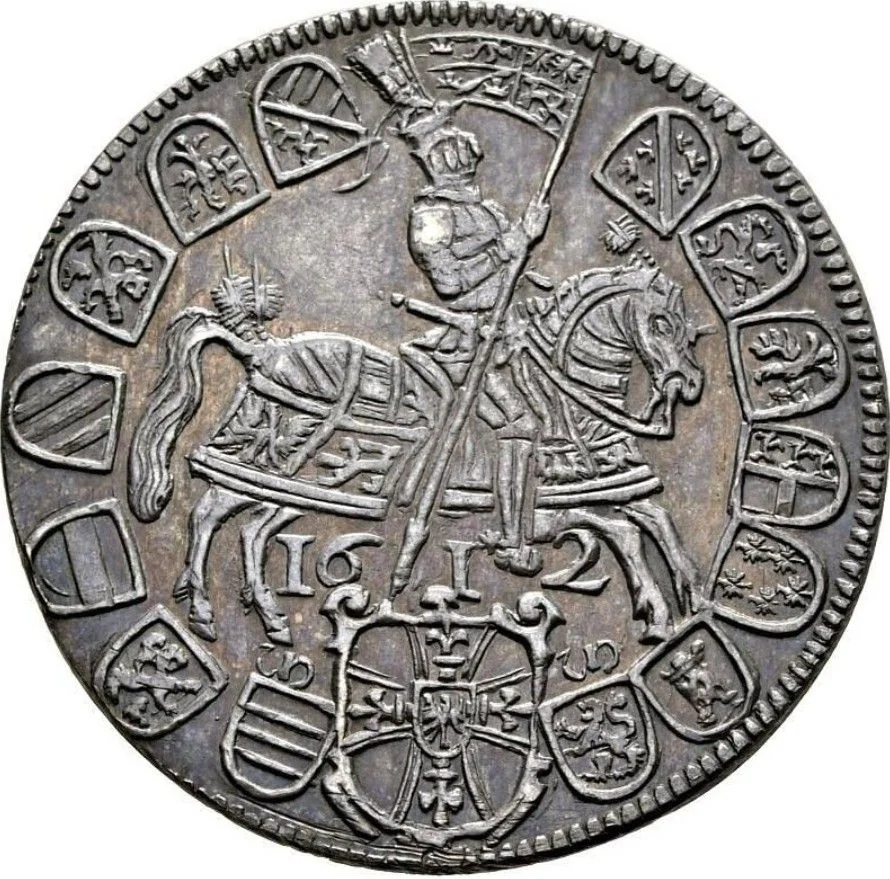
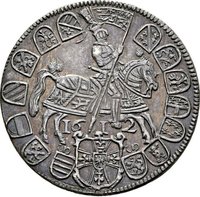
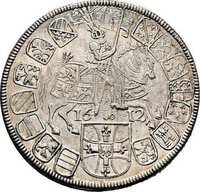
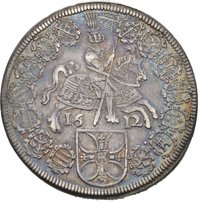
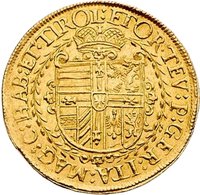
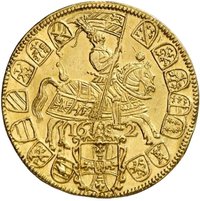
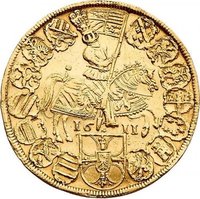
An armored knight on horseback faces right, wearing a great helm and carrying a banner. He is encircled by 14 small shields of various regions (Alsace, Habsburg, Prussia, Carinthia, Lower Austria, Castile, Leon, Teutonic Order, Hungary, Bohemia, Austria, Ancient Burgundy, Styria, Carniola, Gorizia). Below is a larger shield of the Teutonic Order with Tyrol at its center, dated above.
Inscription:
16 12
Script: Latin
Edge
Categories
| Object> Armour |
| Building> Castle or fortification |
| Animal> Feline |
| Animal> Bird> Eagle |
| Animal> Horse |
| Symbols> Coat of Arms |
Mints
| Name | Mark |
|---|---|
| Hall | — |
Mintings
| Year | Mint Mark | Mintage | Quality | Collection |
|---|---|---|---|---|
| 1612 | CO | — | ||
| 1614 | CO | — | BU |
Historical background
In 1612, the Teutonic Order's currency situation was a complex and challenging reflection of its diminished political and economic power. The Order's state, centered on the Duchy of Prussia (a Polish fief since 1525) and the Livonian territories, operated within a fragmented monetary landscape. It did not possess a strong, unified coinage of its own but was instead subject to the circulation of numerous foreign coins, primarily Polish grosze and talers, alongside Swedish, Dutch, and various German state currencies. This reliance created chronic instability, as the value and supply of money were dictated by external mints and economic policies beyond the Order's control.
The primary monetary instrument issued by the Order itself was the Prussian schilling, a low-value billon coin (made of debased silver) minted in Königsberg. However, these coins were often of inferior quality and were prone to clipping and counterfeiting, leading to frequent devaluations and a lack of public trust. The real backbone of larger transactions, especially in Baltic trade, was the silver Reichsthaler, a reliable international coin. This duality between weak local coinage and strong foreign currency hampered internal commerce and state finance, as the Order struggled to extract seigniorage revenue and control its money supply.
Furthermore, the monetary system was strained by the broader economic pressures of the early 17th century. The lucrative Baltic grain trade, while a source of wealth for Prussian nobles, often saw profits bypass the Order's treasury. Simultaneously, the region was feeling the first tremors of the coming European crisis, with inflationary trends and the looming threat of conflict (the Polish–Swedish War would engulf Livonia by the 1620s). Consequently, the currency situation in 1612 was one of vulnerability, marking the Order's transition from a medieval powerhouse to a minor state dependent on the economic currents of its powerful neighbors.
The primary monetary instrument issued by the Order itself was the Prussian schilling, a low-value billon coin (made of debased silver) minted in Königsberg. However, these coins were often of inferior quality and were prone to clipping and counterfeiting, leading to frequent devaluations and a lack of public trust. The real backbone of larger transactions, especially in Baltic trade, was the silver Reichsthaler, a reliable international coin. This duality between weak local coinage and strong foreign currency hampered internal commerce and state finance, as the Order struggled to extract seigniorage revenue and control its money supply.
Furthermore, the monetary system was strained by the broader economic pressures of the early 17th century. The lucrative Baltic grain trade, while a source of wealth for Prussian nobles, often saw profits bypass the Order's treasury. Simultaneously, the region was feeling the first tremors of the coming European crisis, with inflationary trends and the looming threat of conflict (the Polish–Swedish War would engulf Livonia by the 1620s). Consequently, the currency situation in 1612 was one of vulnerability, marking the Order's transition from a medieval powerhouse to a minor state dependent on the economic currents of its powerful neighbors.
✨ Legendary