

1 Mohur – Afghanistan
Afghanistan
Context
Material
Diameter: 22 mm
Weight: 10.85 g
Gold weight: 9.95 g
Shape: Irregular round
Composition: 91.67% Gold
Magnetic: No
References
KM: #Click to copy to clipboard136
Numista: #10478
Value
Bullion value: $1655.84
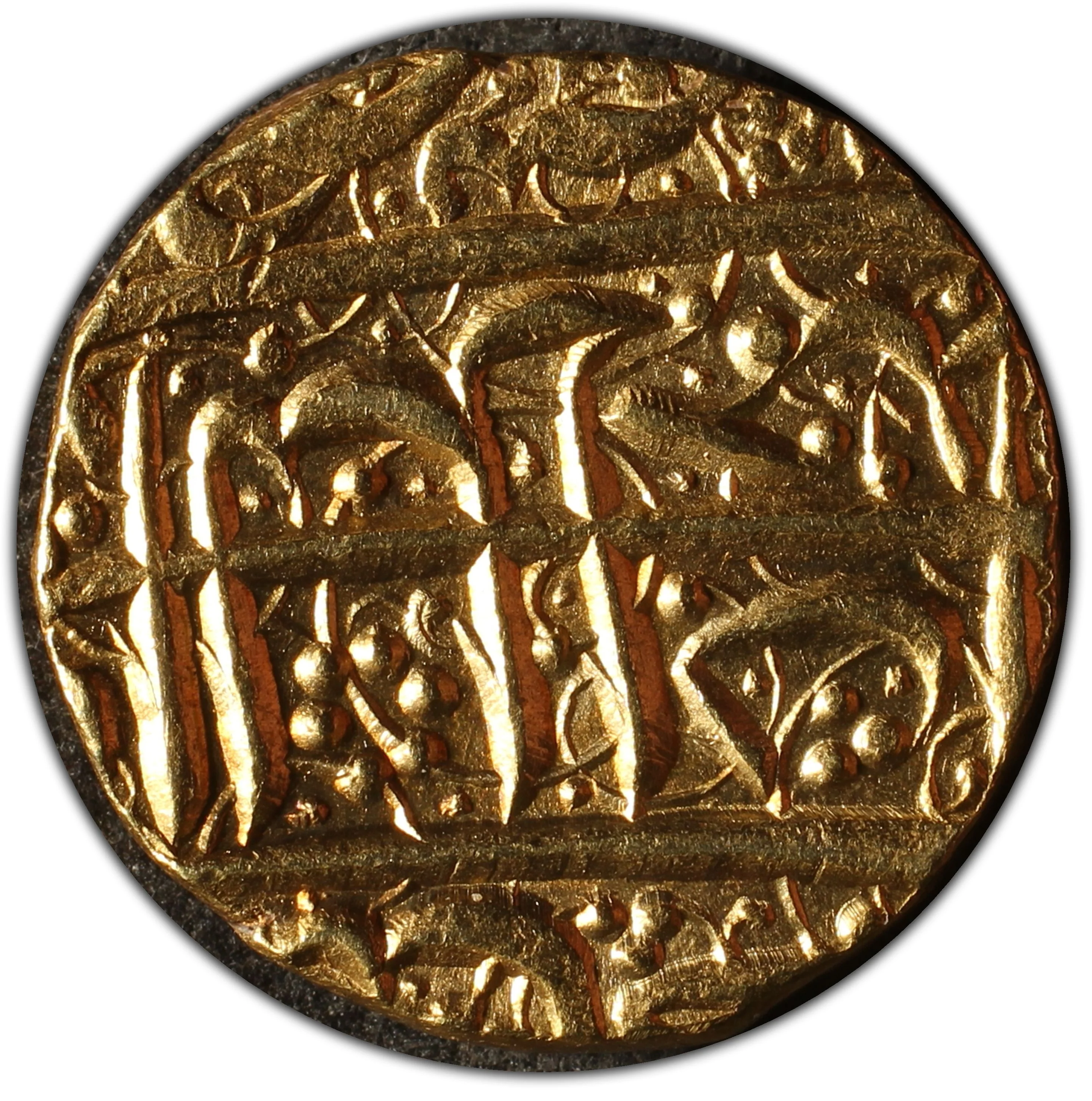
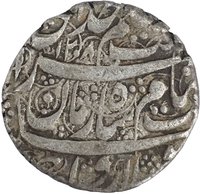
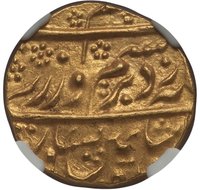
Obverse
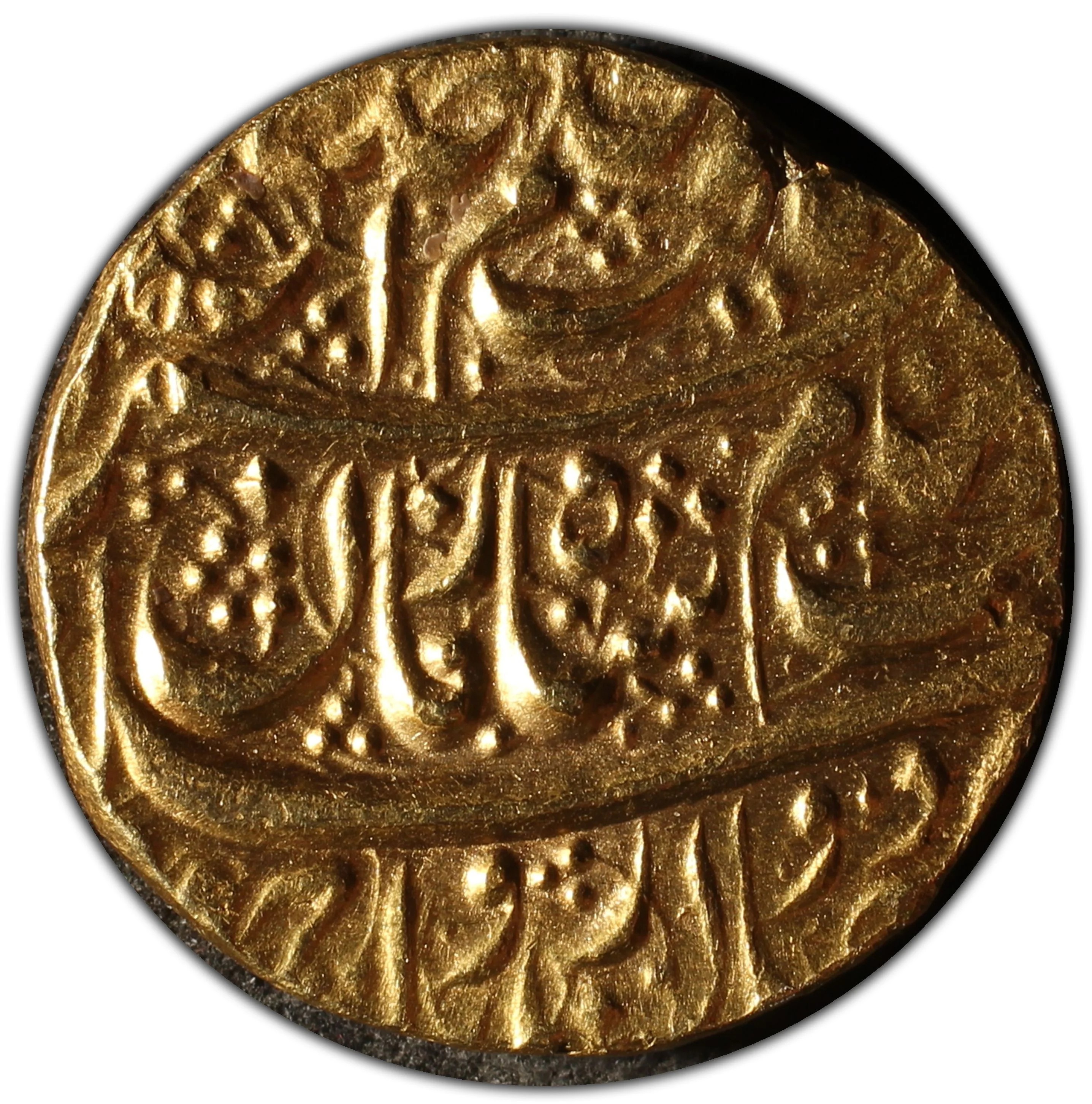
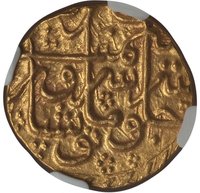
Reverse
Edge
Mints
| Name | Mark |
|---|---|
| Ahmadshahi | — |
| Kandahar | — |
Mintings
| Year | Mint Mark | Mintage | Quality | Collection |
|---|---|---|---|---|
| 1795 | — | — | ||
| 1801 | — | — |
Historical background
In 1795, the currency situation in Afghanistan was characterized by fragmentation and transition, reflecting the decentralized political landscape following the death of Ahmad Shah Durrani in 1772. The Durrani Empire, though weakened, remained the nominal framework, with power contested among his descendants and regional chiefs. The primary circulating currency was the Durrani silver rupee, first minted by Ahmad Shah, but its weight, purity, and acceptance varied significantly across regions like Kabul, Herat, Kandahar, and Peshawar as local rulers often struck their own imitations. This period saw a proliferation of mint towns, leading to a lack of uniform monetary standard and complicating trade.
The monetary system was also deeply influenced by robust regional and international trade, making Afghanistan a crossroads for diverse currencies. Alongside local rupees, older Mughal rupees, Persian krans, and Bukharan tillas circulated freely, especially along caravan routes. The value of coins was determined largely by their intrinsic silver content, requiring constant weighing and assaying by merchants. This multi-currency environment, while flexible, created a complex and often inefficient marketplace where exchange rates fluctuated based on political stability and the credibility of the minting authority.
Furthermore, the political instability of the era directly undermined monetary integrity. Rulers like Zaman Shah (reigning 1793-1801) faced constant internal revolts and external threats, which strained treasury reserves. To finance military campaigns, debasement—reducing the silver content in coins—was a recurring temptation, eroding public trust in the currency. Consequently, the economy of 1795 Afghanistan functioned on a precarious blend of official coinage, foreign specie, and barter, with the state lacking the central authority to impose a unified and stable monetary system across its territories.
The monetary system was also deeply influenced by robust regional and international trade, making Afghanistan a crossroads for diverse currencies. Alongside local rupees, older Mughal rupees, Persian krans, and Bukharan tillas circulated freely, especially along caravan routes. The value of coins was determined largely by their intrinsic silver content, requiring constant weighing and assaying by merchants. This multi-currency environment, while flexible, created a complex and often inefficient marketplace where exchange rates fluctuated based on political stability and the credibility of the minting authority.
Furthermore, the political instability of the era directly undermined monetary integrity. Rulers like Zaman Shah (reigning 1793-1801) faced constant internal revolts and external threats, which strained treasury reserves. To finance military campaigns, debasement—reducing the silver content in coins—was a recurring temptation, eroding public trust in the currency. Consequently, the economy of 1795 Afghanistan functioned on a precarious blend of official coinage, foreign specie, and barter, with the state lacking the central authority to impose a unified and stable monetary system across its territories.
💎 Extremely Rare