

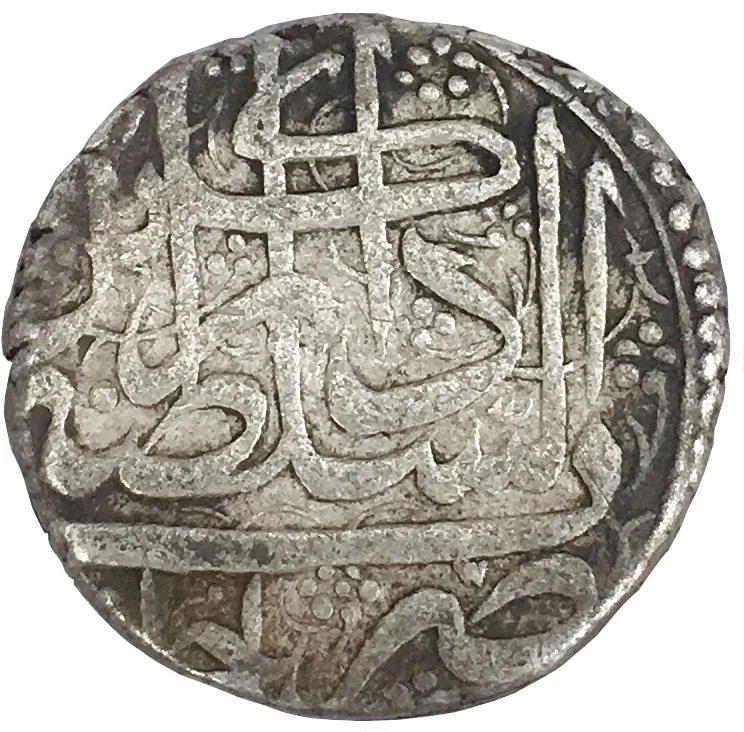
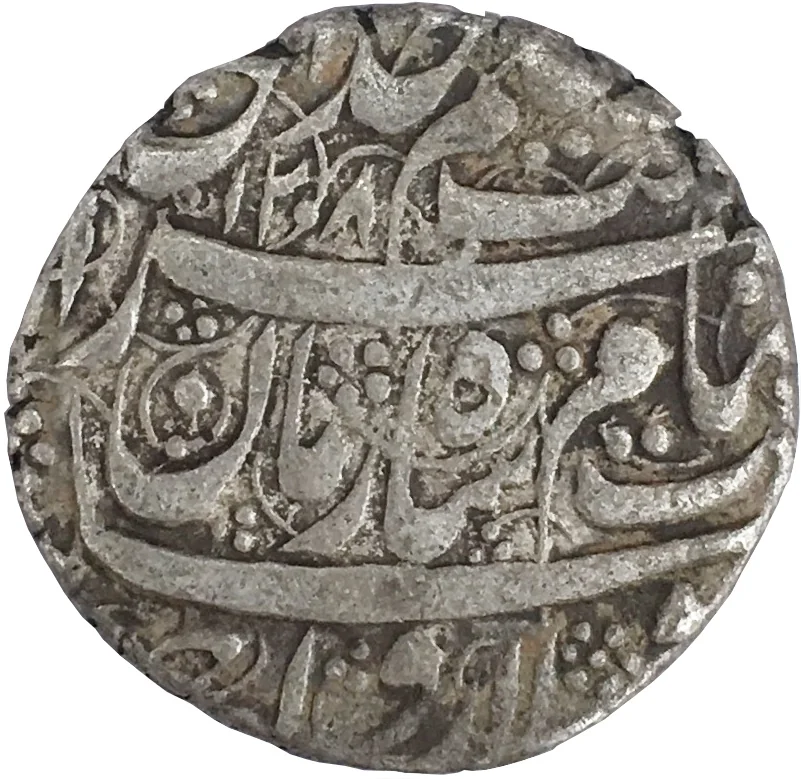
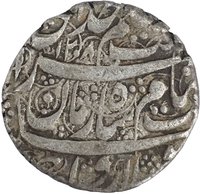
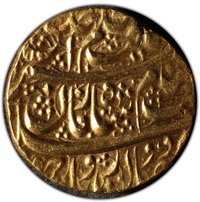
1 Rupee – Afghanistan
Afghanistan
Context
Material
Diameter: 23 mm
Weight: 11.47 g
Silver weight: 11.47 g
Shape: Irregular round
Composition: Silver
Magnetic: No
Alignment: Medal alignment
flip
References
KM: #Click to copy to clipboard443
Numista: #165200
Value
Bullion value: $33.27
Obverse
Description:
First verse.
Script: Arabic
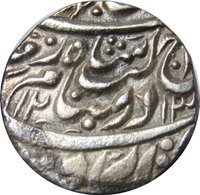
Reverse
Description:
Inscribed.
Script: Arabic
Edge
Mintings
| Year | Mint Mark | Mintage | Quality | Collection |
|---|---|---|---|---|
| 1793 | — | — | ||
| 1794 | — | — | ||
| 1795 | — | — | ||
| 1796 | — | — | ||
| 1797 | — | — | ||
| 1798 | — | — |
Historical background
In 1793, Afghanistan was not a unified nation-state but a patchwork of competing principalities, most notably the Durrani Empire, which was in a state of fragmentation and dynastic struggle. The primary currency in circulation was the Durrani rupee, a silver coin established by Ahmad Shah Durrani earlier in the century. However, the authority and minting power of the Sadozai rulers in Kabul had significantly weakened following the death of Timur Shah Durrani in 1793, leading to a period of intense civil war among his many sons. This political instability directly impacted the monetary system, as regional governors and claimants to the throne often issued their own coinage to assert sovereignty and finance their military campaigns.
The currency landscape was therefore heterogeneous and localized. Alongside the debasing of official Durrani rupees, older Mughal and Safavid coins remained in use, especially in border regions and trade routes. The value and purity of coins could vary greatly depending on which faction minted them and the availability of silver bullion. Furthermore, the economy was heavily reliant on cross-border trade and nomadic pastoralism, meaning that foreign currencies, particularly the British Indian rupee and Persian toman, also circulated in markets, adding another layer of complexity to transactions.
Consequently, the year 1793 marked a point of monetary uncertainty at the heart of a political crisis. There was no central banking authority or standardized currency across the territories of modern-day Afghanistan. The economic system was characterized by competing coinages, fluctuating values, and a reliance on both legacy and foreign currencies, all reflecting the fractured political reality of the Durrani Empire's decline. This instability would persist until the rise of Dost Mohammad Khan decades later, who would begin to consolidate power and reassert centralized control over minting.
The currency landscape was therefore heterogeneous and localized. Alongside the debasing of official Durrani rupees, older Mughal and Safavid coins remained in use, especially in border regions and trade routes. The value and purity of coins could vary greatly depending on which faction minted them and the availability of silver bullion. Furthermore, the economy was heavily reliant on cross-border trade and nomadic pastoralism, meaning that foreign currencies, particularly the British Indian rupee and Persian toman, also circulated in markets, adding another layer of complexity to transactions.
Consequently, the year 1793 marked a point of monetary uncertainty at the heart of a political crisis. There was no central banking authority or standardized currency across the territories of modern-day Afghanistan. The economic system was characterized by competing coinages, fluctuating values, and a reliance on both legacy and foreign currencies, all reflecting the fractured political reality of the Durrani Empire's decline. This instability would persist until the rise of Dost Mohammad Khan decades later, who would begin to consolidate power and reassert centralized control over minting.
✨ Legendary