

8 Reales – Chile
Chile
Context
Years: 1751–1758
Issuer: Chile 
Ruler: Ferdinand VI
Currency:
(1541—1852)
Demonetized: Yes
Total mintage: 50,133
Material
References
KM: #Click to copy to clipboard5
Numista: #104419
Value
Bullion value: $70.22
Obverse
Description:
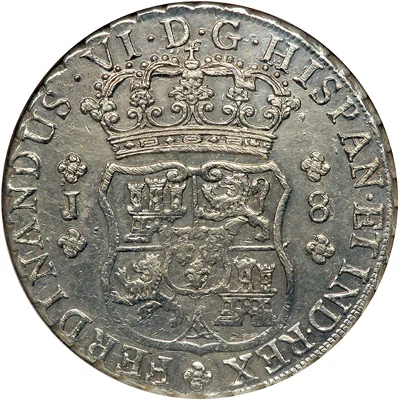
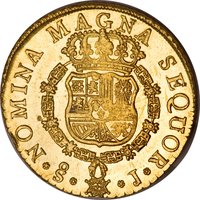
Crowned heraldic shield.
Inscription:
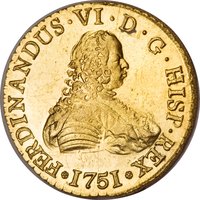
FERDINANDUS · VI · D · G · HISPAN · ET IND · REX *
J 8
J 8
Script: Latin
Reverse
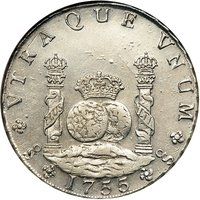
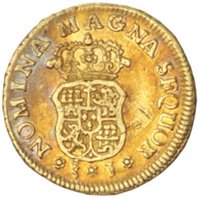
Description:
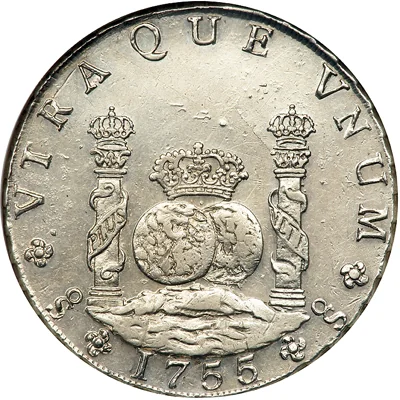
Globe between crowned pillars.
Inscription:
* VTRAQUE VNUM *
So * 1755 * So
So * 1755 * So
Script: Latin
Edge
Mints
| Name | Mark |
|---|---|
| Casa de Moneda de Chile | (So) |
Mintings
| Year | Mint Mark | Mintage | Quality | Collection |
|---|---|---|---|---|
| 1751 | So | 6,070 | ||
| 1753 | So | 6,665 | ||
| 1755 | /1 | 17,419 | ||
| 1758 | So | 19,979 |
Historical background
In 1751, the currency situation in the Kingdom of Chile, a remote captaincy general of the Spanish Empire, was characterized by a severe and chronic shortage of official coinage. The local economy operated primarily on a system of vales (promissory notes) and barter, with even large transactions and tax payments often conducted using goods like wheat, tallow, or hides. This scarcity stemmed from Chile's economic role as a minor, defensive outpost; its limited exports of gold and agricultural products generated insufficient silver and gold coin to circulate locally, as most precious metals were remitted to the Viceroyalty of Peru or onward to Spain.
The Spanish Crown's mercantilist policies exacerbated the problem. Chile was forbidden from trading directly with other regions or foreign powers, forcing all commerce through the port of Callao in Peru. This system drained Chile of its specie, as payments for imported goods from Peru consistently exceeded the value of Chilean exports. Furthermore, the Crown's repeated debasements of the coinage in Peru (such as the introduction of lower-grade macuquina coins) created monetary instability that rippled into the Chilean economy, confusing valuations and undermining trust.
Consequently, local authorities and merchants were forced into pragmatic, informal solutions. The widespread use of credit tokens and commodity money was essential for daily commerce, but it was inefficient and hindered economic development. This persistent monetary crisis of 1751 was a defining feature of Chile's colonial experience, highlighting its marginal position within the imperial structure and fostering a resilient, if irregular, internal economy that would shape its financial practices for decades to come.
The Spanish Crown's mercantilist policies exacerbated the problem. Chile was forbidden from trading directly with other regions or foreign powers, forcing all commerce through the port of Callao in Peru. This system drained Chile of its specie, as payments for imported goods from Peru consistently exceeded the value of Chilean exports. Furthermore, the Crown's repeated debasements of the coinage in Peru (such as the introduction of lower-grade macuquina coins) created monetary instability that rippled into the Chilean economy, confusing valuations and undermining trust.
Consequently, local authorities and merchants were forced into pragmatic, informal solutions. The widespread use of credit tokens and commodity money was essential for daily commerce, but it was inefficient and hindered economic development. This persistent monetary crisis of 1751 was a defining feature of Chile's colonial experience, highlighting its marginal position within the imperial structure and fostering a resilient, if irregular, internal economy that would shape its financial practices for decades to come.
✨ Legendary