

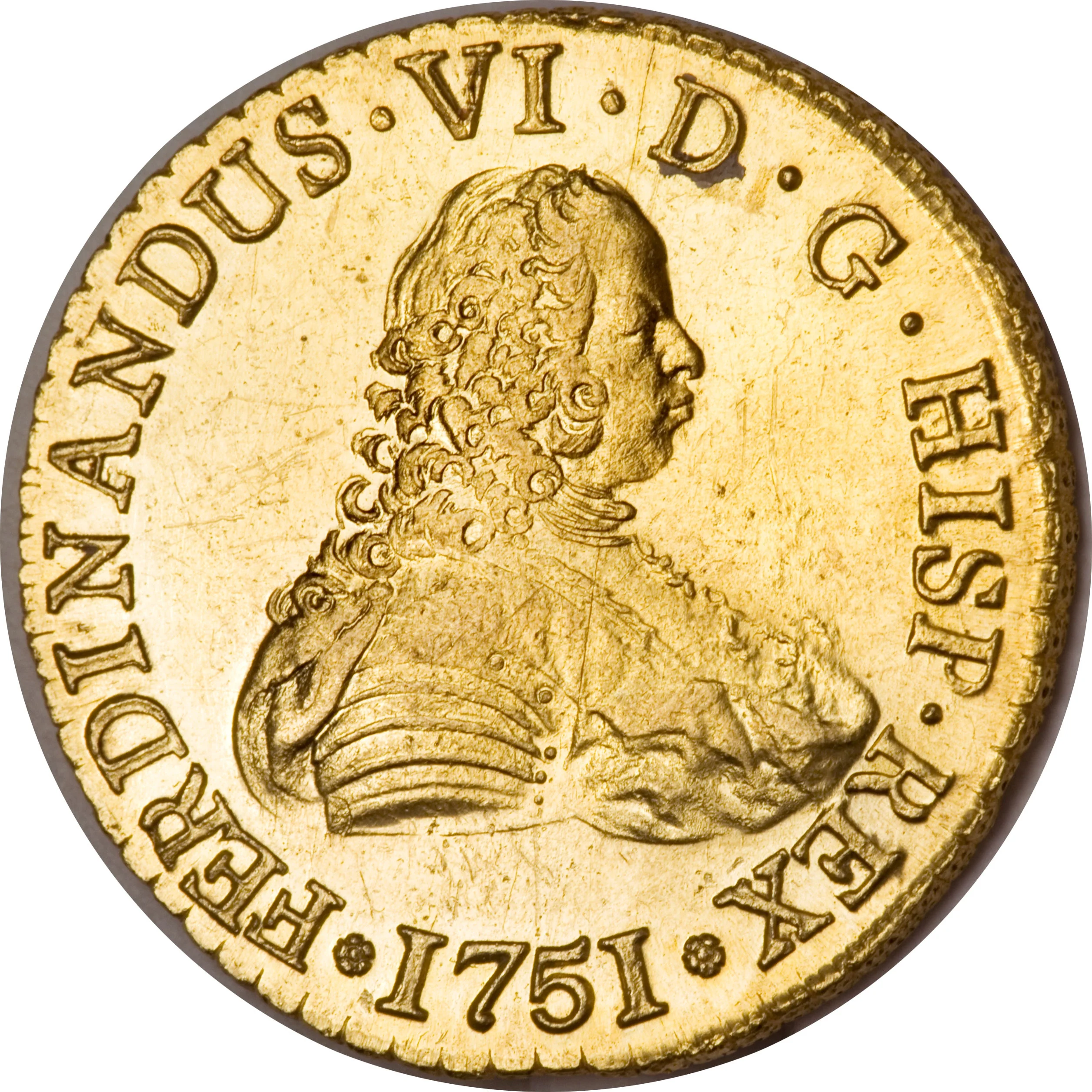
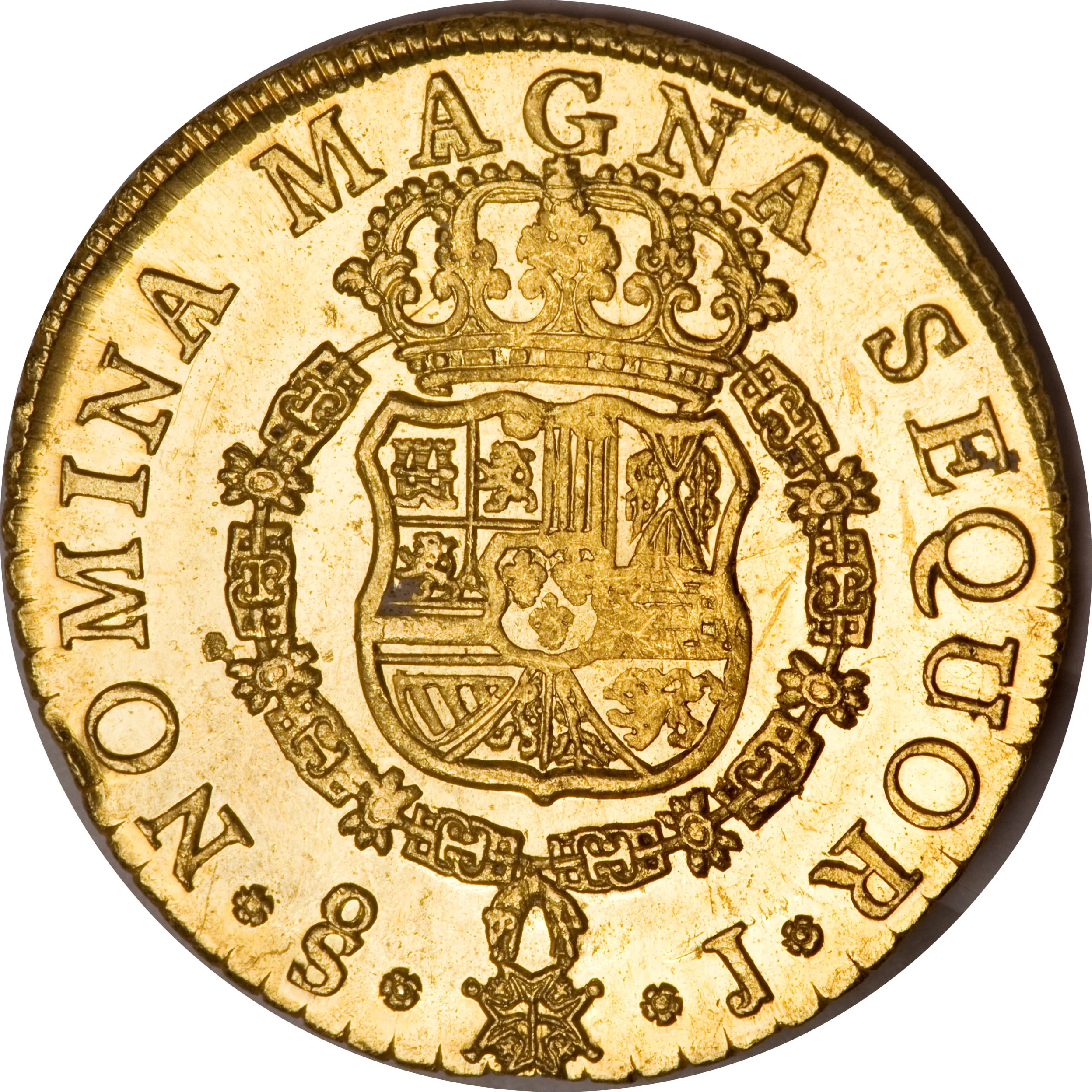
8 escudos – Chile
Add to wishlist
Chile
Context
Years: 1750–1758
Issuer: Chile
Ruler: Ferdinand VI
Currency:
(1541—1852)
Demonetized: Yes
Total mintage: 188,618
Material
References
KM: #
Numista: #35152
Value
Bullion value: $3831.44
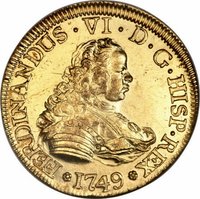
Obverse
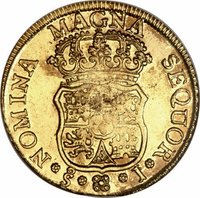
Reverse
Edge
Mints
| Name | Mark |
|---|---|
| Casa de Moneda de Chile | (So) |
Mintings
| Year | Mint Mark | Mintage | Quality | Collection |
|---|---|---|---|---|
| 1750 | So | 20,669 | ||
| 1751 | /0 | — | ||
| 1751 | So | 25,591 | ||
| 1752 | So | 24,701 | ||
| 1753 | So | 25,690 | ||
| 1754 | So | 34,457 | ||
| 1756 | /5 | — | ||
| 1756 | So | 35,166 | ||
| 1757 | So | 22,344 | ||
| 1758 | So | — |
Historical background
In 1750, Chile was a remote and economically modest captaincy-general within the Spanish Empire, and its currency situation was defined by chronic scarcity and improvisation. The official monetary system was based on the Spanish real, with eight reales equaling one peso, but the physical supply of minted coins from the central mint in Lima, Peru, was insufficient for local needs. This scarcity stemmed from Chile's limited export economy, which was primarily based on agricultural products sent to Peru, and the empire's mercantilist policies that drained precious metals to Spain. As a result, the local economy suffered from a persistent lack of circulating medium.
To facilitate daily transactions, Chileans relied heavily on a variety of substitute currencies. The most common was "moneda de la tierra" (money of the land), which consisted of physical goods like wheat, barley, and dried hides used as barter units for larger trades. For smaller purchases, people often used cut pieces of silver coins, known as champurrada or macuquina (cut and hammered coins), which were irregular in shape and weight. Additionally, due to Chile's long coastline and trade routes, foreign coins—particularly Peruvian pesos and even some coins from other European empires—circulated unofficially but were accepted out of necessity.
This fragmented and inefficient system highlighted the colony's economic isolation and its dependence on the broader Viceroyalty of Peru. The lack of standardized coinage hindered commerce and tax collection for the Spanish crown, creating an environment where informal and commodity-based exchange was normalized. This situation would persist for decades until the establishment of a royal mint in Santiago in 1749, which began operations in the early 1750s, slowly starting to address the coinage shortage and impose a more uniform monetary standard by minting the first local Chilean coins.
To facilitate daily transactions, Chileans relied heavily on a variety of substitute currencies. The most common was "moneda de la tierra" (money of the land), which consisted of physical goods like wheat, barley, and dried hides used as barter units for larger trades. For smaller purchases, people often used cut pieces of silver coins, known as champurrada or macuquina (cut and hammered coins), which were irregular in shape and weight. Additionally, due to Chile's long coastline and trade routes, foreign coins—particularly Peruvian pesos and even some coins from other European empires—circulated unofficially but were accepted out of necessity.
This fragmented and inefficient system highlighted the colony's economic isolation and its dependence on the broader Viceroyalty of Peru. The lack of standardized coinage hindered commerce and tax collection for the Spanish crown, creating an environment where informal and commodity-based exchange was normalized. This situation would persist for decades until the establishment of a royal mint in Santiago in 1749, which began operations in the early 1750s, slowly starting to address the coinage shortage and impose a more uniform monetary standard by minting the first local Chilean coins.
✨ Legendary