

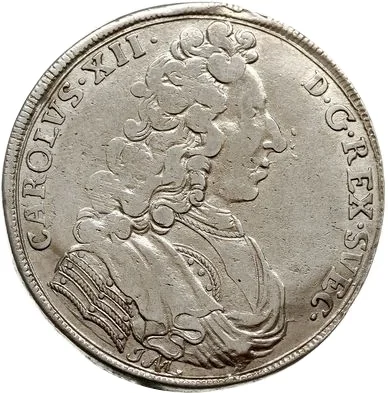
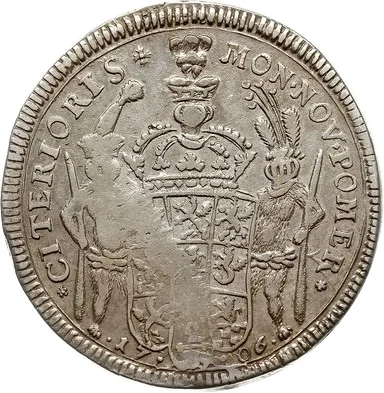
⅔ Thaler – Swedish dominion of Pomerania
Sweden
Context
Years: 1706–1707
Country: Sweden 
Issuer: Swedish dominion of Pomerania
Ruler: Charles XII
Currency:
(1630—1815)
Demonetized: Yes
References
KM: #Click to copy to clipboard357
Numista: #136757
Obverse
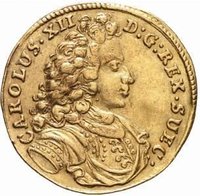
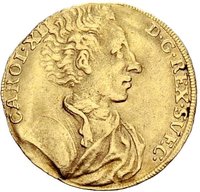
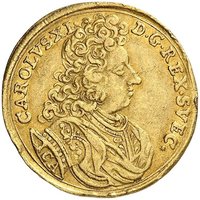
Description:
Right-facing bust, initials on truncation.
Script: Latin
Reverse
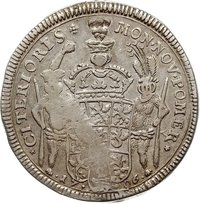
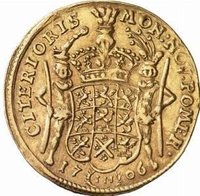
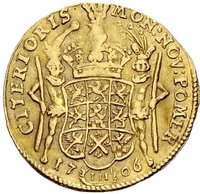
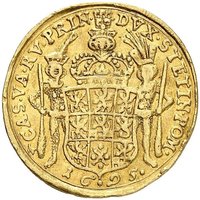
Description:
Arms with crowned helm and flanking supporters.
Script: Latin
Edge
Mints
| Name | Mark |
|---|---|
| Szczecin | — |
Mintings
| Year | Mint Mark | Mintage | Quality | Collection |
|---|---|---|---|---|
| 1706 | — | — | ||
| 1707 | — | — |
Historical background
In 1706, the Swedish dominion of Pomerania was caught in the severe monetary and economic turmoil of the Great Northern War (1700-1721). The primary currency, the Swedish reichsthaler, was under immense strain due to the colossal costs of financing the war. Sweden, fighting a multi-front conflict, was extracting heavy war contributions from its German territories, while also deliberately debasing its coinage by reducing its silver content to increase the volume of currency for military spending. This led to a classic scenario of inflation, where more coins of intrinsically lower value chased available goods, eroding purchasing power and creating widespread distrust in the currency.
Compounding this crisis was a chaotic mix of circulating currencies. Alongside the debased Swedish money, older high-quality Pomeranian coins, various German state thalers, and foreign currencies from trade all circulated simultaneously. This created a complex and unstable exchange environment, where merchants and the public struggled to assess real values. The poorer, debased Swedish coins often drove the better, full-weight coins out of circulation, as people hoarded the valuable silver (Gresham's Law). The result was a fractured monetary system where daily transactions became fraught with uncertainty and dispute.
The situation was exacerbated by the direct impacts of the war itself. Pomerania, as a strategic base for Swedish operations, faced repeated occupations, troop movements, and requisitions, which disrupted agriculture, trade, and administration. This economic dislocation, combined with the currency chaos, led to rising prices for essentials, hardship for the local population, and a significant decline in credible fiscal governance. The monetary situation of 1706 thus reflected not just a financial policy failure, but the broader collapse of economic stability under the relentless pressures of a prolonged and costly war.
Compounding this crisis was a chaotic mix of circulating currencies. Alongside the debased Swedish money, older high-quality Pomeranian coins, various German state thalers, and foreign currencies from trade all circulated simultaneously. This created a complex and unstable exchange environment, where merchants and the public struggled to assess real values. The poorer, debased Swedish coins often drove the better, full-weight coins out of circulation, as people hoarded the valuable silver (Gresham's Law). The result was a fractured monetary system where daily transactions became fraught with uncertainty and dispute.
The situation was exacerbated by the direct impacts of the war itself. Pomerania, as a strategic base for Swedish operations, faced repeated occupations, troop movements, and requisitions, which disrupted agriculture, trade, and administration. This economic dislocation, combined with the currency chaos, led to rising prices for essentials, hardship for the local population, and a significant decline in credible fiscal governance. The monetary situation of 1706 thus reflected not just a financial policy failure, but the broader collapse of economic stability under the relentless pressures of a prolonged and costly war.
✨ Legendary