

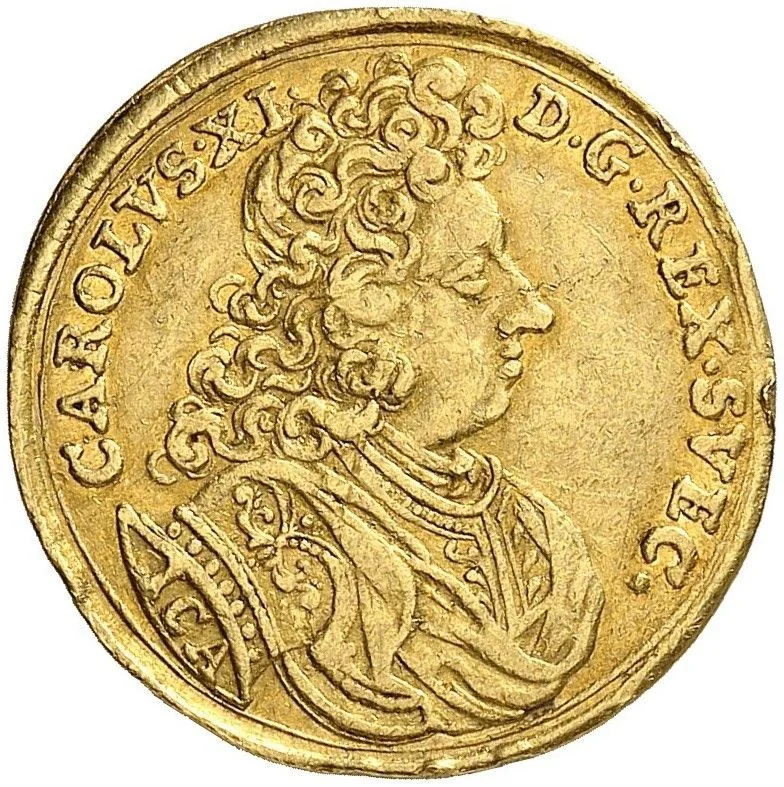
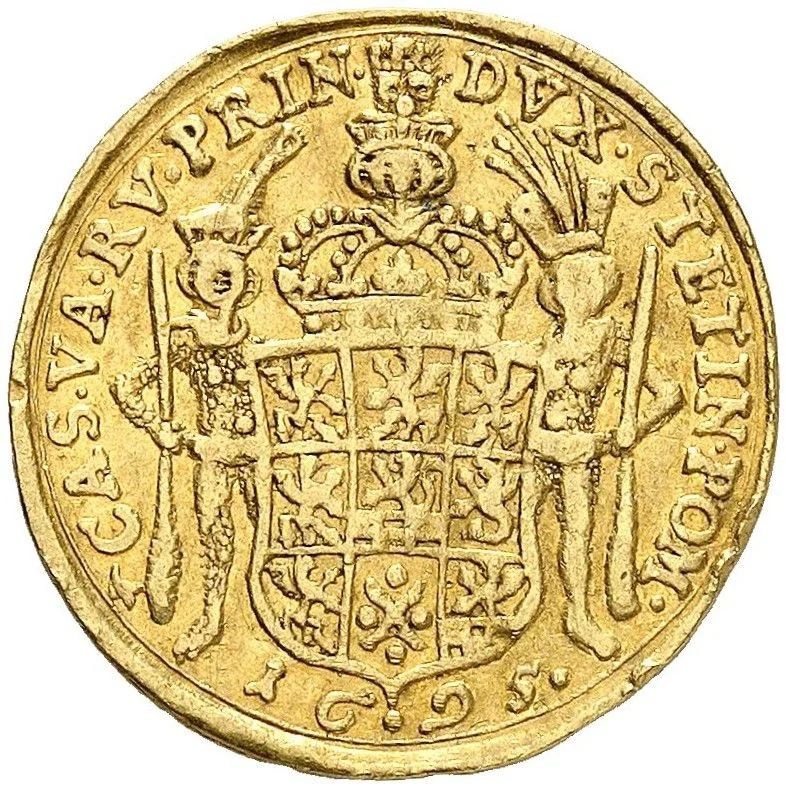
1 Ducat – Swedish dominion of Pomerania
Sweden
Context
Years: 1695–1697
Country: Sweden 
Issuer: Swedish dominion of Pomerania
Ruler: Charles XI
Currency:
(1630—1815)
Demonetized: Yes
References
KM: #Click to copy to clipboard340.2
Numista: #420120
Value
Bullion value: $575.40
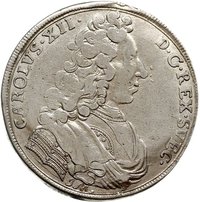
Obverse
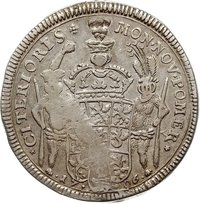
Reverse
Edge
Mints
| Name | Mark |
|---|---|
| Szczecin | — |
Mintings
| Year | Mint Mark | Mintage | Quality | Collection |
|---|---|---|---|---|
| 1695 | — | — | ||
| 1696 | — | — | ||
| 1697 | — | — |
Historical background
In 1695, the currency situation in Swedish Pomerania was complex and strained, reflecting both local economic pressures and the broader monetary policies of the Swedish Empire. The province operated within a bimetallic system based on Reichsthalers (silver) and Marks (accounting units), but its circulation was dominated by a chaotic mix of domestic and foreign coins. Crucially, Sweden itself was undergoing the Great Coinage Recoinage of 1695, a deliberate devaluation where old copper plate money was called in and replaced with new coins of lower intrinsic value. This policy, designed to shore up the crown's finances for the ongoing Nine Years' War, directly impacted Pomerania, as the Swedish government sought to extend the use of its debased currency within its German dominion.
The local economy suffered from a chronic shortage of high-quality specie, as good silver coins were often hoarded or exported. This void was filled by an array of inferior coins, including numerous low-denomination Klippe coins (emergency mintings) and a flood of debased Polish and German coins from neighboring states. The resulting inflation and loss of confidence in the currency created significant hardship for the population, complicating trade and tax collection. Swedish authorities attempted to regulate the situation by setting official exchange rates (Kurantzettel), but these often failed to reflect market realities, leading to a thriving black market in currency exchange.
Ultimately, the monetary chaos of 1695 highlighted the challenges of governing a fragmented German territory from Stockholm. Swedish policies, driven by imperial fiscal needs, often clashed with the province's integration into the economic networks of the Holy Roman Empire. The situation would remain unstable until more comprehensive reforms were attempted under King Charles XII, but the year 1695 stands as a particularly acute example of the tension between local stability and the extractive demands of a wartime empire.
The local economy suffered from a chronic shortage of high-quality specie, as good silver coins were often hoarded or exported. This void was filled by an array of inferior coins, including numerous low-denomination Klippe coins (emergency mintings) and a flood of debased Polish and German coins from neighboring states. The resulting inflation and loss of confidence in the currency created significant hardship for the population, complicating trade and tax collection. Swedish authorities attempted to regulate the situation by setting official exchange rates (Kurantzettel), but these often failed to reflect market realities, leading to a thriving black market in currency exchange.
Ultimately, the monetary chaos of 1695 highlighted the challenges of governing a fragmented German territory from Stockholm. Swedish policies, driven by imperial fiscal needs, often clashed with the province's integration into the economic networks of the Holy Roman Empire. The situation would remain unstable until more comprehensive reforms were attempted under King Charles XII, but the year 1695 stands as a particularly acute example of the tension between local stability and the extractive demands of a wartime empire.
✨ Legendary