

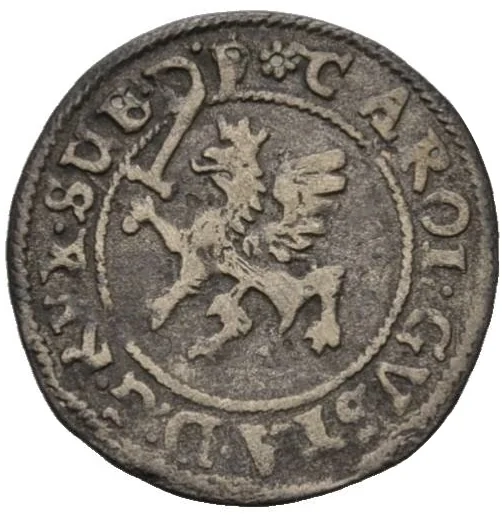
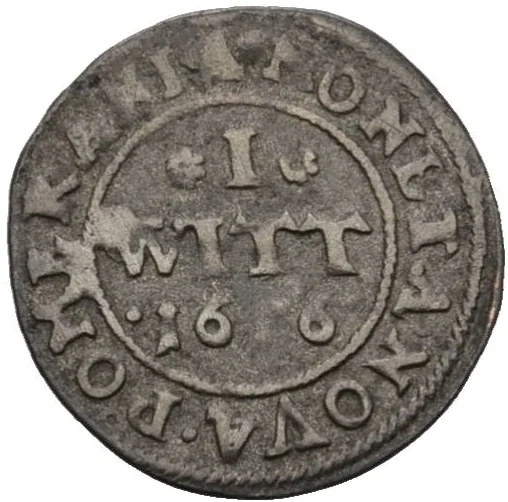
1 witten – Swedish dominion of Pomerania
Add to wishlist
Sweden
Context
Years: 1655–1657
Country: Sweden
Issuer: Swedish dominion of Pomerania
Ruler: Charles X Gustav
Currency:
(1630—1815)
Demonetized: Yes
References
KM: #
Numista: #136458
Value
Bullion value: $1.41
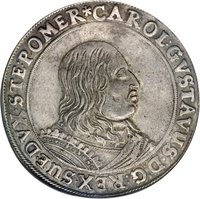
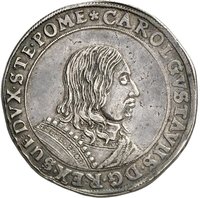
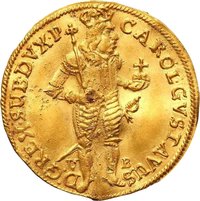
Obverse
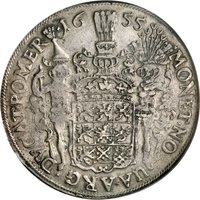
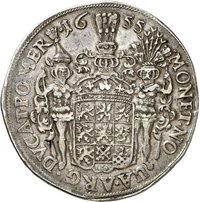
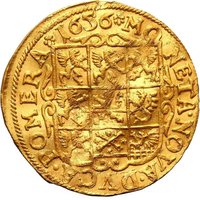
Reverse
Edge
Mints
| Name | Mark |
|---|---|
| Szczecin | — |
Mintings
| Year | Mint Mark | Mintage | Quality | Collection |
|---|---|---|---|---|
| 1655 | — | — | ||
| 1656 | — | — | ||
| 1657 | — | — |
Historical background
In 1655, Swedish Pomerania was a dominion caught in the complex monetary systems of Northern Europe, operating under a bimetallic standard of silver and copper. However, the reality was one of severe currency debasement and chaos. The Thirty Years' War (1618-1648), which had formally ended just seven years prior, had left the region's economy shattered and its coinage severely degraded. To finance its military campaigns, Sweden had heavily exploited its Pomeranian territories, issuing vast quantities of low-quality Klippe coins (emergency square coins) and debased copper Schillinge, which flooded the market and drove better-quality money out of circulation.
The situation was further complicated by the competing circulation of currencies from neighbouring states. Alongside the official Swedish issues, coins from Brandenburg, the Holy Roman Empire, Poland, and the Netherlands were all in use, creating a confusing and inefficient monetary environment. This "currency pluralism" made trade difficult and facilitated fraud. The Swedish administration, headquartered in Stettin (Szczecin), struggled to impose order, but its efforts were undermined by the pressing financial demands of the ongoing Second Northern War (1655-1660), which had just erupted, drawing Swedish resources and attention away from domestic monetary reform.
Consequently, the currency situation in 1655 was characterised by a profound lack of trust. Inhabitants and merchants faced erratic exchange rates, uncertainty about the intrinsic value of coins, and widespread inflation. This monetary instability crippled local commerce and hampered reconstruction efforts, perpetuating the economic distress of the war years. The Pomeranian economy remained subservient to Stockholm's fiscal-military needs, with its currency system acting less as a tool for local prosperity and more as an instrument for extracting resources for the Swedish crown's broader imperial ambitions.
The situation was further complicated by the competing circulation of currencies from neighbouring states. Alongside the official Swedish issues, coins from Brandenburg, the Holy Roman Empire, Poland, and the Netherlands were all in use, creating a confusing and inefficient monetary environment. This "currency pluralism" made trade difficult and facilitated fraud. The Swedish administration, headquartered in Stettin (Szczecin), struggled to impose order, but its efforts were undermined by the pressing financial demands of the ongoing Second Northern War (1655-1660), which had just erupted, drawing Swedish resources and attention away from domestic monetary reform.
Consequently, the currency situation in 1655 was characterised by a profound lack of trust. Inhabitants and merchants faced erratic exchange rates, uncertainty about the intrinsic value of coins, and widespread inflation. This monetary instability crippled local commerce and hampered reconstruction efforts, perpetuating the economic distress of the war years. The Pomeranian economy remained subservient to Stockholm's fiscal-military needs, with its currency system acting less as a tool for local prosperity and more as an instrument for extracting resources for the Swedish crown's broader imperial ambitions.
✨ Legendary