

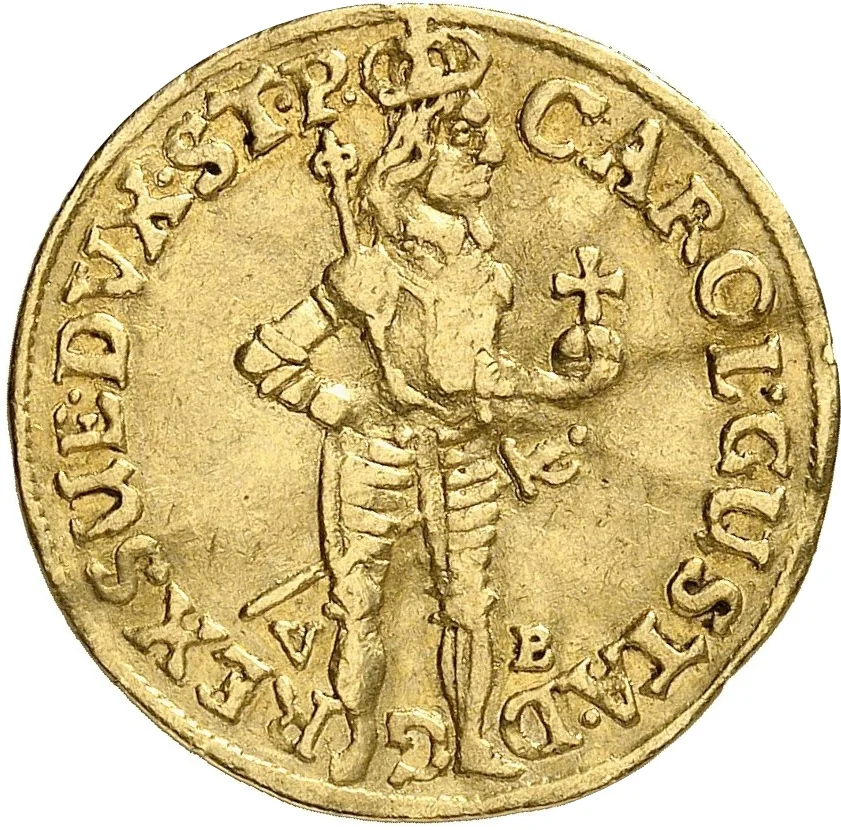
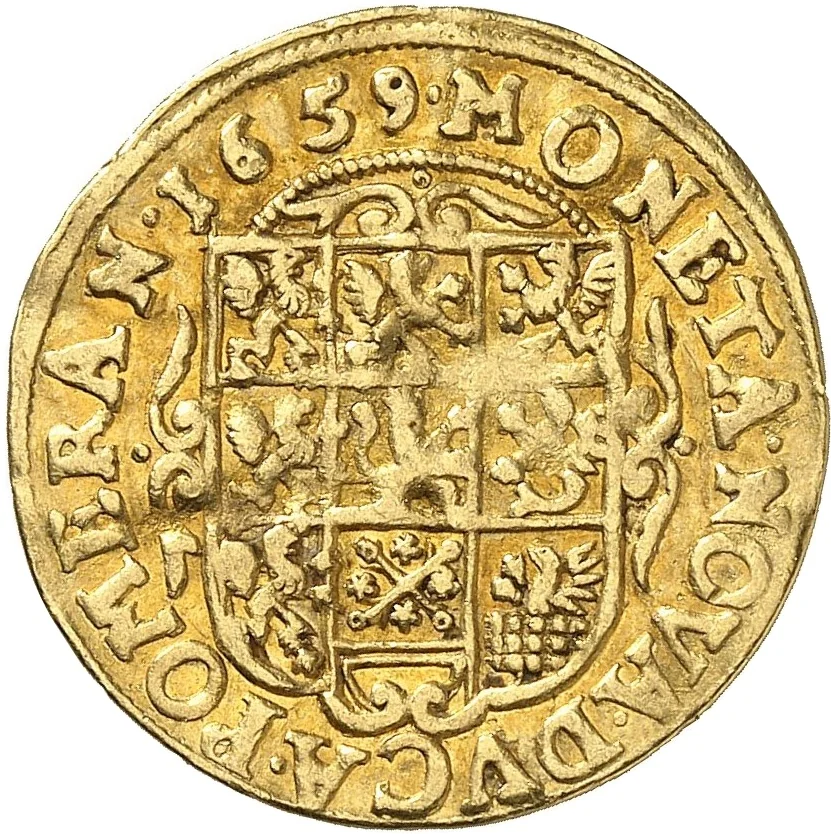
1 ducat – Swedish dominion of Pomerania
Add to wishlist
Sweden
Context
Year: 1659
Country: Sweden
Issuer: Swedish dominion of Pomerania
Ruler: Charles X Gustav
Currency:
(1630—1815)
Demonetized: Yes
References
KM: #
Numista: #136457
Value
Bullion value: $517.32
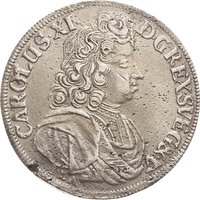
Obverse
Description:
Crowned armored figure facing right, holding scepter and orb. Mintmaster initials below.
Inscription:
CAROL.GUSTA.D / G / REX SUE.DVX.ST.P.
Script: Latin
Engraver: Ulrich Butkau
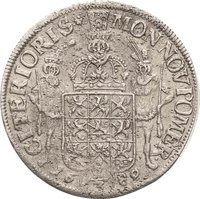
Reverse
Description:
Manifold arms, legend below.
Inscription:
.MONETA.NOVA.DVCA.POMERAN.1659
Script: Latin
Engraver: Ulrich Butkau
Edge
Mintings
| Year | Mint Mark | Mintage | Quality | Collection |
|---|---|---|---|---|
| 1659 | VB | — |
Historical background
In 1659, the currency situation in Swedish Pomerania was one of profound crisis and complexity, deeply entangled in the broader devastation of the Second Northern War (1655-1660). The ongoing conflict had placed immense fiscal strain on Sweden, leading to deliberate currency manipulation. The Swedish government, needing to finance its military campaigns, systematically debased the coinage in its dominions, including Pomerania, by reducing the silver content in minted coins. This practice, while generating short-term revenue for the Stockholm treasury, flooded the local economy with inferior money, causing severe inflation and a collapse in public trust.
The local economy was further strained by a chaotic monetary dualism. While Swedish-imposed debased currency was legally enforced, older, high-quality coins like the Reichsthaler and foreign currencies from neighbouring states remained in circulation and were hoarded due to their intrinsic value. This led to Gresham's Law in action, where "bad money drives out good," crippling everyday commerce. Merchants and peasants suffered as prices soared and the value of payments in debased coins plummeted, creating social hardship and economic paralysis in a region already scarred by wartime requisitions and troop movements.
Ultimately, the 1659 currency crisis was not an isolated economic event but a direct symptom of Swedish imperial policy, which treated Pomerania as a fiscal resource to be exploited. The situation would only begin to stabilise after the war's end with the Treaty of Oliva in 1660, which allowed for gradual monetary reforms. However, the experience left a lasting legacy of economic distrust and highlighted the vulnerabilities of a dominion whose financial system was subordinated to the exigencies of a distant empire's warfare.
The local economy was further strained by a chaotic monetary dualism. While Swedish-imposed debased currency was legally enforced, older, high-quality coins like the Reichsthaler and foreign currencies from neighbouring states remained in circulation and were hoarded due to their intrinsic value. This led to Gresham's Law in action, where "bad money drives out good," crippling everyday commerce. Merchants and peasants suffered as prices soared and the value of payments in debased coins plummeted, creating social hardship and economic paralysis in a region already scarred by wartime requisitions and troop movements.
Ultimately, the 1659 currency crisis was not an isolated economic event but a direct symptom of Swedish imperial policy, which treated Pomerania as a fiscal resource to be exploited. The situation would only begin to stabilise after the war's end with the Treaty of Oliva in 1660, which allowed for gradual monetary reforms. However, the experience left a lasting legacy of economic distrust and highlighted the vulnerabilities of a dominion whose financial system was subordinated to the exigencies of a distant empire's warfare.
✨ Legendary