Logo Title
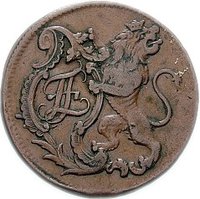
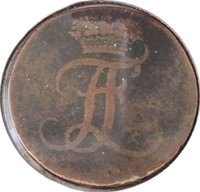
obverse
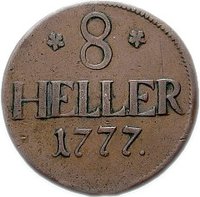
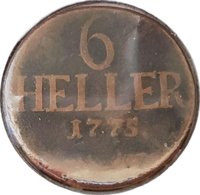
reverse
MANFRED OLDING Münzenhandlung
Context
Years: 1774–1777
Currency:
Demonetized: Yes
Material
Diameter: 31 mm
Weight: 16.4 g
Shape: Round
Composition: Copper
Magnetic: No
Alignment: Medal alignment
Obverse
OBVERSE ↑
flip
Reverse
REVERSE ↑
References
KM: #Click to copy to clipboard509
Numista: #136411

Obverse

Description:
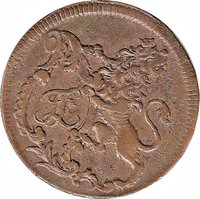
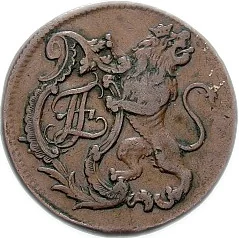
Hessian lion left, looking right, with ornate FL monogram frame at left.
Inscription:
FL

Reverse

Description:
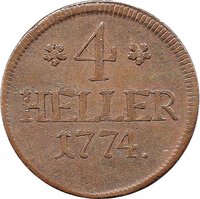
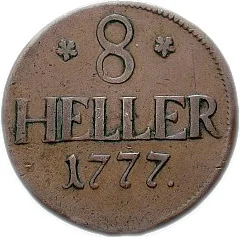
Dated three-line inscription with denomination.
Inscription:
*8*

HELLER

1777.
Script: Latin

Edge

Mints

NameMark
Kassel

Mintings

YearMint MarkMintageQualityCollection
1774
1777

Historical background

In 1774, the currency situation in the Landgraviate of Hesse-Cassel was one of relative stability and strength, a notable achievement in the fragmented and often chaotic monetary landscape of the Holy Roman Empire. This stability was largely the legacy of Landgrave Frederick II, who had ascended to the throne in 1760. He inherited a treasury depleted by the Seven Years' War but implemented rigorous fiscal policies, including the infamous practice of leasing Hessian soldiers to Great Britain, which generated substantial foreign revenue. This income allowed him to amass a large war chest and avoid the debasement of coinage—a common shortcut for other German princes facing debt.

The landgraviate operated on the Reichsthaler (Imperial Thaler) standard, as mandated by imperial ordinances. The primary silver coin was the Hessen-Casselischer Reichsthaler, which was minted to a reliable fineness and weight, earning it trust in regional commerce. However, practical daily transactions were dominated by a complex system of smaller subsidiary coins, including Gute Groschen and Albuses, whose values were defined in fractions of the Thaler. The real monetary challenge was not internal minting but the constant circulation of hundreds of foreign coins from neighboring states, each with fluctuating intrinsic values, which complicated trade and required vigilant exchange tables.

This hard-currency stability was fundamentally tied to the landgrave’s mercenary policies and his authoritarian, centralized control over finances. While it provided economic credibility and facilitated the landgraviate's role as a significant financial power, it was a stability built on a morally questionable foundation. The system’s robustness in 1774 stood in stark contrast to the experiences of many contemporary German territories, positioning Hesse-Cassel not only as a militarized state but also as one with an unusually sound and formidable treasury.

Series: 1774 Landgraviate of Hesse-Cassel circulation coins

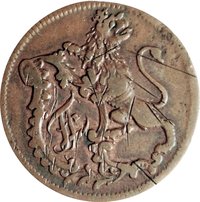
2 Hellers obverse
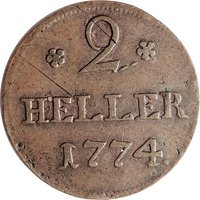
2 Hellers reverse
2 Hellers
1774
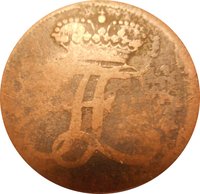
3 Hellers obverse
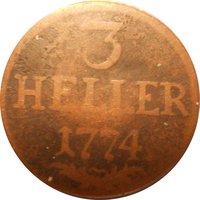
3 Hellers reverse
3 Hellers
1774
4 Hellers obverse
4 Hellers reverse
4 Hellers
1774-1782
8 Hellers obverse
8 Hellers reverse
8 Hellers
1774-1777
💎 Extremely Rare