

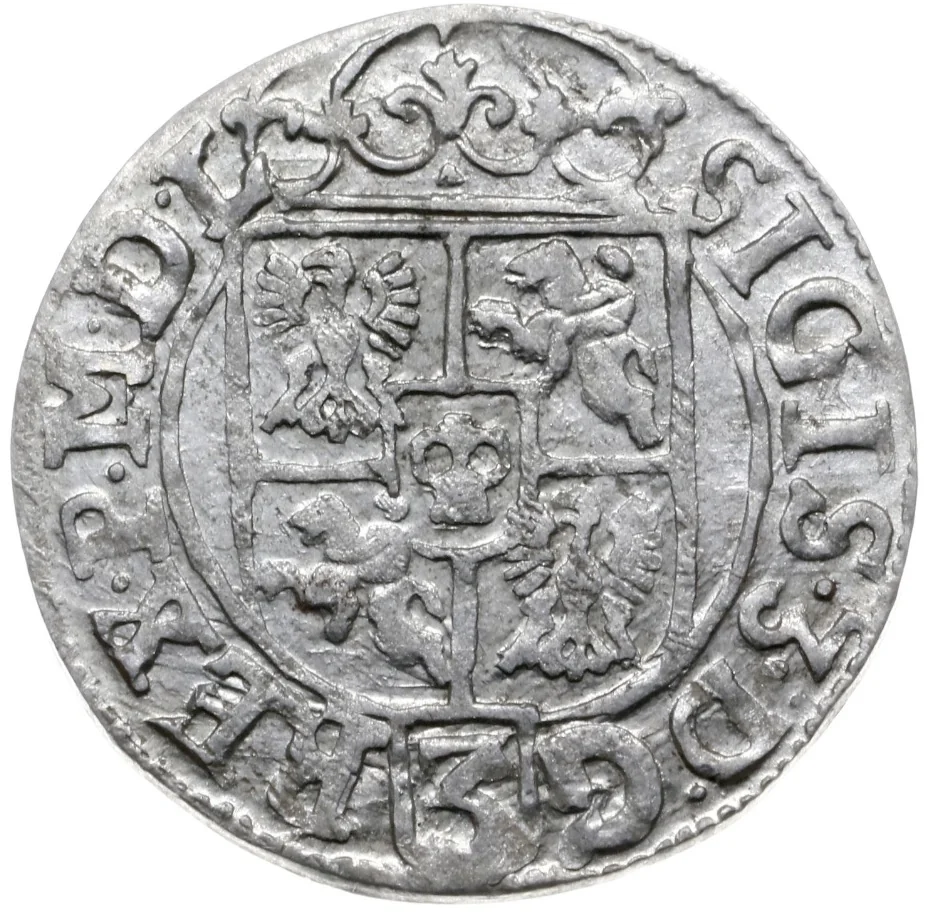
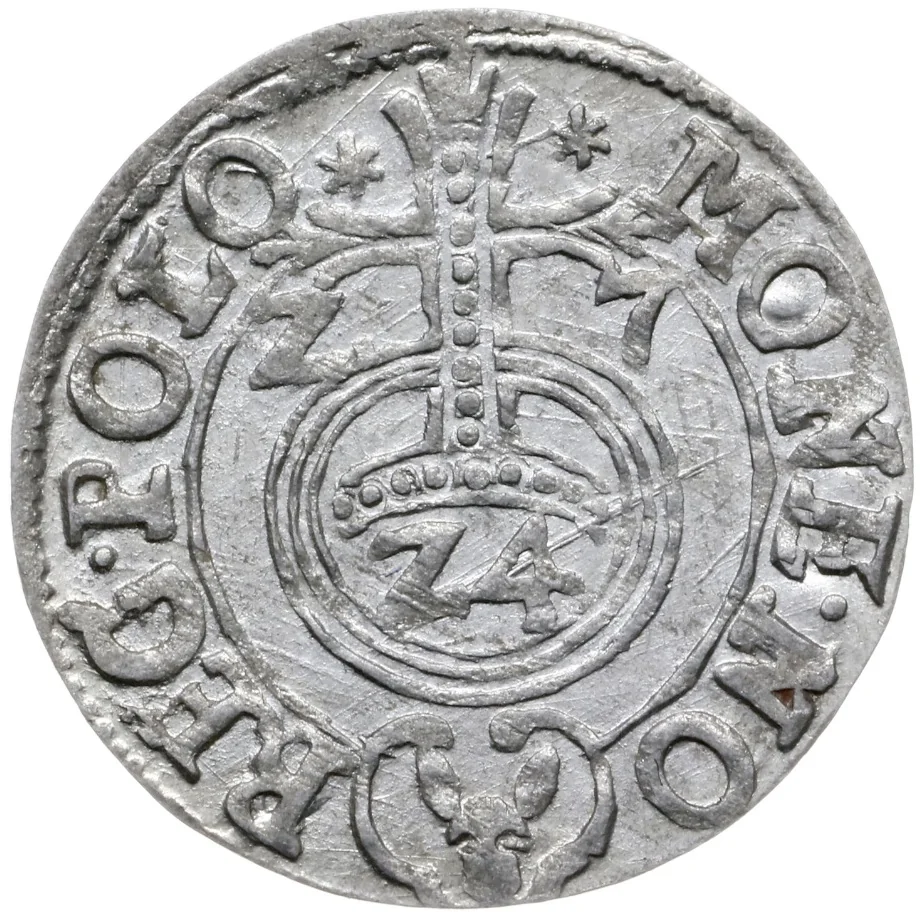
1½ Groschen – Polish–Lithuanian Commonwealth
Poland
Context
Year: 1627
Country: Poland 
Issuer: Polish–Lithuanian Commonwealth
Ruler: Sigismund III Vasa
Currency:
(1573—1795)
Demonetized: Yes
Material
References
KM: #Click to copy to clipboard41
Numista: #136389
Value
Bullion value: $2.11
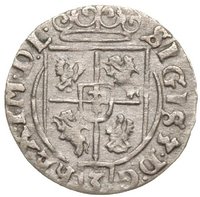
Obverse
Inscription:
SIGIS 3 D G (3) REX P M D L
Script: Latin
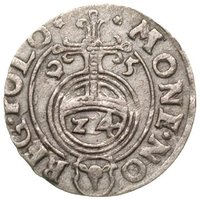
Reverse
Inscription:
MONE NO (Półkozic coat of arms) REG POLO
Script: Latin
Edge
Mints
| Name | Mark |
|---|---|
| Bydgoszcz | — |
Mintings
| Year | Mint Mark | Mintage | Quality | Collection |
|---|---|---|---|---|
| 1627 | — | — |
Historical background
In 1627, the Polish–Lithuanian Commonwealth was grappling with a severe monetary crisis rooted in decades of debasement and external economic pressures. The core problem was the proliferation of inferior coinage, particularly small denominations like copper szelągs (shillings) and silver ternars, which were minted with a face value far exceeding their intrinsic metal content. This practice, driven by the state's need for revenue, especially to fund ongoing wars like the conflict with Sweden, led to rampant inflation and a classic manifestation of Gresham's Law: "bad money drives out good." High-quality foreign coins, such as Hungarian gold ducats and full-weight German thalers, were hoarded or exported, leaving the domestic economy awash in depreciated currency.
The crisis was exacerbated by the activities of private mints, most notoriously those operated by the Tytler brothers in Bydgoszcz and Poznań under royal license. These mints produced massive quantities of debased coinage for immense private profit, further flooding the market and destroying public trust in the currency. The situation caused social unrest, as soldiers and officials paid in worthless coin rebelled, and merchants struggled with unpredictable prices. The Sejm (parliament) recognized the danger, as the monetary chaos threatened both the Crown's ability to finance its military and the stability of the entire Commonwealth's economic life.
In response, the government of King Sigismund III Vasa took decisive action in 1627. The reform of 1627 introduced a new, stable monetary system based on a silver złoty (złoty polski), which was a unit of account tied to tangible, full-weight silver coins. Critically, the reform shut down the private mints and reasserted royal control over coinage. While the reform did not instantly cure all economic ills, it successfully stabilized the currency for a period, restored some confidence, and demonstrated the Crown's ability to address a systemic crisis, marking a crucial, if temporary, halt to the financial decay of the Commonwealth.
The crisis was exacerbated by the activities of private mints, most notoriously those operated by the Tytler brothers in Bydgoszcz and Poznań under royal license. These mints produced massive quantities of debased coinage for immense private profit, further flooding the market and destroying public trust in the currency. The situation caused social unrest, as soldiers and officials paid in worthless coin rebelled, and merchants struggled with unpredictable prices. The Sejm (parliament) recognized the danger, as the monetary chaos threatened both the Crown's ability to finance its military and the stability of the entire Commonwealth's economic life.
In response, the government of King Sigismund III Vasa took decisive action in 1627. The reform of 1627 introduced a new, stable monetary system based on a silver złoty (złoty polski), which was a unit of account tied to tangible, full-weight silver coins. Critically, the reform shut down the private mints and reasserted royal control over coinage. While the reform did not instantly cure all economic ills, it successfully stabilized the currency for a period, restored some confidence, and demonstrated the Crown's ability to address a systemic crisis, marking a crucial, if temporary, halt to the financial decay of the Commonwealth.
⭐ Rare