

1½ Groschen – Polish–Lithuanian Commonwealth
Poland
Context
Year: 1625
Country: Poland 
Issuer: Polish–Lithuanian Commonwealth
Ruler: Sigismund III Vasa
Currency:
(1573—1795)
Demonetized: Yes
Material
References
KM: #Click to copy to clipboard41
Numista: #136386
Value
Bullion value: $1.61
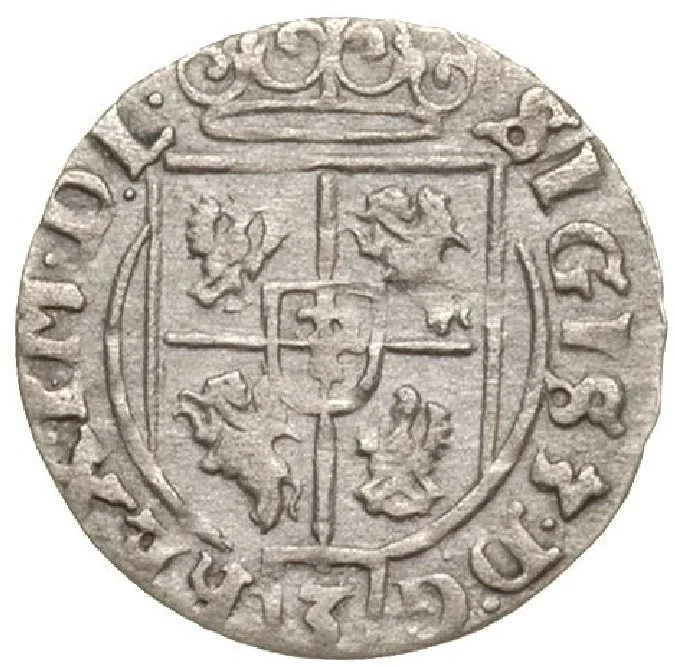
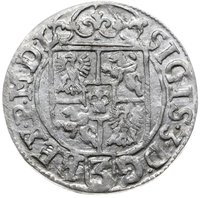
Obverse
Inscription:
SIGIS 3 D G (3) REX P M D L
Script: Latin
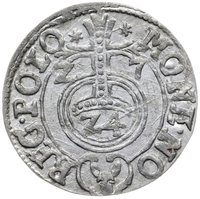
Reverse
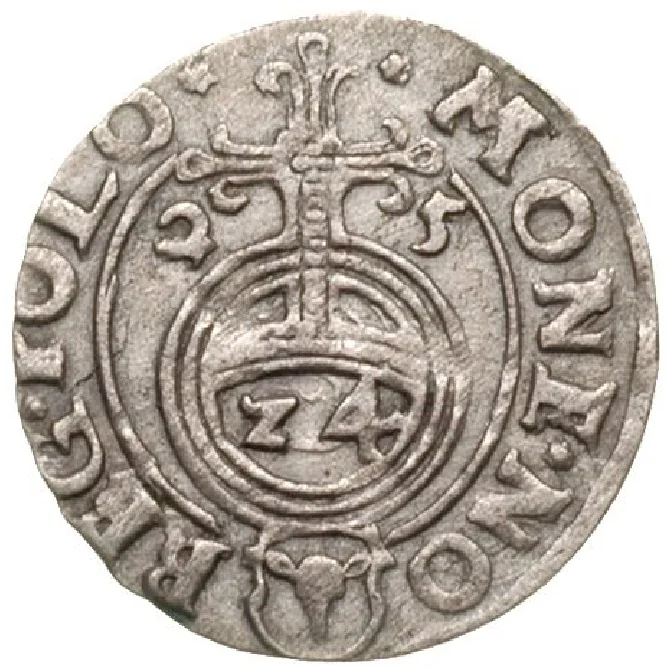
Description:
Orb marked "Z4" and "24." Półkozic coat of arms below, legend around.
Inscription:
MONE NO REG POLO
25
Z4
25
Z4
Script: Latin
Edge
Plain
Mints
| Name | Mark |
|---|---|
| Bydgoszcz | — |
Mintings
| Year | Mint Mark | Mintage | Quality | Collection |
|---|---|---|---|---|
| 1625 | — | — |
Historical background
By 1625, the Polish–Lithuanian Commonwealth was grappling with a severe and multifaceted monetary crisis, primarily driven by the disruptive influx of foreign coinage. The core of the problem was the widespread circulation of debased Prussian ort coins (worth 18 groszy) and Swedish tymf coins, which were intentionally minted with less silver than their official face value. These coins, often introduced through trade and military interactions, flooded the Commonwealth, as foreign rulers and mint operators profited from the difference between the metal value and the nominal value. This practice drove full-value domestic coins, like the good silver Polish tymf and szóstak, out of circulation, in accordance to Gresham's Law ("bad money drives out good").
The situation was exacerbated by the chronic financial weakness of the state. The Commonwealth's monarchy, constrained by the powerful nobility (szlachta) and their parliamentary institution (the Sejm), lacked a strong central fiscal authority and the ability to impose effective taxes. Consequently, the state mint in Krakow operated sporadically and could not produce enough quality coinage to stabilize the market. Attempts at reform, such as the monetary ordinance of 1623, proved ineffective as they failed to stop the inflow of bad coin and could not enforce a uniform currency across the vast Commonwealth.
This monetary chaos had direct and damaging consequences for the economy and social stability. It created price inflation, particularly in silver-based wholesale trade, and eroded trust in the coinage system. Soldiers and mercenaries, often paid in debased coin, saw the real value of their wages plummet, leading to unrest and mutinies—a critical problem for a Commonwealth engaged in nearly constant warfare on its northern and eastern frontiers. Thus, in 1625, the currency situation was not merely an economic issue but a significant factor undermining military effectiveness and the internal cohesion of the state.
The situation was exacerbated by the chronic financial weakness of the state. The Commonwealth's monarchy, constrained by the powerful nobility (szlachta) and their parliamentary institution (the Sejm), lacked a strong central fiscal authority and the ability to impose effective taxes. Consequently, the state mint in Krakow operated sporadically and could not produce enough quality coinage to stabilize the market. Attempts at reform, such as the monetary ordinance of 1623, proved ineffective as they failed to stop the inflow of bad coin and could not enforce a uniform currency across the vast Commonwealth.
This monetary chaos had direct and damaging consequences for the economy and social stability. It created price inflation, particularly in silver-based wholesale trade, and eroded trust in the coinage system. Soldiers and mercenaries, often paid in debased coin, saw the real value of their wages plummet, leading to unrest and mutinies—a critical problem for a Commonwealth engaged in nearly constant warfare on its northern and eastern frontiers. Thus, in 1625, the currency situation was not merely an economic issue but a significant factor undermining military effectiveness and the internal cohesion of the state.
🌱 Fairly Common