

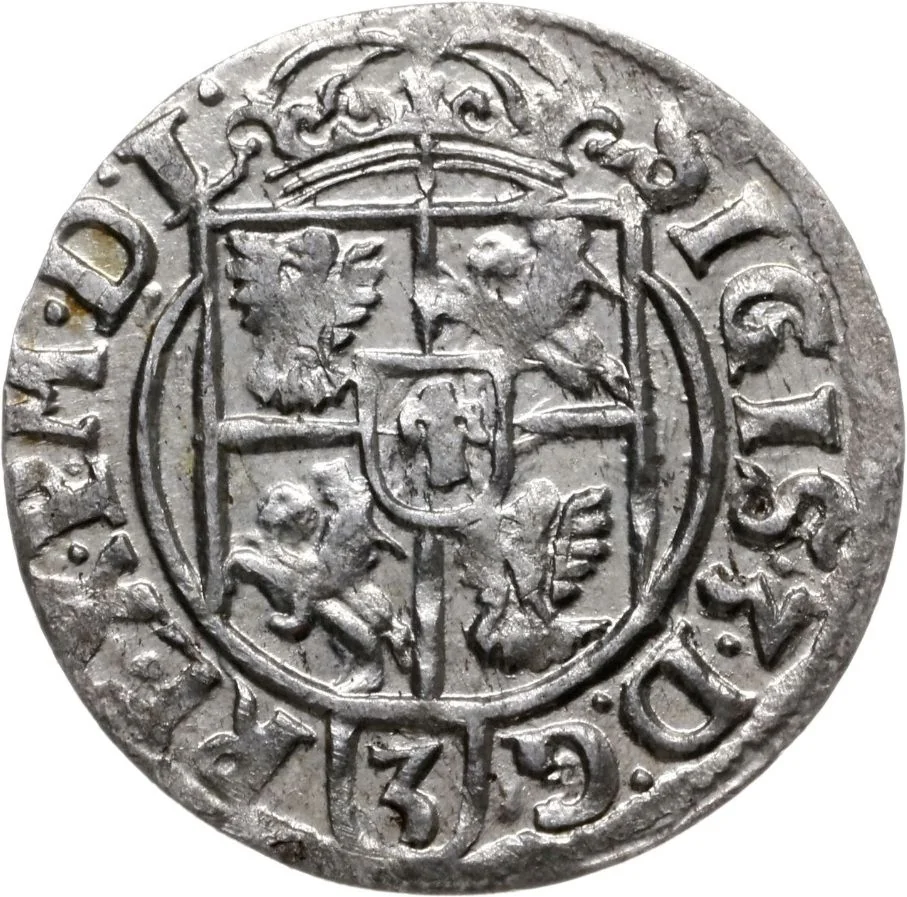
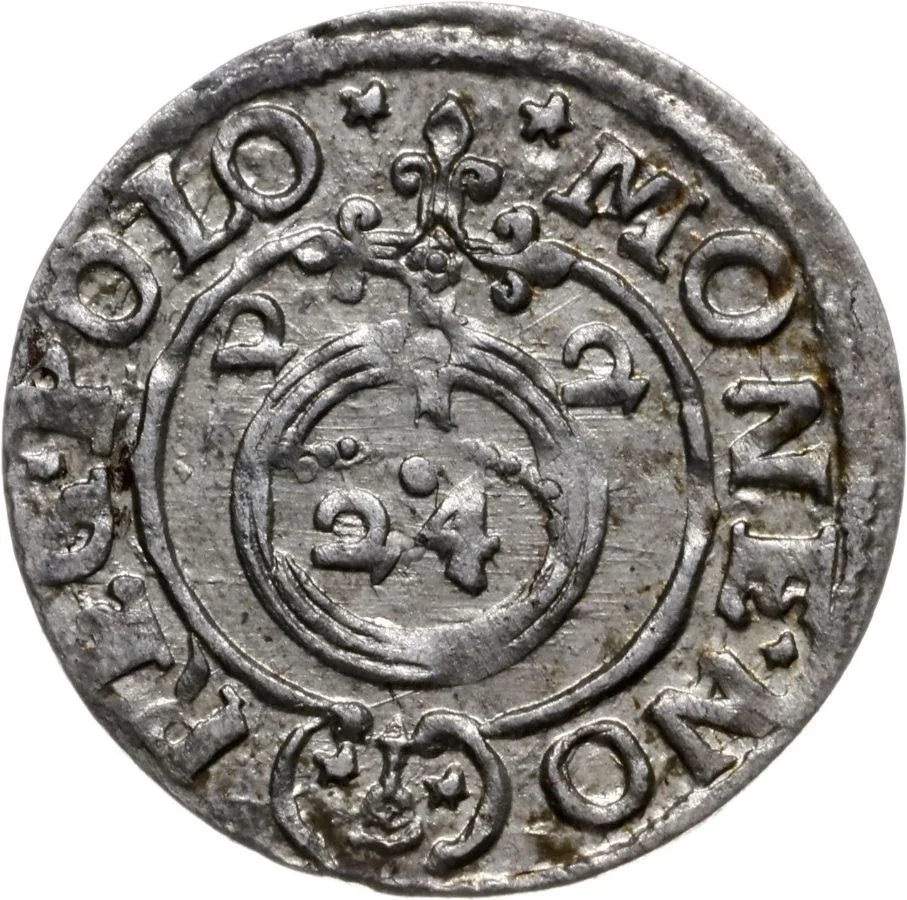
1½ Groschen – Polish–Lithuanian Commonwealth
Poland
Context
Year: 1622
Country: Poland 
Issuer: Polish–Lithuanian Commonwealth
Ruler: Sigismund III Vasa
Currency:
(1573—1795)
Demonetized: Yes
Material
References
KM: #Click to copy to clipboard41
Numista: #136366
Value
Bullion value: $1.59
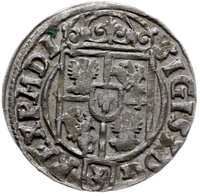
Obverse
Inscription:
SIGIS 3 D G (3) REX P M D L
Script: Latin
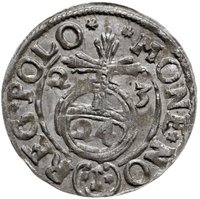
Reverse
Inscription:
MONE NO (*↑*) REG POLO
Script: Latin
Edge
Plain
Mints
| Name | Mark |
|---|---|
| Bydgoszcz | — |
Mintings
| Year | Mint Mark | Mintage | Quality | Collection |
|---|---|---|---|---|
| 1622 | — | — |
Historical background
In 1622, the Polish–Lithuanian Commonwealth was grappling with a severe monetary crisis rooted in decades of debasement and the disruptive influx of foreign coinage. The core problem was the proliferation of lightweight, substandard coins, particularly the small silver szeląg (shilling) and the copper boratynka, which were minted in massive quantities to fund the state's expensive wars, notably the conflicts with Sweden and the Ottoman Empire. This practice, known as "krótka moneta" (short coin), eroded public trust as the intrinsic metal value of coins fell sharply below their face value, leading to rampant inflation, price instability, and a classic "bad money drives out good" (Gresham's Law) scenario where full-weight silver coins like talers were hoarded or exported.
The situation was exacerbated by the chaotic circulation of a vast array of foreign currencies, especially German, Prussian, and Dutch coins, which flowed into the Commonwealth due to its active grain trade. This created a complex and unreliable multi-currency system where exchange rates fluctuated wildly, hindering commerce and state finance. Attempts at reform, such as the monetary ordinances of the early 1620s, proved ineffective as the Crown's urgent need for revenue, often controlled by the Sejm (parliament) dominated by nobility resistant to taxation, continued to prioritize short-term minting profits over long-term stability.
Consequently, by 1622, the economic and social consequences were deeply felt. The debasement effectively taxed the population, particularly the lower nobility and townspeople, eroding their purchasing power and causing widespread grievance. The monetary chaos reflected the broader weaknesses of the Commonwealth's political system, where the central government lacked the power to enforce consistent fiscal policy. This crisis undermined economic development, contributed to social unrest, and left the treasury perpetually strained on the eve of further major military engagements in the Thirty Years' War.
The situation was exacerbated by the chaotic circulation of a vast array of foreign currencies, especially German, Prussian, and Dutch coins, which flowed into the Commonwealth due to its active grain trade. This created a complex and unreliable multi-currency system where exchange rates fluctuated wildly, hindering commerce and state finance. Attempts at reform, such as the monetary ordinances of the early 1620s, proved ineffective as the Crown's urgent need for revenue, often controlled by the Sejm (parliament) dominated by nobility resistant to taxation, continued to prioritize short-term minting profits over long-term stability.
Consequently, by 1622, the economic and social consequences were deeply felt. The debasement effectively taxed the population, particularly the lower nobility and townspeople, eroding their purchasing power and causing widespread grievance. The monetary chaos reflected the broader weaknesses of the Commonwealth's political system, where the central government lacked the power to enforce consistent fiscal policy. This crisis undermined economic development, contributed to social unrest, and left the treasury perpetually strained on the eve of further major military engagements in the Thirty Years' War.
🌱 Fairly Common