

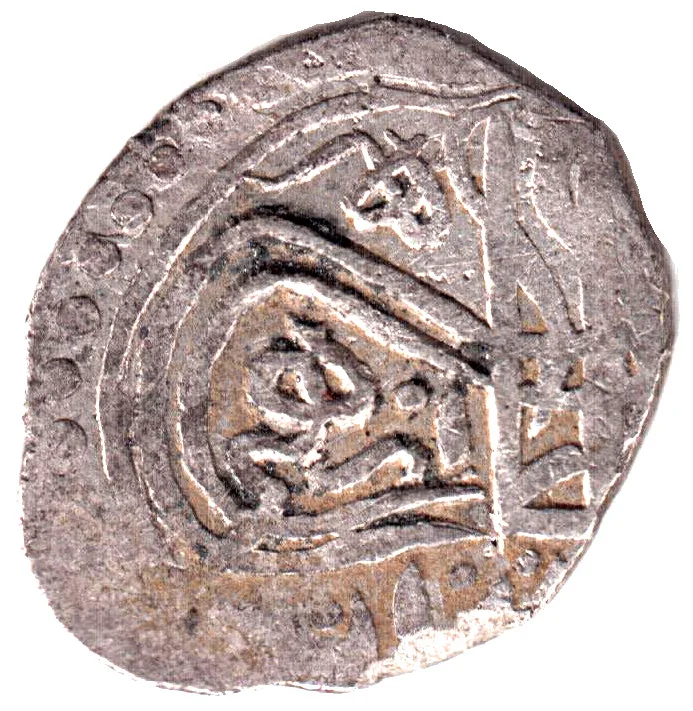
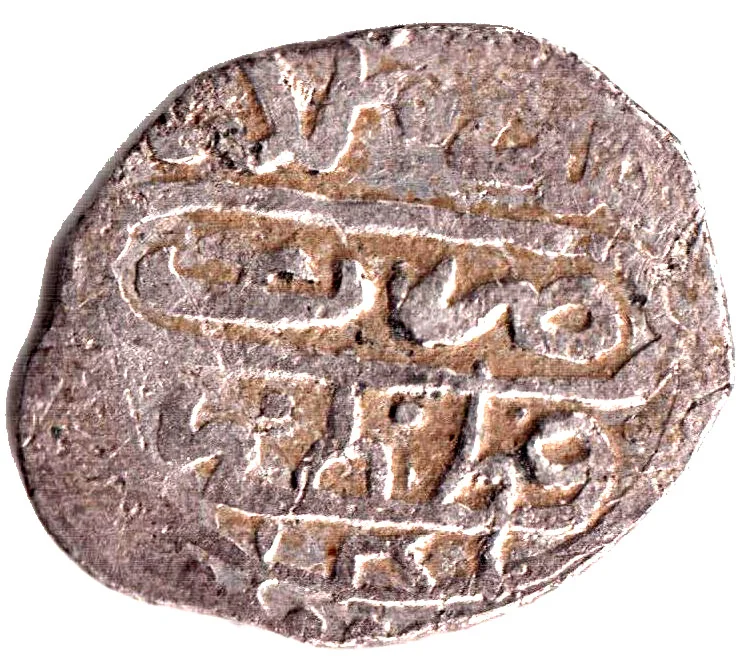
1 Beshlik – Ottoman Empire
Turkey
Context
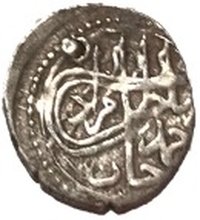
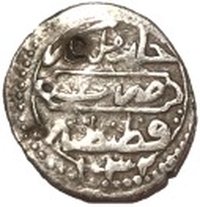
Year: 1640
Islamic (Hijri) Year: 1049
Country: Turkey 
Issuer: Ottoman Empire
Ruler: Ibrahim I
Currency:
(1327—1687)
Demonetized: Yes
Material
Weight: 1.55 g
Silver weight: 1.55 g
Shape: Irregular round
Composition: Silver
Standard: Gold twentieth ounce
Magnetic: No
Alignment: Coin alignment
flip
References
KM: #Click to copy to clipboard71.2
Numista: #136341
Value
Bullion value: $4.50
Mintings
| Year | Mint Mark | Mintage | Quality | Collection |
|---|---|---|---|---|
| 1640 | — | — |
Historical background
In 1640, the Ottoman Empire's currency system was in a state of significant strain, caught between the legacy of a stable past and the pressures of a changing global economy. The cornerstone of Ottoman finance was the silver akçe, but its value had been steadily eroded by decades of debasement. Sultans, facing relentless fiscal pressures from costly military campaigns, palace expenditures, and a growing bureaucracy, repeatedly reduced the silver content of the coinage to generate short-term revenue. This practice, while filling the state coffers temporarily, fueled chronic inflation, disrupted trade, and sowed distrust in the monetary system among both the populace and the empire's intricate network of merchants and tax farmers.
The situation was exacerbated by the influx of cheap silver from the New World into Europe, which then flowed into Ottoman markets through trade. This "Price Revolution" further destabilized the Ottoman silver-based economy by depressing the value of silver itself. Consequently, the empire faced a dual crisis: the internal devaluation of the akçe and the external devaluation of silver as a global commodity. In daily life, this meant price volatility, a preference for older, purer coins (which were hoarded), and the increasing use of foreign gold coins like the Spanish real and Venetian ducat for large transactions, as they offered more reliable stores of value.
Recognizing the crisis, Sultan Ibrahim I (reigned 1640–1648) initiated a major monetary reform early in his reign. The most significant measure was the introduction of a new, high-value silver coin called the kuruş (or piastre), modeled on the European thaler. The kuruş was intended to restore confidence by containing a fixed and substantial weight of pure silver, providing a stable unit for state finance and long-distance trade. While this reform marked a crucial step toward modernization and temporarily stabilized the currency, it did not fully resolve the underlying structural issues of the Ottoman economy, setting the stage for further monetary adjustments in the decades to follow.
The situation was exacerbated by the influx of cheap silver from the New World into Europe, which then flowed into Ottoman markets through trade. This "Price Revolution" further destabilized the Ottoman silver-based economy by depressing the value of silver itself. Consequently, the empire faced a dual crisis: the internal devaluation of the akçe and the external devaluation of silver as a global commodity. In daily life, this meant price volatility, a preference for older, purer coins (which were hoarded), and the increasing use of foreign gold coins like the Spanish real and Venetian ducat for large transactions, as they offered more reliable stores of value.
Recognizing the crisis, Sultan Ibrahim I (reigned 1640–1648) initiated a major monetary reform early in his reign. The most significant measure was the introduction of a new, high-value silver coin called the kuruş (or piastre), modeled on the European thaler. The kuruş was intended to restore confidence by containing a fixed and substantial weight of pure silver, providing a stable unit for state finance and long-distance trade. While this reform marked a crucial step toward modernization and temporarily stabilized the currency, it did not fully resolve the underlying structural issues of the Ottoman economy, setting the stage for further monetary adjustments in the decades to follow.
💎 Extremely Rare