Logo Title
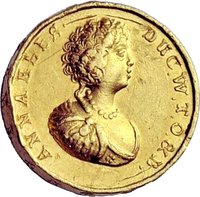
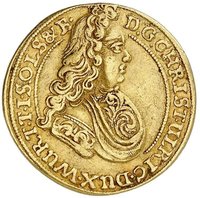
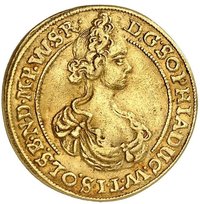
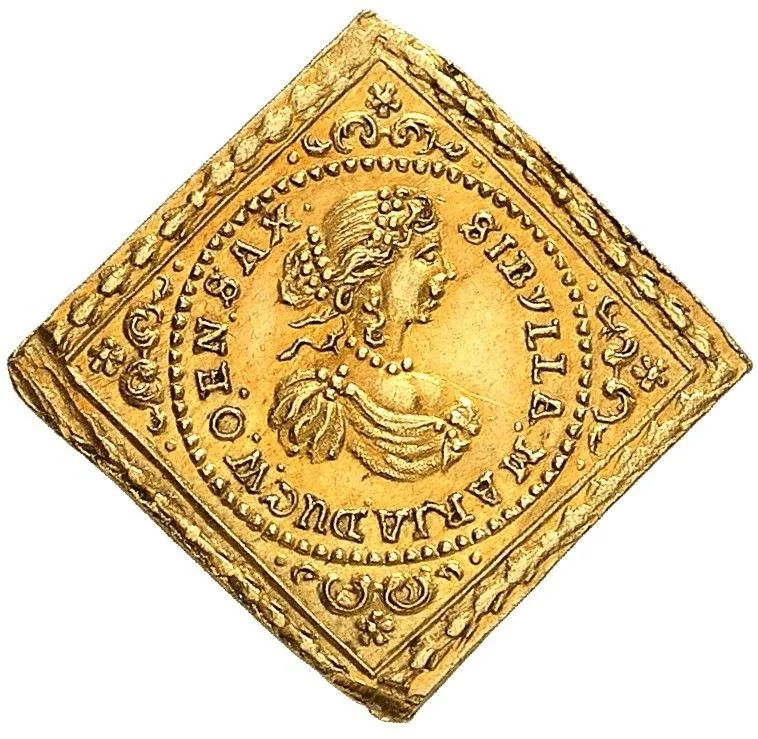
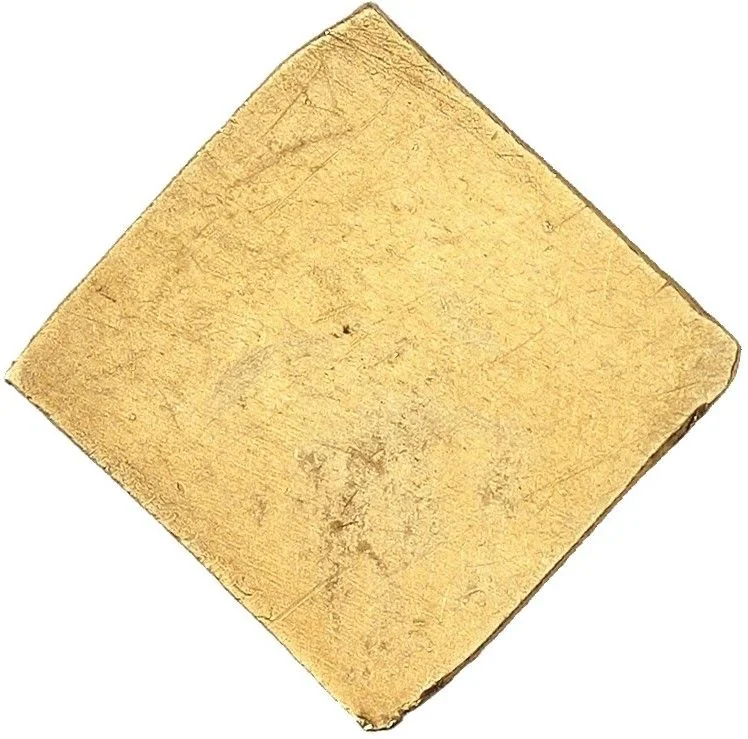
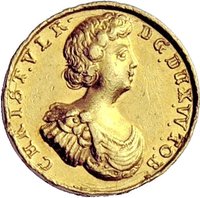
obverse
reverse
Fritz Rudolf Künker GmbH & Co. KG, Osnabrück and Lübke & Wiedemann KG, Leonberg

½ Ducat – Duchy of Württemberg-Oels

Circulating commemorative coins
Commemoration: To the second wedding of Christian Ulrich with Sybilla Marie of Saxe-Merseburg
Context
Year: 1683
Country: Bohemia
Currency:
Demonetized: Yes
Material
Weight: 1.71 g
Gold weight: 1.69 g
Shape: Klippe
Composition: 98.6% Gold
Magnetic: No
Technique: Klippe
References
KM: #Click to copy to clipboard70
Numista: #135960
Value
Bullion value: $280.26

Obverse

Description:
Sybil Marie bust, right profile.
Script: Latin

Reverse

Description:
Blank.

Edge
Categories

Marriage

Mintings

YearMint MarkMintageQualityCollection
1683

Historical background

In 1683, the Duchy of Württemberg-Oels, a small Silesian territory ruled by a cadet branch of the House of Württemberg, operated within the complex and fragmented monetary landscape of the Holy Roman Empire. The duchy itself did not possess a major minting authority comparable to larger electoral states. Consequently, its economy relied heavily on a circulation of diverse coins, including those issued by neighboring Silesian duchies, Imperial Reichsthaler from the central mints, and a multitude of smaller regional and foreign coins. This proliferation of currencies of varying weight, purity, and value made trade cumbersome and created constant potential for exchange rate disputes and debasement.

The primary monetary reference point was the Reichsthaler, a large silver coin defined by Imperial ordinance. However, the daily reality involved a plethora of smaller denominations like Groschen, Kreuzer, and Pfennige. The value of these coins was often tied to the fluctuating price of silver, and the frequent wars of the period, particularly those against the Ottoman Empire (notably the ongoing Great Turkish War), placed severe strain on public finances across the Empire. This pressure often led states to debase their subsidiary coinage—reducing silver content to create more money from the same metal reserves—a practice that caused inflation and eroded public trust.

For Duke Silvius II Frederick of Württemberg-Oels, governing from 1668 to 1697, managing this currency situation was a persistent challenge. His administration had to monitor exchange rates, police against counterfeit and excessively debased foreign coins, and attempt to stabilize local accounting systems. The economic policy would have focused on ensuring that taxes and dues, often calculated in a stable Reichsthaler account, could be reliably collected from a populace using a混乱的 mix of physical coinage, all while navigating the broader economic turbulence of late 17th-century Central Europe.
Legendary