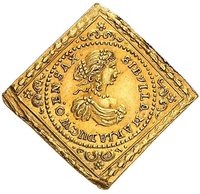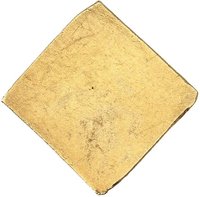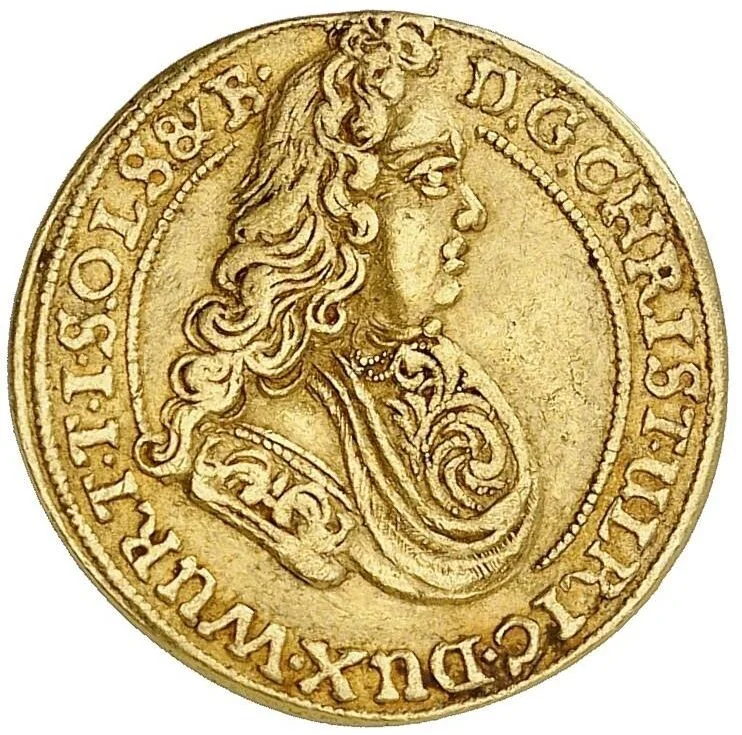
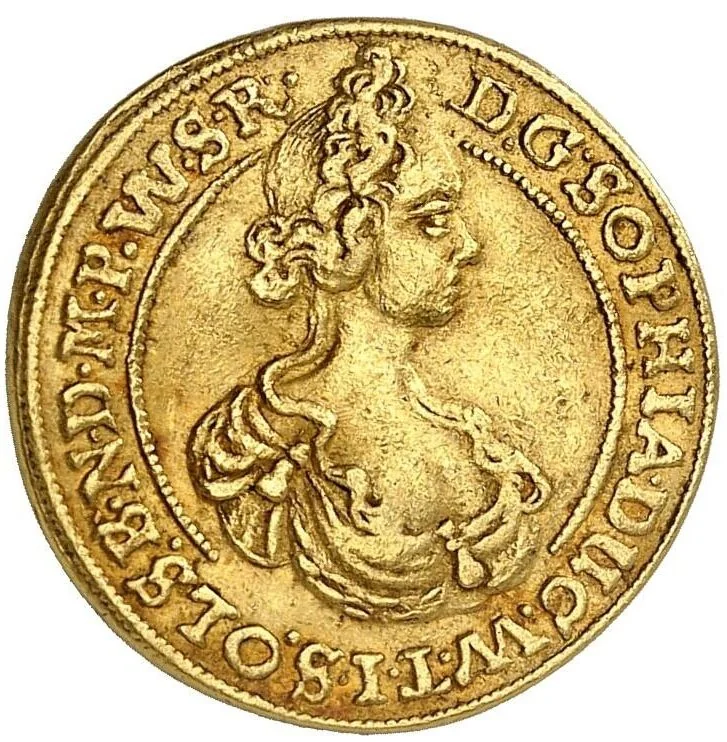
In 1700, the currency situation in the Duchy of Württemberg-Oels was complex and fragmented, reflecting its political status as a small Silesian territory under the rule of a cadet branch of the Württemberg dynasty. The duchy, like much of the Holy Roman Empire, operated within a decentralized monetary system where numerous states issued their own coinage. While the dukes of Württemberg-Oels possessed the right of minting (
Münzrecht), their coins circulated alongside a multitude of other regional and imperial currencies, leading to chronic confusion and instability in everyday commerce.
The primary accounting unit was the Reichsthaler, a large silver coin defined by imperial decree, but the actual circulating medium consisted of a plethora of smaller denominations like groschen, kreuzers, and pfennigs. The value and silver content of these coins varied significantly, not only between states but also over time, as rulers often engaged in debasement to generate revenue. For Württemberg-Oels, a relatively minor territory, its own coinage was limited and likely played a secondary role to the more dominant currencies of neighboring powers, particularly those of the Habsburg lands, which exerted strong political and economic influence over Silesia.
This monetary fragmentation created significant challenges for trade and administration. Merchants and officials required constant reference to exchange rate tables (
Kurstabellen) to conduct business, and the population suffered from the inflationary effects of debased coinage. The situation in 1700 was thus one of inherent weakness and dependency, with the duchy's monetary policy largely reactive to the decisions of larger imperial actors and the ongoing competitive devaluations that characterized the period, known as the
Kipper- und Wipperzeit aftermath.