

1 rupee – Awadh
Add to wishlist
India
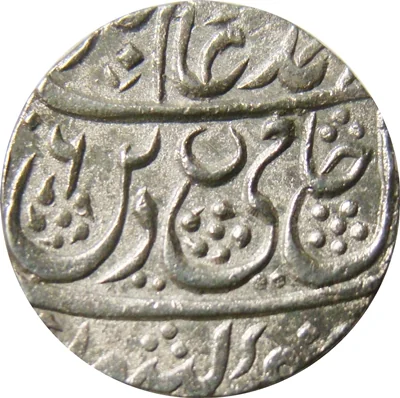
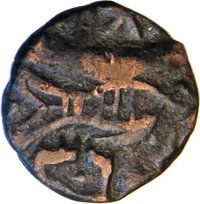
Obverse
Description:
Shah Alam II, dated by year.
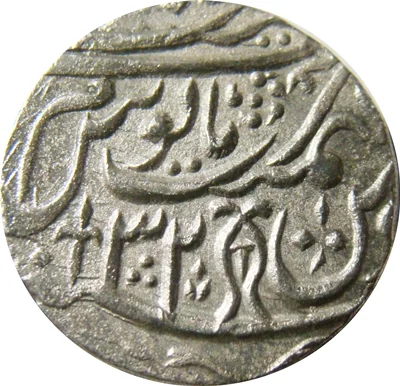
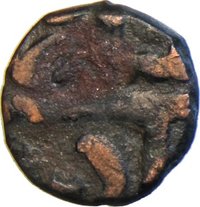
Reverse
Description:
Mim, halberd, fish, mint, year.
Edge
Mints
| Name | Mark |
|---|---|
| Najibabad | — |
Mintings
| Year | Mint Mark | Mintage | Quality | Collection |
|---|---|---|---|---|
| 1792 | — | — | ||
| 1793 | — | — | ||
| 1799 | — | — | ||
| 1800 | — | — |
Historical background
In 1792, the currency situation in Awadh was a complex and deteriorating system, reflecting the broader political and economic pressures on the nawabi state. The primary circulating currency was the Awadh rupee, a silver coin minted in Lucknow and Faizabad, but its value and purity were increasingly unstable. This instability stemmed from the enormous annual tribute of 76 lakh rupees owed to the British East India Company under the Treaty of 1775, which drained the treasury of silver bullion. To meet these demands, Nawab Asaf-ud-Daula’s administration often resorted to debasement—reducing the silver content in coins—which led to inflation and a loss of public confidence.
The monetary landscape was further complicated by the simultaneous circulation of older, purer Mughal rupees (like the Sicca) and various regional rupees, creating a chaotic exchange environment. Merchants and revenue officials had to constantly negotiate different valuation rates (batta), hampering trade and administration. Furthermore, the British, whose Resident wielded significant influence in Lucknow, increasingly insisted on payments in their own, more stable Calcutta Sicca Rupee, effectively creating a two-tier economy and siphoning even more wealth out of Awadh.
This currency crisis was symptomatic of Awadh’s fading sovereignty. The nawab’s inability to control his own coinage highlighted the state’s financial exhaustion and its subordination to British economic interests. The debased coins and monetary confusion eroded internal economic cohesion, weakening the foundation of the Awadh state and making it increasingly dependent on British financial "assistance," a cycle that would culminate in annexation less than six decades later.
The monetary landscape was further complicated by the simultaneous circulation of older, purer Mughal rupees (like the Sicca) and various regional rupees, creating a chaotic exchange environment. Merchants and revenue officials had to constantly negotiate different valuation rates (batta), hampering trade and administration. Furthermore, the British, whose Resident wielded significant influence in Lucknow, increasingly insisted on payments in their own, more stable Calcutta Sicca Rupee, effectively creating a two-tier economy and siphoning even more wealth out of Awadh.
This currency crisis was symptomatic of Awadh’s fading sovereignty. The nawab’s inability to control his own coinage highlighted the state’s financial exhaustion and its subordination to British economic interests. The debased coins and monetary confusion eroded internal economic cohesion, weakening the foundation of the Awadh state and making it increasingly dependent on British financial "assistance," a cycle that would culminate in annexation less than six decades later.
✨ Legendary