

1 speciedaler – Denmark
Add to wishlist
Denmark
Context
Material
References
KM: #
Numista: #132002
Value
Bullion value: $62.43
Obverse
Description:
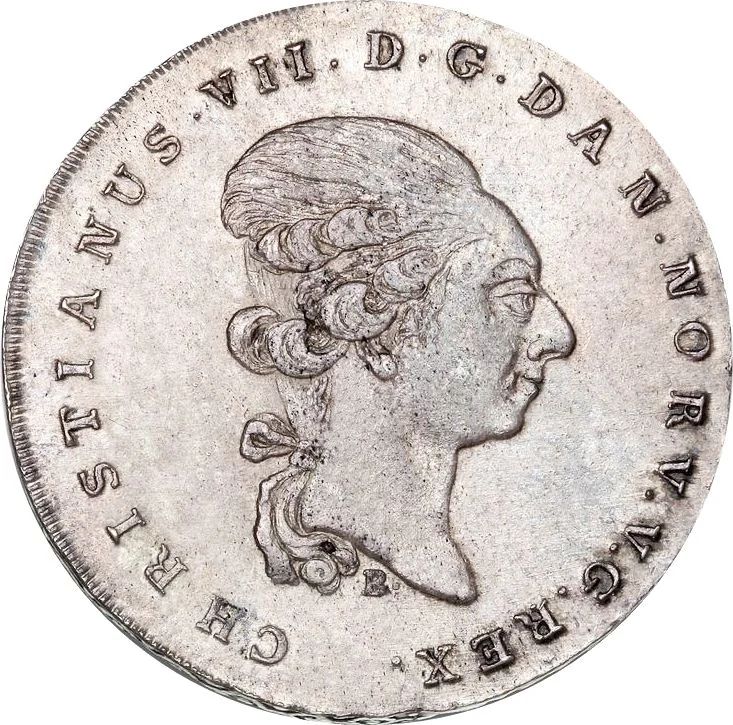
King Christian VII facing right, hair tied back. Legend around rim. Engraver's "B" below neck.
Inscription:
CHRISTIANVS • VII •D • G • DAN • NORV • V • G • REX •
· B ·
· B ·
Script: Latin
Engraver: Johan Ephraim Bauert
Reverse
Description:
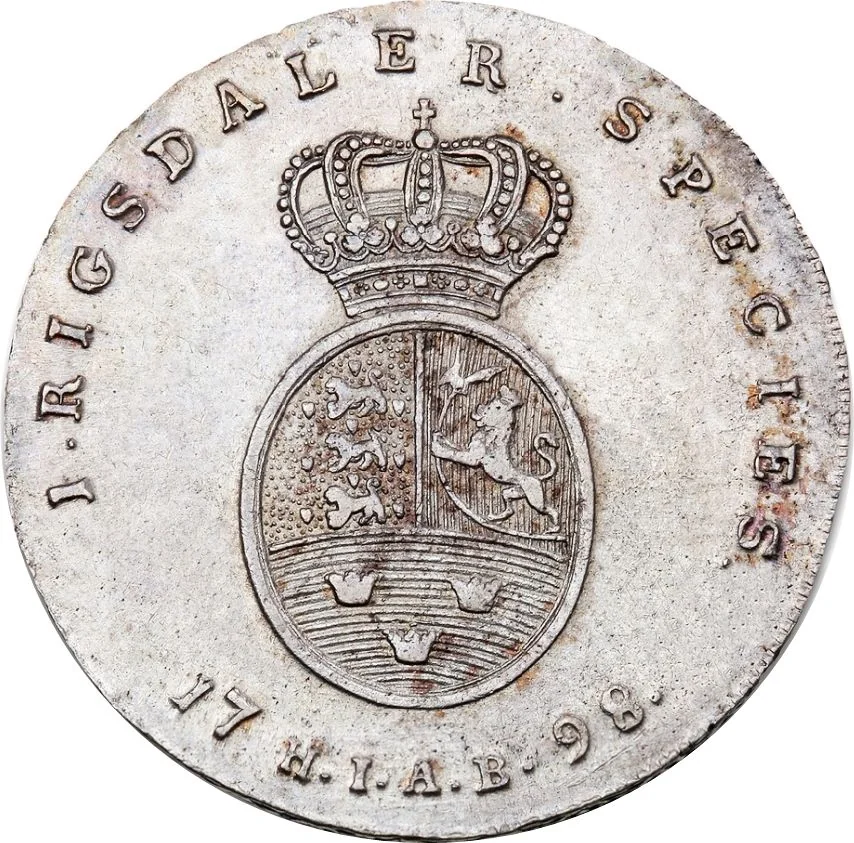
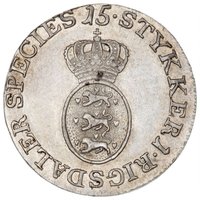
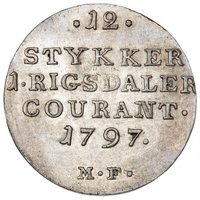
Shield with Danish, Norwegian, and Swedish arms. Value above, date flanking mintmaster initials below.
Inscription:
1 · RIGSDALER · SPECIES ·
17 H·I·A·B· 98 ·
17 H·I·A·B· 98 ·
Script: Latin
Edge
Categories
| Symbols> Coat of Arms |
Mints
| Name | Mark |
|---|---|
| Altona, Schleswig-Holstein | — |
| Royal Danish Mint | CHL |
| Royal Danish Mint | HIAB |
Mintings
Historical background
In 1795, Denmark found itself in a precarious monetary situation, caught between the pressures of international war and domestic economic strain. As a neutral nation during the French Revolutionary Wars, Denmark profited greatly from trade and shipping for the belligerent powers. However, this very neutrality became a financial burden. The state was engaged in a massive and costly naval rearmament, the "Flaadens Ære" (Fleet's Honour) program, to protect its lucrative convoys from the British and other navies. To finance this, the government had already resorted to borrowing and was on the verge of depleting its traditional sources of revenue.
The core of the currency crisis lay in the disparity between Denmark's two primary currencies: the rigsdaler specie, a stable silver-based coin, and the rigsdaler courant, a less valuable paper currency used for daily transactions. The war-driven economic boom led to a surge in imports, which were paid for in solid silver specie. This caused a severe drain of silver bullion from the Danish treasury and the wider economy, as the physical coins were exported to settle international balances. Consequently, the value of the remaining silver rigsdaler soared in relation to the paper courant, creating a disruptive dual-exchange system and undermining public confidence in the paper money.
Facing a critical shortage of silver, the Danish government took a drastic step in 1795 by demonetizing the large silver rigsdaler specie coin. This meant the state refused to accept its own primary silver coin for tax payments, effectively forcing it out of circulation in a bid to hoard the remaining precious metal. This emergency measure, while preserving the state's bullion reserves, exacerbated the currency confusion and placed significant hardship on the populace and merchants. It was a clear sign that the financial strains of wartime neutrality were testing the limits of the absolute monarchy's economic system, setting the stage for the state bankruptcy that would follow in 1813.
The core of the currency crisis lay in the disparity between Denmark's two primary currencies: the rigsdaler specie, a stable silver-based coin, and the rigsdaler courant, a less valuable paper currency used for daily transactions. The war-driven economic boom led to a surge in imports, which were paid for in solid silver specie. This caused a severe drain of silver bullion from the Danish treasury and the wider economy, as the physical coins were exported to settle international balances. Consequently, the value of the remaining silver rigsdaler soared in relation to the paper courant, creating a disruptive dual-exchange system and undermining public confidence in the paper money.
Facing a critical shortage of silver, the Danish government took a drastic step in 1795 by demonetizing the large silver rigsdaler specie coin. This meant the state refused to accept its own primary silver coin for tax payments, effectively forcing it out of circulation in a bid to hoard the remaining precious metal. This emergency measure, while preserving the state's bullion reserves, exacerbated the currency confusion and placed significant hardship on the populace and merchants. It was a clear sign that the financial strains of wartime neutrality were testing the limits of the absolute monarchy's economic system, setting the stage for the state bankruptcy that would follow in 1813.
💎 Extremely Rare