

1 Farthing – United Kingdom
United Kingdom
Context
Years: 1771–1775
Issuer: United Kingdom 
Ruler: George III
Currency:
(1158—1970)
Demonetization: 31 December 1869
Material
References
KM: #Click to copy to clipboard602
Numista: #13152
Obverse
Description:
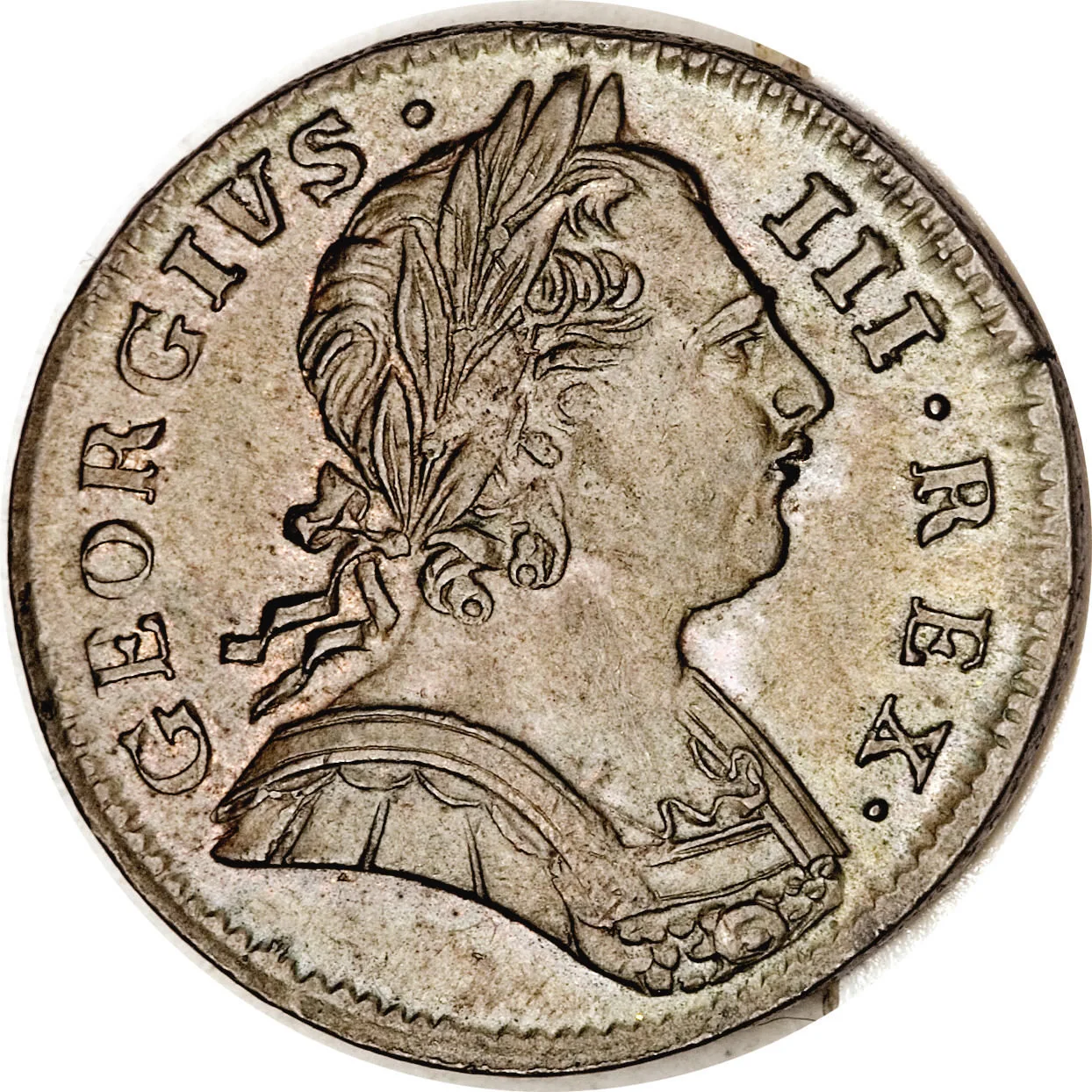
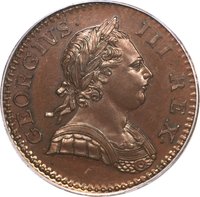
George III laureate and cuirassed bust right, legend surrounding.
Inscription:
GEORGIVS· III·REX·
Script: Latin
Reverse
Description:
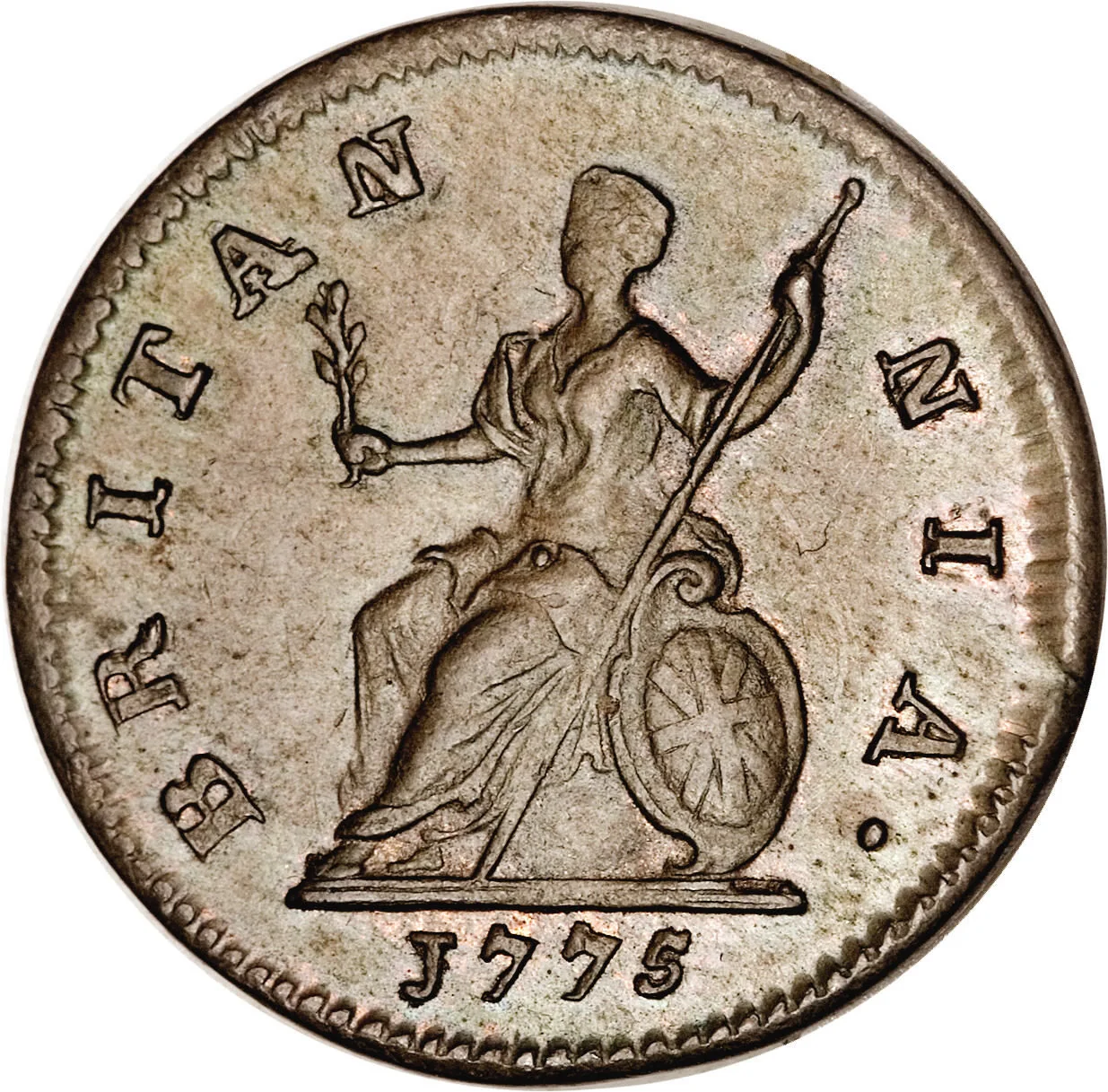
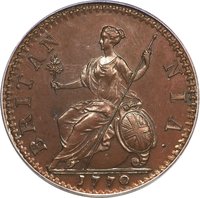
Britannia seated left, holding trident and olive branch, Union Jack shield beside her, legend around, date below.
Inscription:
BRITAN NIA·
1775
1775
Script: Latin
Edge
Plain
Mints
| Name | Mark |
|---|---|
| Royal Mint (Tower of London) | — |
Mintings
| Year | Mint Mark | Mintage | Quality | Collection |
|---|---|---|---|---|
| 1771 | — | — | ||
| 1773 | — | — | ||
| 1774 | — | — | ||
| 1775 | — | — |
Historical background
In 1771, the United Kingdom’s currency system was a complex and often unstable bimetallic standard, based on both gold and silver. The foundational unit was the pound sterling, but the physical money in circulation was a heterogeneous mix. Official gold guineas (minted from 1663) and silver shillings and crowns circulated alongside a vast array of foreign coins, particularly Spanish silver dollars and Portuguese gold moidores, which were widely accepted in trade. The critical problem was the chronic shortage of official small-denomination coinage for everyday transactions. This scarcity was exacerbated by the high demand for silver in trade with Asia, which caused much British silver coinage to be melted down and exported, leaving the public and businesses struggling with a dysfunctional system of worn, clipped, and counterfeit coins.
The government and the Royal Mint had been largely inactive in addressing this shortage for decades. Consequently, the economy relied heavily on a patchwork of substitutes. These included private banknotes issued by the Bank of England and country banks, promissory notes from merchants, and token coinage issued unofficially by towns and manufacturers. This created a precarious financial environment where the value and acceptability of money were highly localised and uncertain. The recoinage of gold in 1774 was already being planned as a partial remedy, aimed at removing worn guineas from circulation, but it did little to solve the acute shortage of trustworthy small change.
Thus, in 1771, the British monetary system was in a state of strained transition. It was underpinned by the strength of the pound as a unit of account and London’s growing role as a financial centre, yet it was practically hampered by a severe lack of reliable specie. This situation placed a significant burden on commerce and daily life, highlighting the tension between the nation’s expanding global economic ambitions and its underdeveloped and inadequate domestic coinage system. The period set the stage for the more comprehensive reforms that would follow, including the great recoinage of 1816 that would eventually move Britain towards a formal gold standard.
The government and the Royal Mint had been largely inactive in addressing this shortage for decades. Consequently, the economy relied heavily on a patchwork of substitutes. These included private banknotes issued by the Bank of England and country banks, promissory notes from merchants, and token coinage issued unofficially by towns and manufacturers. This created a precarious financial environment where the value and acceptability of money were highly localised and uncertain. The recoinage of gold in 1774 was already being planned as a partial remedy, aimed at removing worn guineas from circulation, but it did little to solve the acute shortage of trustworthy small change.
Thus, in 1771, the British monetary system was in a state of strained transition. It was underpinned by the strength of the pound as a unit of account and London’s growing role as a financial centre, yet it was practically hampered by a severe lack of reliable specie. This situation placed a significant burden on commerce and daily life, highlighting the tension between the nation’s expanding global economic ambitions and its underdeveloped and inadequate domestic coinage system. The period set the stage for the more comprehensive reforms that would follow, including the great recoinage of 1816 that would eventually move Britain towards a formal gold standard.
🌱 Common