

½ Guinea – United Kingdom
United Kingdom
Context

Material
References
KM: #Click to copy to clipboard603
Numista: #169920
Value
Bullion value: $641.94
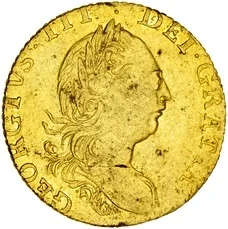
Obverse
Description:
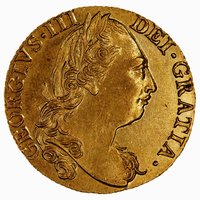
King George III portrait right, simpler style, legend around.
Inscription:
GEORGIVS·III·DEI·GRATIA·
Script: Latin
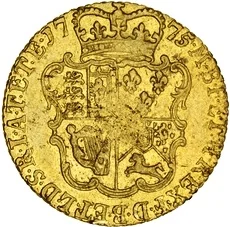
Reverse
Description:
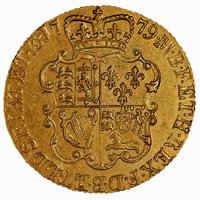
Shield quartered with the arms of England & Scotland, France, Ireland, and Hanover; date above, legend around.
Inscription:
M·B·F·ET·H·REX·F·D·B·ET·L·D·S·R·I·A·T·ET·E·1775·
Script: Latin
Edge
Reeded
Mintings
| Year | Mint Mark | Mintage | Quality | Collection |
|---|---|---|---|---|
| 1774 | — | — | ||
| 1775 | — | — |
Historical background
In 1774, the currency situation in the United Kingdom was defined by a complex and often strained system based on the gold standard. The official unit of account was the pound sterling (£), which was divided into 20 shillings, each of 12 pence. However, the physical money in circulation was a patchwork of gold guineas, silver shillings and crowns, and copper pennies and halfpennies. A critical problem was the chronic shortage of small-denomination coinage for everyday trade, which hampered commerce and led to widespread use of private tokens, foreign coins (especially Spanish dollars), and even promissory notes issued by local merchants and manufacturers to facilitate transactions.
This scarcity was exacerbated by the government's monetary policy, which fixed the value of the gold guinea at 21 shillings. Due to the fluctuating market prices of precious metals, this official valuation often overvalued gold relative to silver. Consequently, full-weight silver coinage was frequently melted down or exported for profit, leaving the circulating silver currency worn, clipped, and underweight. This phenomenon, known as "Gresham's Law" ("bad money drives out good"), meant the sound silver necessary for a healthy economy was disappearing from circulation, leaving a degraded and unreliable medium for daily business.
The situation was a significant concern for Parliament and merchants alike, occurring against the backdrop of growing industrial activity and colonial tensions. While the Royal Mint produced coins, its output was insufficient to meet the demands of a rapidly expanding economy. This monetary instability highlighted the need for reform, which would eventually lead to major recoinages and the official establishment of the gold standard later in the century. Meanwhile, the economic strains contributed to broader fiscal pressures, as the British government grappled with the enormous debt from the Seven Years' War and the rising costs of administering its American colonies.
This scarcity was exacerbated by the government's monetary policy, which fixed the value of the gold guinea at 21 shillings. Due to the fluctuating market prices of precious metals, this official valuation often overvalued gold relative to silver. Consequently, full-weight silver coinage was frequently melted down or exported for profit, leaving the circulating silver currency worn, clipped, and underweight. This phenomenon, known as "Gresham's Law" ("bad money drives out good"), meant the sound silver necessary for a healthy economy was disappearing from circulation, leaving a degraded and unreliable medium for daily business.
The situation was a significant concern for Parliament and merchants alike, occurring against the backdrop of growing industrial activity and colonial tensions. While the Royal Mint produced coins, its output was insufficient to meet the demands of a rapidly expanding economy. This monetary instability highlighted the need for reform, which would eventually lead to major recoinages and the official establishment of the gold standard later in the century. Meanwhile, the economic strains contributed to broader fiscal pressures, as the British government grappled with the enormous debt from the Seven Years' War and the rising costs of administering its American colonies.
✨ Legendary