

6 pence – United Kingdom
Add to wishlist
United Kingdom
Context
Years: 1743–1758
Issuer: United Kingdom
Ruler: George II
Currency:
(1158—1970)
Demonetized: Yes
Total mintage: 100
Material
References
KM: #
Numista: #13120
Value
Bullion value: $7.09
Obverse
Description:
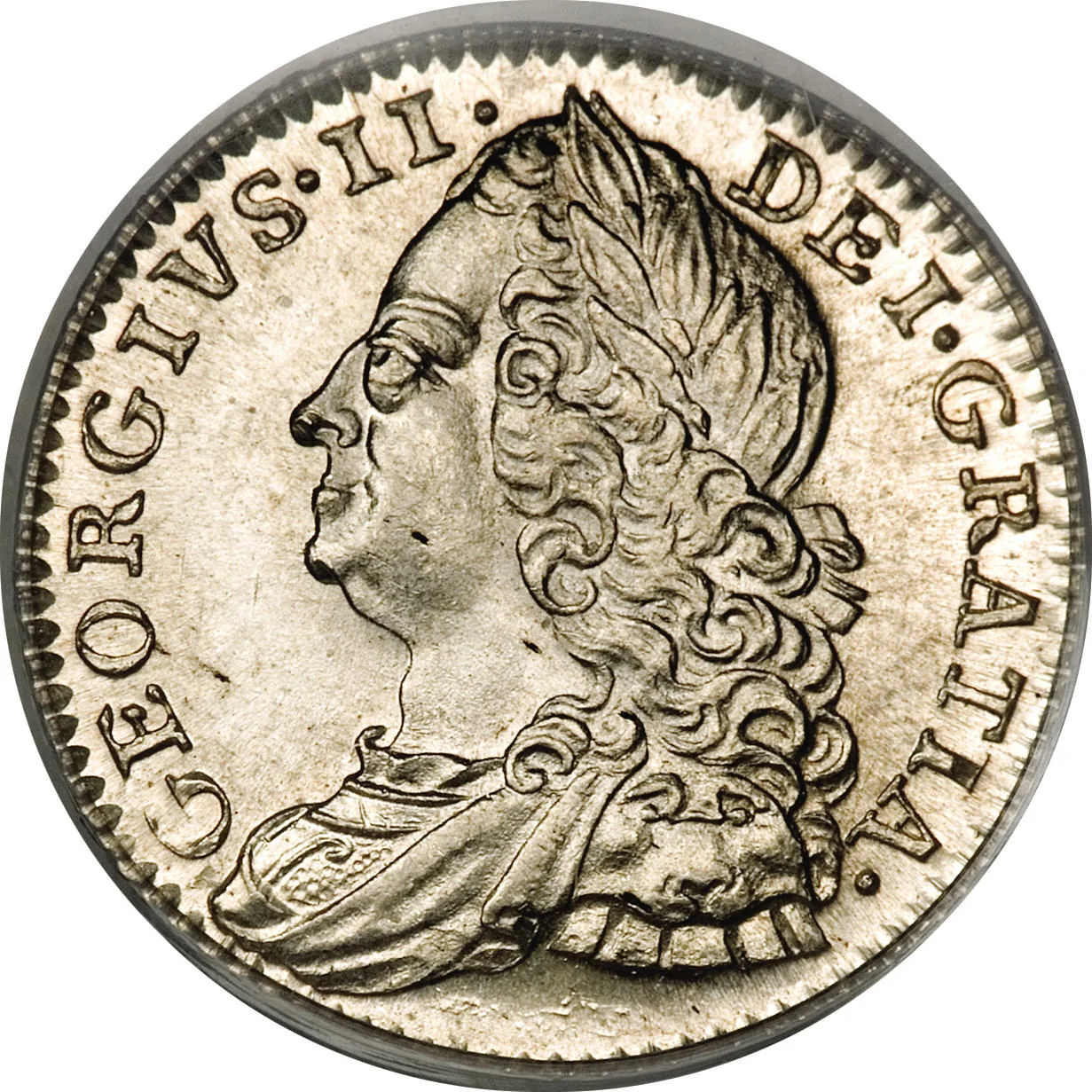
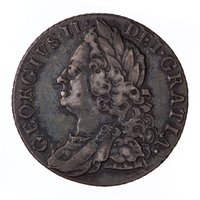
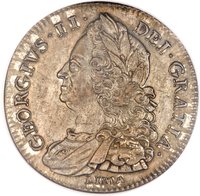
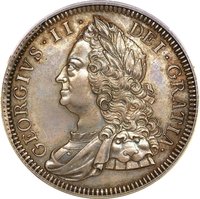
King George II left, draped bust, legend around.
Inscription:
GEORGIUS·II· DEI·GRATIA·
Script: Latin
Engraver: John Tanner
Reverse
Description:
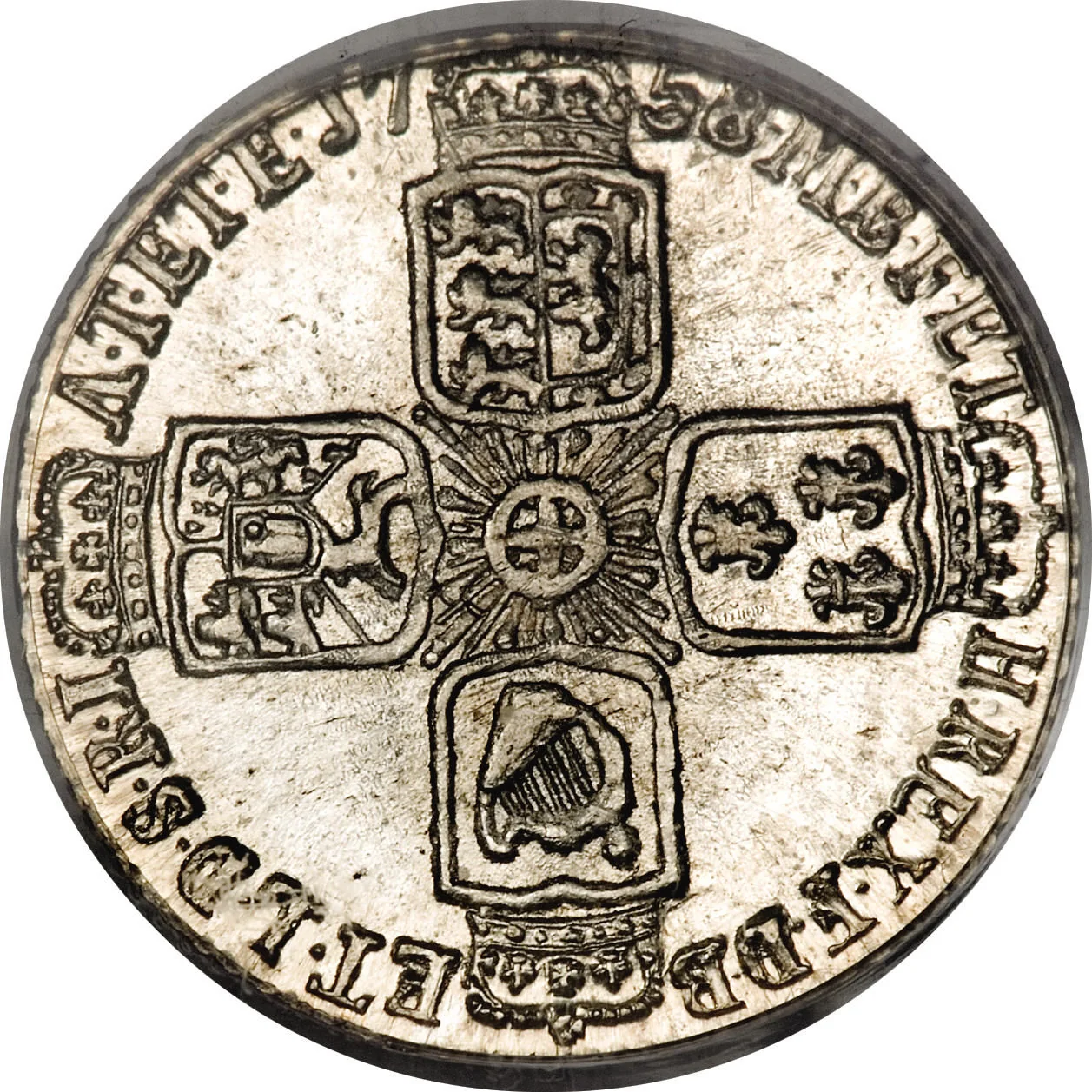
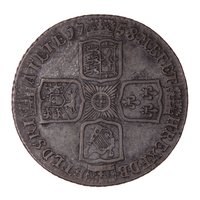
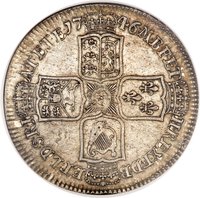
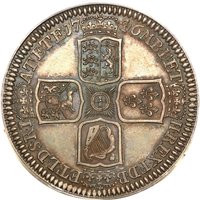
Crowned cruciform shields flanking central Garter star, date above, legend surrounding.
Inscription:
M·B·F·ET H·REX·F·D·B ET·L·D·S·R·I A·T·ET·E·1758·
Script: Latin
Engraver: Johann Ochs
Edge
Diagonal reeding
Mintings
| Year | Mint Mark | Mintage | Quality | Collection |
|---|---|---|---|---|
| 1743 | — | — | ||
| 1745 | — | — | ||
| 1745 | LIMA | — | BU | |
| 1746 | — | 100 | Proof | |
| 1746 | LIMA | — | BU | |
| 1750 | — | — | ||
| 1751 | — | — | ||
| 1757 | — | — | ||
| 1758 | — | — |
Historical background
In 1743, the currency situation in the United Kingdom was characterised by a chronic shortage of small-denomination coinage for everyday trade, a problem that had plagued the nation for decades. The official coin of the realm was silver, but much of it had been clipped, worn, or exported due to the higher price of silver bullion on the continent, leaving the circulating medium in a poor state. While the gold guinea (valued at 21 shillings) was stable and reliable for larger transactions, the scarcity of usable shillings and pennies created a significant practical burden on shopkeepers, labourers, and the general populace, hindering daily commerce.
This shortage was partially addressed by the widespread use of private and token coinage. Traders, towns, and even industrialists like the Anglesey copper mines issued their own unofficial pennies and halfpennies, known as "token" coinage, to facilitate local business. Furthermore, the practice of "cutting money" – physically dividing larger coins like Spanish dollars or crowns into segments to make change – was still common. The government, preoccupied with the War of the Austrian Succession (1740-1748), had not yet undertaken a major recoinage to solve the fundamental problem, leaving the monetary system a patchwork of official, degraded, and private currencies.
Underpinning this unstable everyday reality was the solid foundation of the gold standard, which had been formally established in 1717 when Sir Isaac Newton, as Master of the Mint, set the guinea's value. This linked the pound sterling to a fixed quantity of gold, providing stability for high finance and international trade. Thus, the currency situation in 1743 was a paradox: a sophisticated financial system centred in London, with the Bank of England issuing notes and managing government debt, coexisted with a chaotic and inadequate system of physical small change in the streets and marketplaces across the country.
This shortage was partially addressed by the widespread use of private and token coinage. Traders, towns, and even industrialists like the Anglesey copper mines issued their own unofficial pennies and halfpennies, known as "token" coinage, to facilitate local business. Furthermore, the practice of "cutting money" – physically dividing larger coins like Spanish dollars or crowns into segments to make change – was still common. The government, preoccupied with the War of the Austrian Succession (1740-1748), had not yet undertaken a major recoinage to solve the fundamental problem, leaving the monetary system a patchwork of official, degraded, and private currencies.
Underpinning this unstable everyday reality was the solid foundation of the gold standard, which had been formally established in 1717 when Sir Isaac Newton, as Master of the Mint, set the guinea's value. This linked the pound sterling to a fixed quantity of gold, providing stability for high finance and international trade. Thus, the currency situation in 1743 was a paradox: a sophisticated financial system centred in London, with the Bank of England issuing notes and managing government debt, coexisted with a chaotic and inadequate system of physical small change in the streets and marketplaces across the country.
🌱 Fairly Common