

1 Farthing – United Kingdom
United Kingdom
Context
Years: 1741–1754
Issuer: United Kingdom 
Ruler: George II
Currency:
(1158—1970)
Demonetization: 31 December 1869
Material
References
KM: #Click to copy to clipboard581
Numista: #13119
Obverse
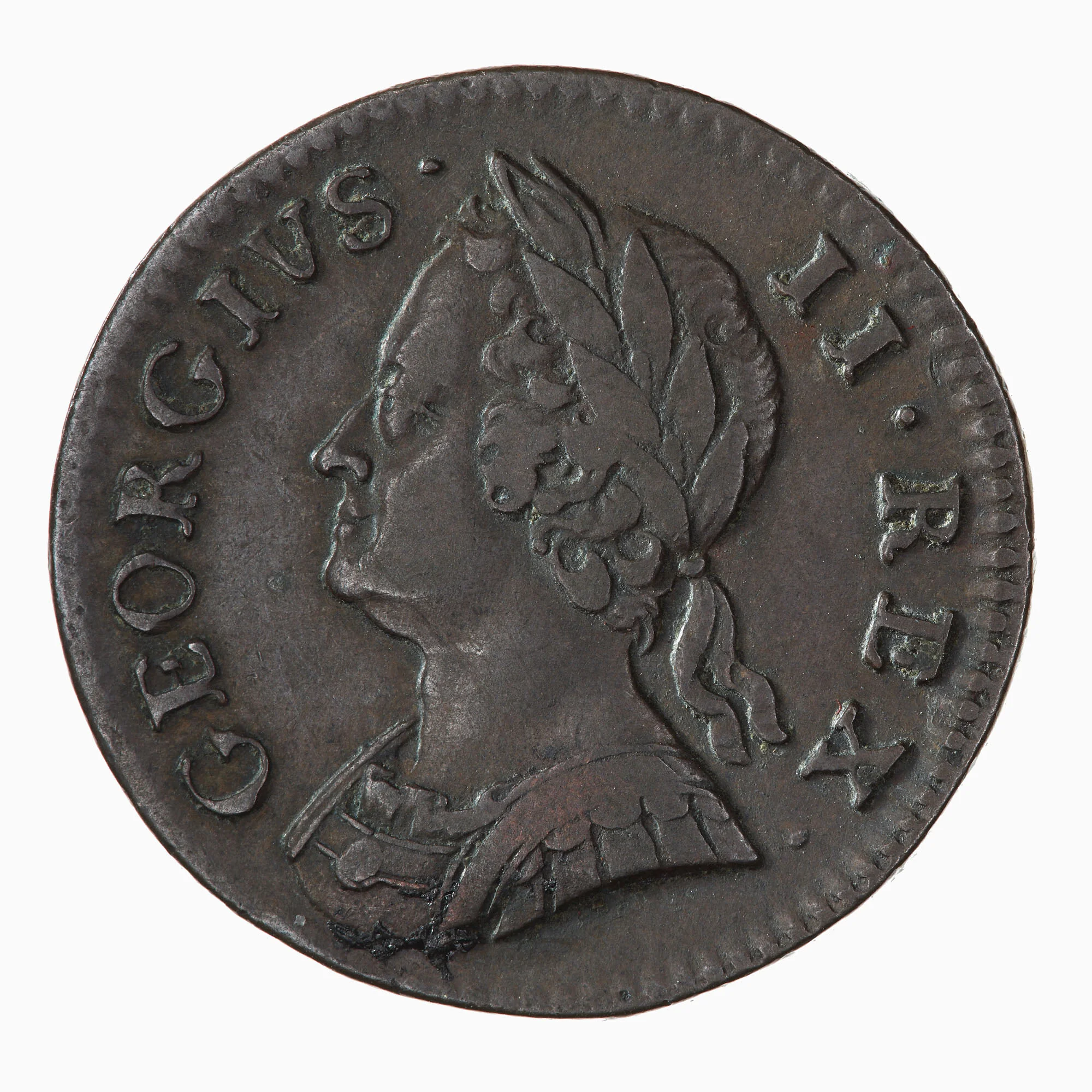
Description:
King George II facing left in armor, legend encircling.
Inscription:
GEORGIVS·II·REX·
Script: Latin
Engraver: John Tanner
Reverse
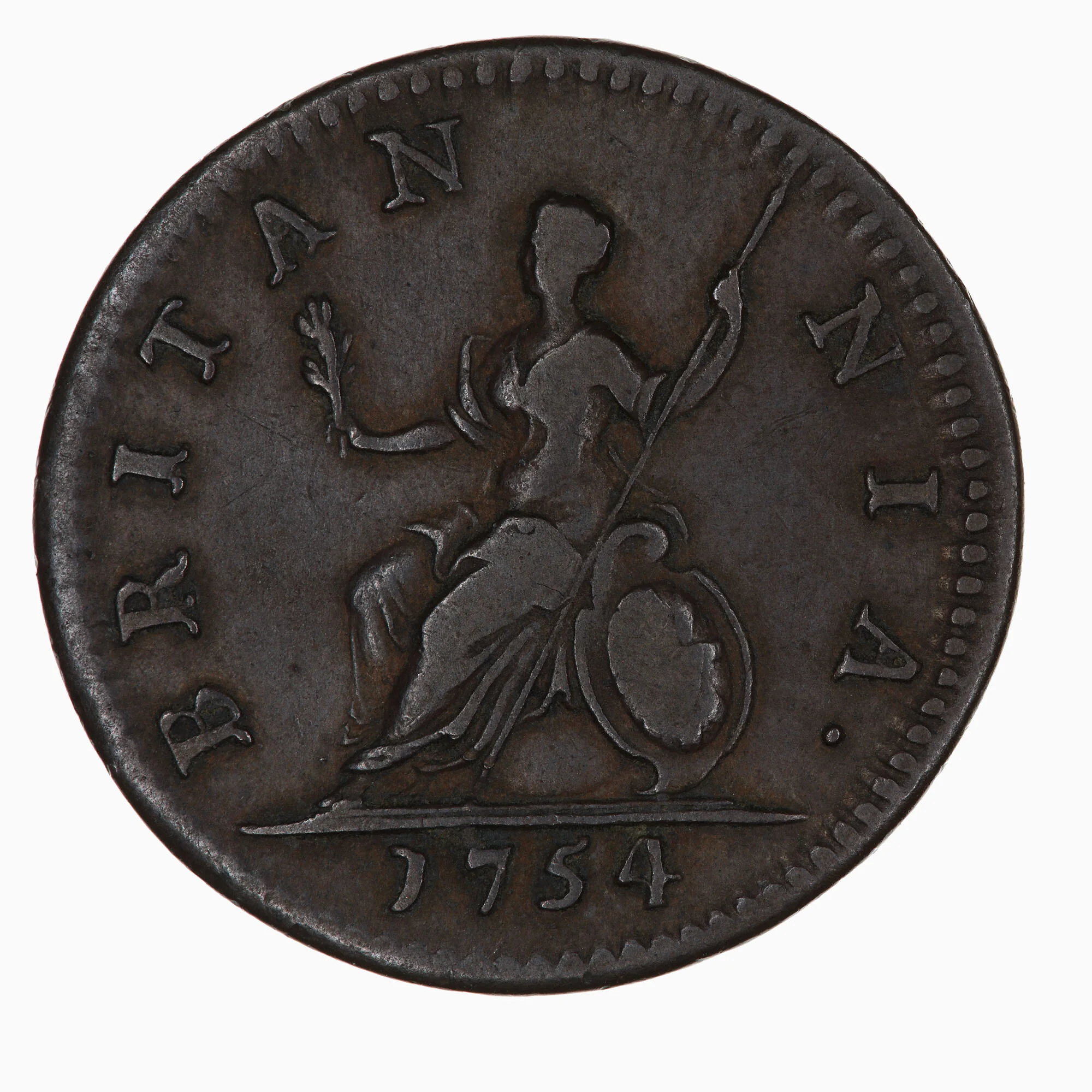
Description:
Britannia seated left, holding trident and olive branch, Union Jack shield beside her, legend around, date below.
Inscription:
BRITAN NIA.
1754
1754
Script: Latin
Edge
Plain
Mints
| Name | Mark |
|---|---|
| Royal Mint (Tower of London) | — |
Mintings
| Year | Mint Mark | Mintage | Quality | Collection |
|---|---|---|---|---|
| 1741 | — | — | ||
| 1744 | — | — | ||
| 1746 | — | — | ||
| 1749 | — | — | ||
| 1750 | — | — | ||
| 1754 | — | — |
Historical background
In 1741, the United Kingdom’s currency system was a complex and often problematic bimetallic standard, based on both gold and silver. The official coinage was defined by the great recoinage of 1696, which had established the gold guinea (originally worth 20 shillings) and the silver shilling as the principal coins. However, the fixed legal ratio between gold and silver did not align with their market values, leading to Gresham’s Law in practice: undervalued silver was often hoarded or exported, while overvalued gold circulated. This resulted in a chronic shortage of reliable small-denomination silver coin for everyday trade, a problem that plagued the economy for decades.
The scarcity of official coinage was partially filled by a chaotic array of alternatives. Merchants and municipalities issued private tokens, foreign coins (especially Spanish dollars and Portuguese moidores) circulated widely, and much business was conducted through credit notes and bills of exchange. The Bank of England, founded in 1694, issued paper notes, but these were largely for high-value transactions in London and not a solution for the common person. The state of the coinage was a source of public frustration and economic inefficiency, hindering commerce and wage payments, particularly outside the capital.
This situation existed within the context of global mercantilist competition and near-constant warfare, notably the War of the Austrian Succession (1740-1748), in which Britain was deeply involved. The war placed immense strain on public finances, leading to increased government borrowing and further inflationary pressures. While calls for monetary reform were growing, a comprehensive solution would not arrive until the mid-1750s, when the gold guinea was formally stabilised at 21 shillings and efforts to replenish the silver coinage began in earnest. Thus, 1741 represents a point of persistent monetary crisis within the tumultuous financial development of eighteenth-century Britain.
The scarcity of official coinage was partially filled by a chaotic array of alternatives. Merchants and municipalities issued private tokens, foreign coins (especially Spanish dollars and Portuguese moidores) circulated widely, and much business was conducted through credit notes and bills of exchange. The Bank of England, founded in 1694, issued paper notes, but these were largely for high-value transactions in London and not a solution for the common person. The state of the coinage was a source of public frustration and economic inefficiency, hindering commerce and wage payments, particularly outside the capital.
This situation existed within the context of global mercantilist competition and near-constant warfare, notably the War of the Austrian Succession (1740-1748), in which Britain was deeply involved. The war placed immense strain on public finances, leading to increased government borrowing and further inflationary pressures. While calls for monetary reform were growing, a comprehensive solution would not arrive until the mid-1750s, when the gold guinea was formally stabilised at 21 shillings and efforts to replenish the silver coinage began in earnest. Thus, 1741 represents a point of persistent monetary crisis within the tumultuous financial development of eighteenth-century Britain.
🌱 Common