

2 Guineas – United Kingdom
United Kingdom
Context

Material
References
KM: #Click to copy to clipboard576
Numista: #13115
Value
Bullion value: $2564.82
Obverse
Description:
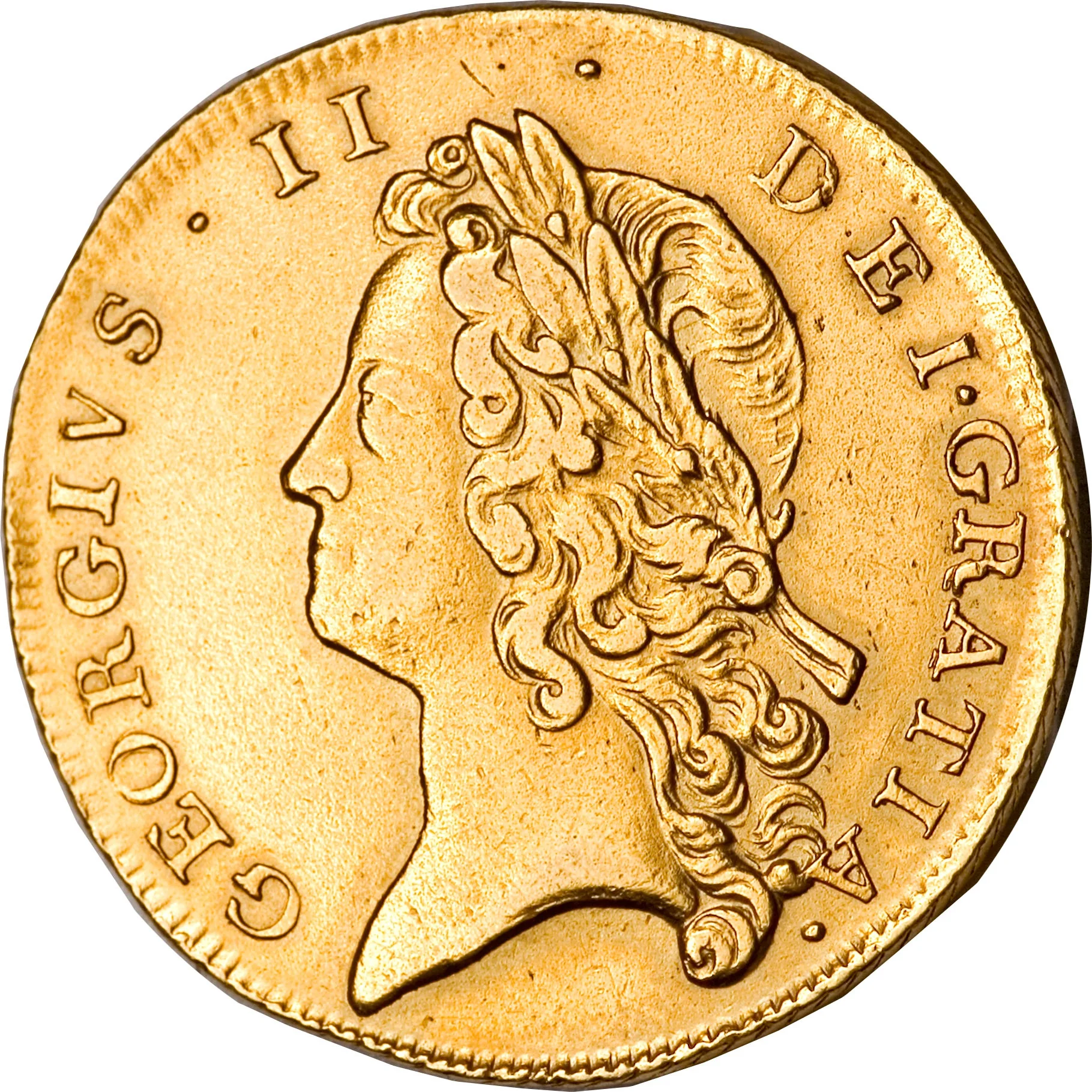
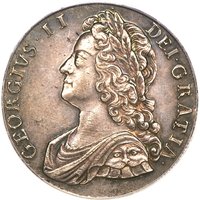
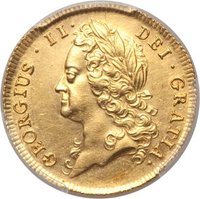
Young laureate King George II left, legend surrounding.
Inscription:
GEORGIUS·II· DEI·GRATIA·
Script: Latin
Engraver: John Croker
Reverse
Description:
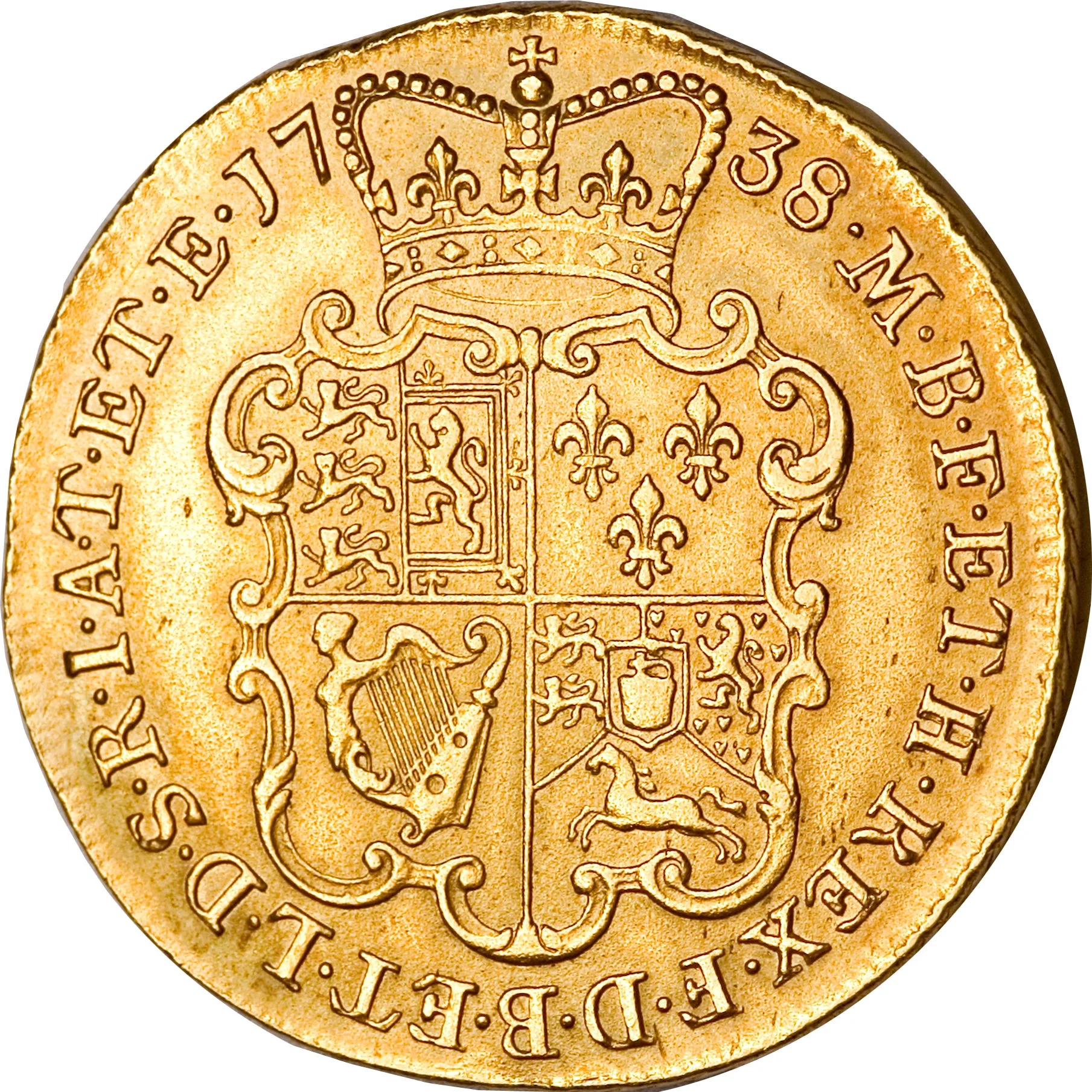
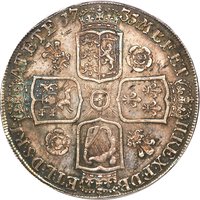
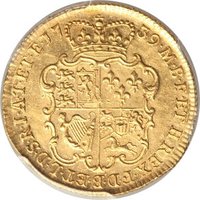
Quartered shield, date above, legend around.
Inscription:
M·B·F·ET·H·REX·F·D·B·ET·L·D·S·R·I·A·T·ET·E·17 38·
Script: Latin
Engraver: John Tanner
Edge
Reeded
Mintings
| Year | Mint Mark | Mintage | Quality | Collection |
|---|---|---|---|---|
| 1734 | — | — | ||
| 1735 | — | — | ||
| 1738 | — | — | ||
| 1739 | — | — |
Historical background
In 1734, the currency situation in Great Britain was one of relative stability but underlying complexity, shaped by the recent recoinage of 1696 and the establishment of a de facto gold standard. The recoinage had resolved the "Great Recoinage" crisis by replacing the old, clipped, and degraded silver hammered coins with new, milled silver coins of full weight. However, a key consequence was that the mint price of silver was set slightly below its market value, causing full-weight silver coins to be exported or melted down for bullion. This effectively drove full-weight silver out of circulation, leaving the nation reliant on a mix of worn silver shillings and sixpences, copper farthings and halfpennies for small change, and an increasing supply of gold guineas for larger transactions.
The real monetary workhorse was the gold guinea, originally worth 21 shillings. Its value in silver shillings was fixed by the Royal Proclamation of 1717, which set the guinea at 21 shillings, a rate masterminded by Sir Isaac Newton as Master of the Mint. This action formally put Britain on a bimetallic system but, in practice, began its slide toward a gold standard, as the gold-to-silver ratio at the mint made it unprofitable to bring silver for coinage. Consequently, while the pound sterling remained a unit of account based on silver, the physical circulating medium was increasingly gold-based. Bank of England notes, while in use, were largely confined to London and major commercial transactions, not yet part of everyday life for the general populace.
For the common person, the system was often inconvenient and prone to local shortages. There was a chronic lack of trustworthy small change, leading to the widespread use of private tokens issued by tradesmen and even municipalities, particularly in industrialising areas. Counterfeiting was a rampant problem, punishable by death, as the worn state of silver coins made fakes easier to pass. Thus, in 1734, the system functioned for national trade and government finance, largely thanks to gold, but at the street level, it was a patchwork of worn official coinage, unofficial tokens, and the constant risk of deception.
The real monetary workhorse was the gold guinea, originally worth 21 shillings. Its value in silver shillings was fixed by the Royal Proclamation of 1717, which set the guinea at 21 shillings, a rate masterminded by Sir Isaac Newton as Master of the Mint. This action formally put Britain on a bimetallic system but, in practice, began its slide toward a gold standard, as the gold-to-silver ratio at the mint made it unprofitable to bring silver for coinage. Consequently, while the pound sterling remained a unit of account based on silver, the physical circulating medium was increasingly gold-based. Bank of England notes, while in use, were largely confined to London and major commercial transactions, not yet part of everyday life for the general populace.
For the common person, the system was often inconvenient and prone to local shortages. There was a chronic lack of trustworthy small change, leading to the widespread use of private tokens issued by tradesmen and even municipalities, particularly in industrialising areas. Counterfeiting was a rampant problem, punishable by death, as the worn state of silver coins made fakes easier to pass. Thus, in 1734, the system functioned for national trade and government finance, largely thanks to gold, but at the street level, it was a patchwork of worn official coinage, unofficial tokens, and the constant risk of deception.
✨ Legendary