

1 Guinea – United Kingdom
United Kingdom
Context

Material
References
KM: #Click to copy to clipboard577
Numista: #13116
Value
Bullion value: $1282.41
Obverse
Description:
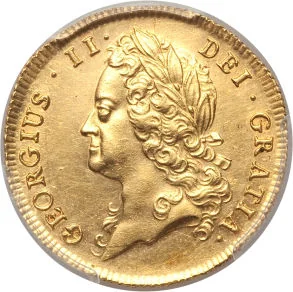
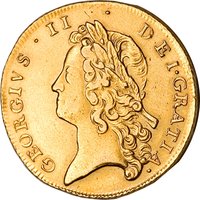
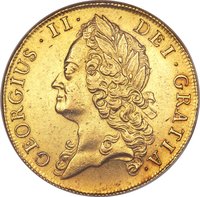
King George II laureate left, legend surrounding.
Inscription:
GEORGIUS·II· DEI·GRATIA·
Script: Latin
Engraver: John Tanner
Reverse
Description:
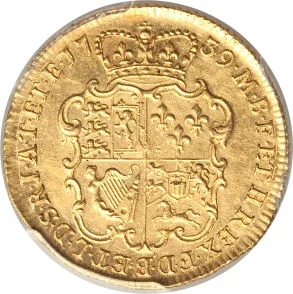
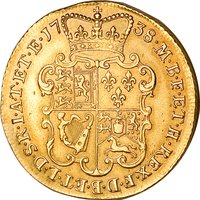
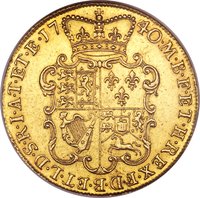
Quartered shield, date above, legend around.
Inscription:
M·B·F·ET·H·REX·F·D·B·ET·L·D·S·R·I·A·T·ET·E·17 46·
Script: Latin
Engraver: John Croker
Edge
Reeded
Mintings
| Year | Mint Mark | Mintage | Quality | Collection |
|---|---|---|---|---|
| 1739 | — | — | ||
| 1739 | E.I.C. | — | ||
| 1740 | — | — | ||
| 1741 | — | — | ||
| 1743 | — | — | ||
| 1745 | — | — | ||
| 1745 | LIMA | — | ||
| 1746 | — | — |
Historical background
In 1739, the United Kingdom operated under a bimetallic standard, where both gold and silver were legal tender. The system was governed by the Royal Mint's official ratios, but these often failed to reflect market values, leading to chronic instability. A key problem was the undervaluation of gold at the Mint; newly minted gold guineas (21 shillings) were worth more in terms of silver than their face value, causing silver coinage to be melted down or exported for profit. Consequently, the circulation was dominated by worn, clipped, and underweight silver coins, while the new, full-weight silver and gold coins disappeared from everyday use, creating a severe shortage of reliable small change for trade and wages.
This deteriorating currency was a legacy of the Great Recoinage of 1696, which had attempted to replace all hammered silver coins with new milled ones but had failed to address the structural flaws of bimetallism. By 1739, the shortage of sound coin was so acute that counterfeiting was rampant, and tradesmen and municipalities increasingly issued their own token coinage to facilitate local commerce. The situation created widespread confusion, hindered economic transactions, and undermined public confidence in the currency, with the value of coins often being assessed by weight rather than face value.
The year 1739 itself, marked by the outbreak of the War of Jenkins' Ear with Spain, exacerbated these monetary pressures. War finance typically strained specie reserves, and the government's need to raise funds increased scrutiny on the nation's economic machinery, including its fragile currency system. While no major monetary reforms were enacted that year, the persistent problems of 1739 set the stage for future developments. They highlighted the urgent need for stabilization, which would later culminate in Sir Isaac Newton's tenure as Master of the Mint and, ultimately, the UK's move toward a de facto gold standard in the following decades.
This deteriorating currency was a legacy of the Great Recoinage of 1696, which had attempted to replace all hammered silver coins with new milled ones but had failed to address the structural flaws of bimetallism. By 1739, the shortage of sound coin was so acute that counterfeiting was rampant, and tradesmen and municipalities increasingly issued their own token coinage to facilitate local commerce. The situation created widespread confusion, hindered economic transactions, and undermined public confidence in the currency, with the value of coins often being assessed by weight rather than face value.
The year 1739 itself, marked by the outbreak of the War of Jenkins' Ear with Spain, exacerbated these monetary pressures. War finance typically strained specie reserves, and the government's need to raise funds increased scrutiny on the nation's economic machinery, including its fragile currency system. While no major monetary reforms were enacted that year, the persistent problems of 1739 set the stage for future developments. They highlighted the urgent need for stabilization, which would later culminate in Sir Isaac Newton's tenure as Master of the Mint and, ultimately, the UK's move toward a de facto gold standard in the following decades.
✨ Legendary