

1 Crown – United Kingdom
United Kingdom
Context
Material
References
KM: #Click to copy to clipboard575
Numista: #13105
Value
Bullion value: $79.69
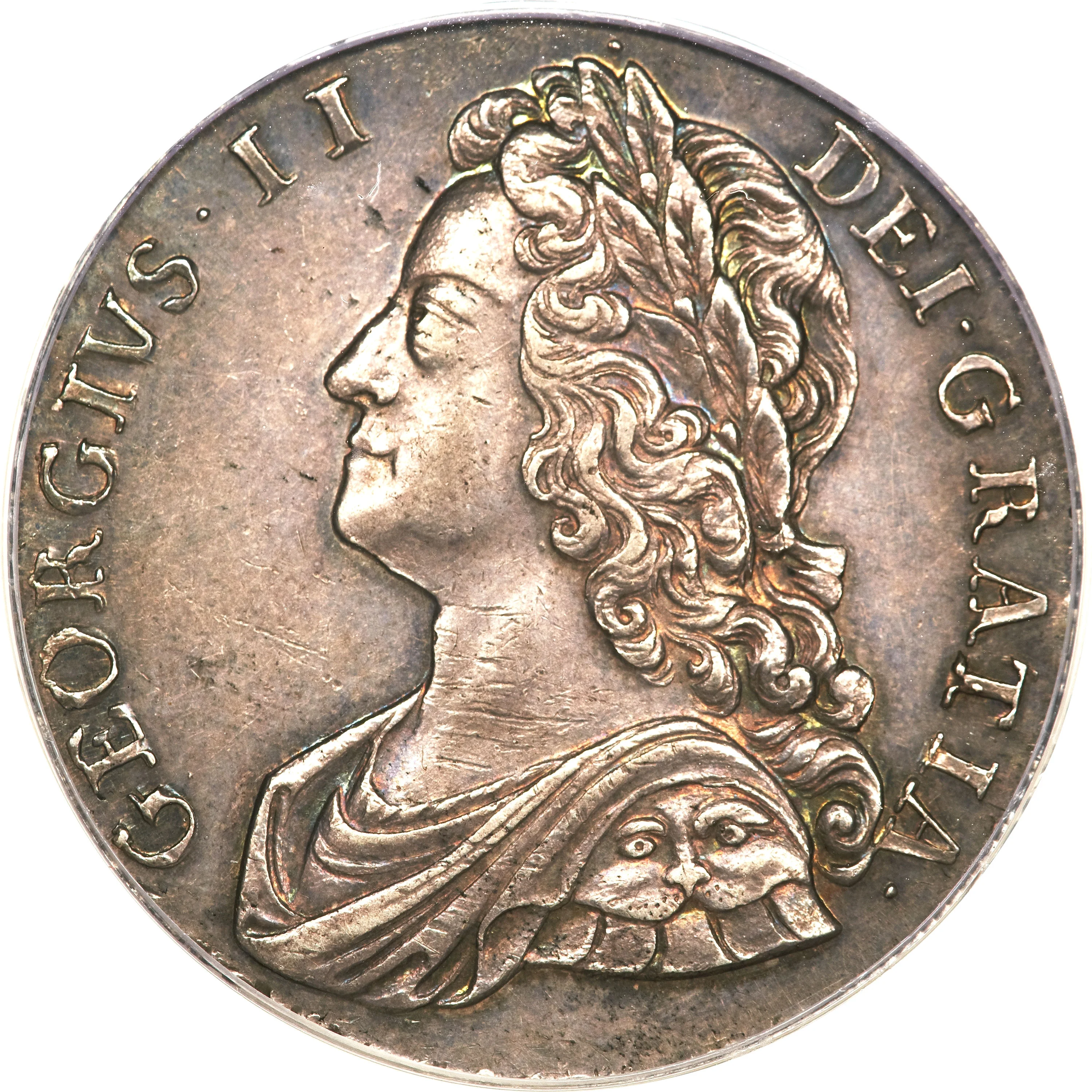
Obverse
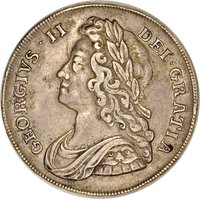
Description:
Young laureate and draped bust of George II left, encircled by legend.
Inscription:
GEORGIVS·II · DEI·GRATIA·
Script: Latin
Engraver: John Croker
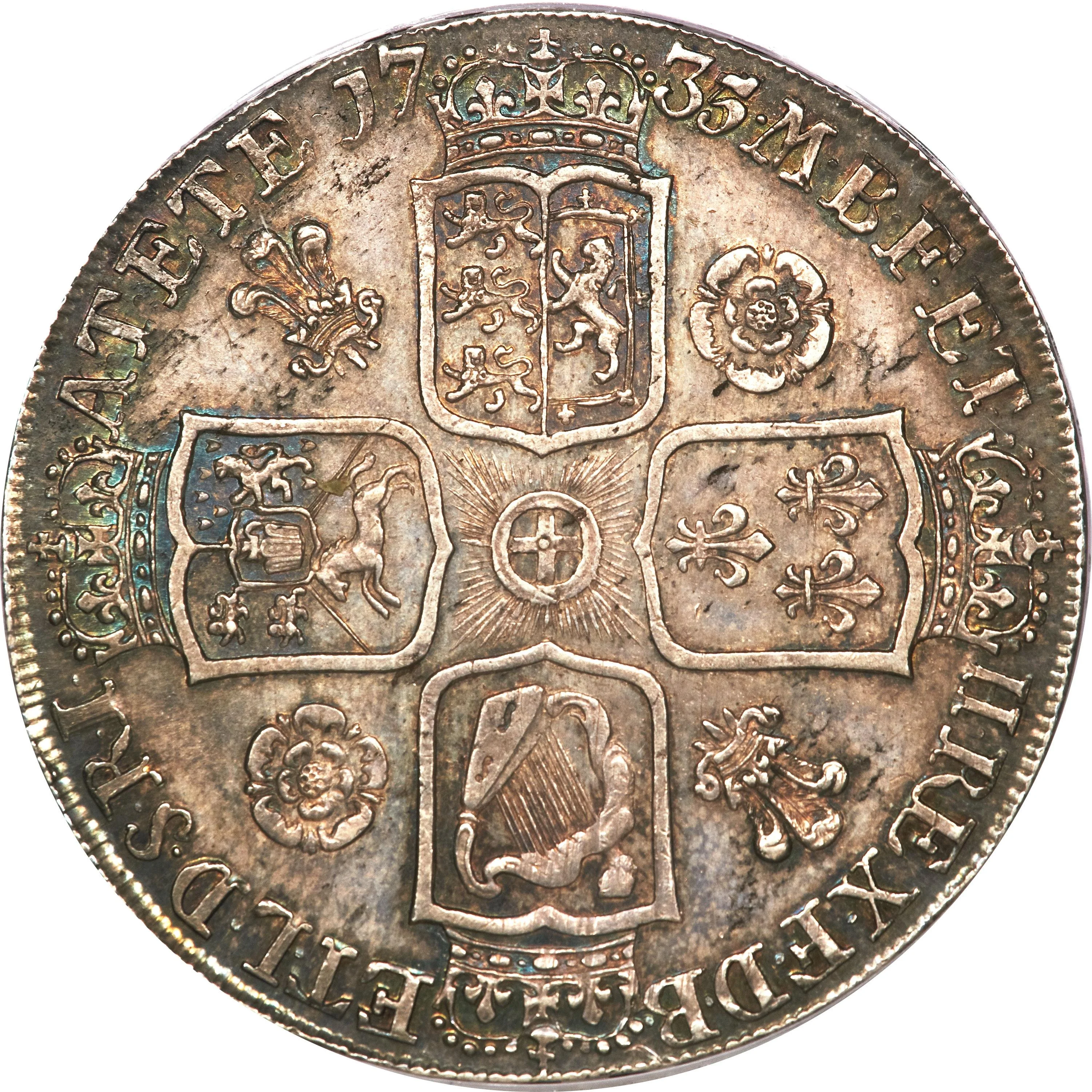
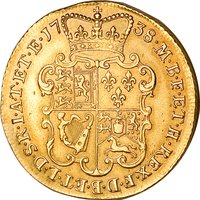
Reverse
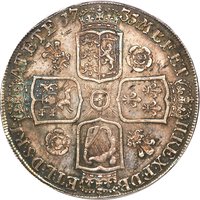
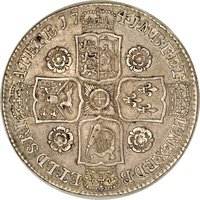
Description:
Crowned cruciform shields, central Garter star, date above, legend around.
Inscription:
M·B·F·ET· H·REX·F·D·B· ET·L·D·S·R·I· A·T·ET·E·1735·
Script: Latin
Engraver: Johann Ochs
Edge
Regnal year in Latin
Legend:
OCTAVO
Mintings
| Year | Mint Mark | Mintage | Quality | Collection |
|---|---|---|---|---|
| 1732 | — | — | Proof | |
| 1732 | — | — | ||
| 1734 | — | — | ||
| 1735 | — | — | ||
| 1736 | — | — | ||
| 1739 | — | — | ||
| 1741 | — | — |
Historical background
In 1732, the United Kingdom operated under a bimetallic monetary system, with both gold and silver serving as legal tender. The foundation for this system had been established by Sir Isaac Newton, as Master of the Mint, who in 1717 set the gold guinea’s value at 21 shillings. This official ratio between gold and silver, however, slightly overvalued gold relative to the European market, leading to a gradual but persistent problem: silver coins began to be exported or melted down for their higher bullion value abroad. Consequently, while gold coins like guineas circulated freely, the silver coinage in public hands became increasingly worn, clipped, and scarce, eroding everyday transactional efficiency.
The state of the currency was a source of significant economic concern. The Royal Mint produced very little new silver coinage for decades, failing to replace the degraded stock. In everyday commerce, people relied on a motley assortment of underweight hammered silver coins from previous centuries, heavily worn milled coins from the 1660s, and a flood of foreign silver coins—particularly Spanish dollars or "pieces of eight"—which circulated in British trading ports. This created a chaotic and unreliable medium of exchange, hindering trade and causing disputes over the true value of handed coin. The problem was most acute for small transactions, as the shortage of official shillings and pennies was severe.
This situation persisted because any comprehensive recoinage would have been a massive and expensive undertaking for the government. Furthermore, the focus on maintaining gold as the de facto standard for larger transactions and bank reserves meant the silver shortage was often tolerated as a chronic, lower-priority ailment. Thus, in 1732, Britain was in the midst of what is now termed the "Silver Crisis," a period of deteriorating physical currency that would eventually force action, leading to the great recoinage of silver later in the 1750s under Lord Liverpool. The year itself was a quiet point within this long-simmering monetary discontent.
The state of the currency was a source of significant economic concern. The Royal Mint produced very little new silver coinage for decades, failing to replace the degraded stock. In everyday commerce, people relied on a motley assortment of underweight hammered silver coins from previous centuries, heavily worn milled coins from the 1660s, and a flood of foreign silver coins—particularly Spanish dollars or "pieces of eight"—which circulated in British trading ports. This created a chaotic and unreliable medium of exchange, hindering trade and causing disputes over the true value of handed coin. The problem was most acute for small transactions, as the shortage of official shillings and pennies was severe.
This situation persisted because any comprehensive recoinage would have been a massive and expensive undertaking for the government. Furthermore, the focus on maintaining gold as the de facto standard for larger transactions and bank reserves meant the silver shortage was often tolerated as a chronic, lower-priority ailment. Thus, in 1732, Britain was in the midst of what is now termed the "Silver Crisis," a period of deteriorating physical currency that would eventually force action, leading to the great recoinage of silver later in the 1750s under Lord Liverpool. The year itself was a quiet point within this long-simmering monetary discontent.
💎 Extremely Rare