

1 Penny – England
United Kingdom
Context
Years: 1670–1684
Country: United Kingdom 
Issuer: England 
Ruler: Charles II
Currency:
(1158—1970)
Demonetized: Yes
Material
References
KM: #Click to copy to clipboard432
Numista: #13112
Value
Bullion value: $1.30
Obverse
Description:
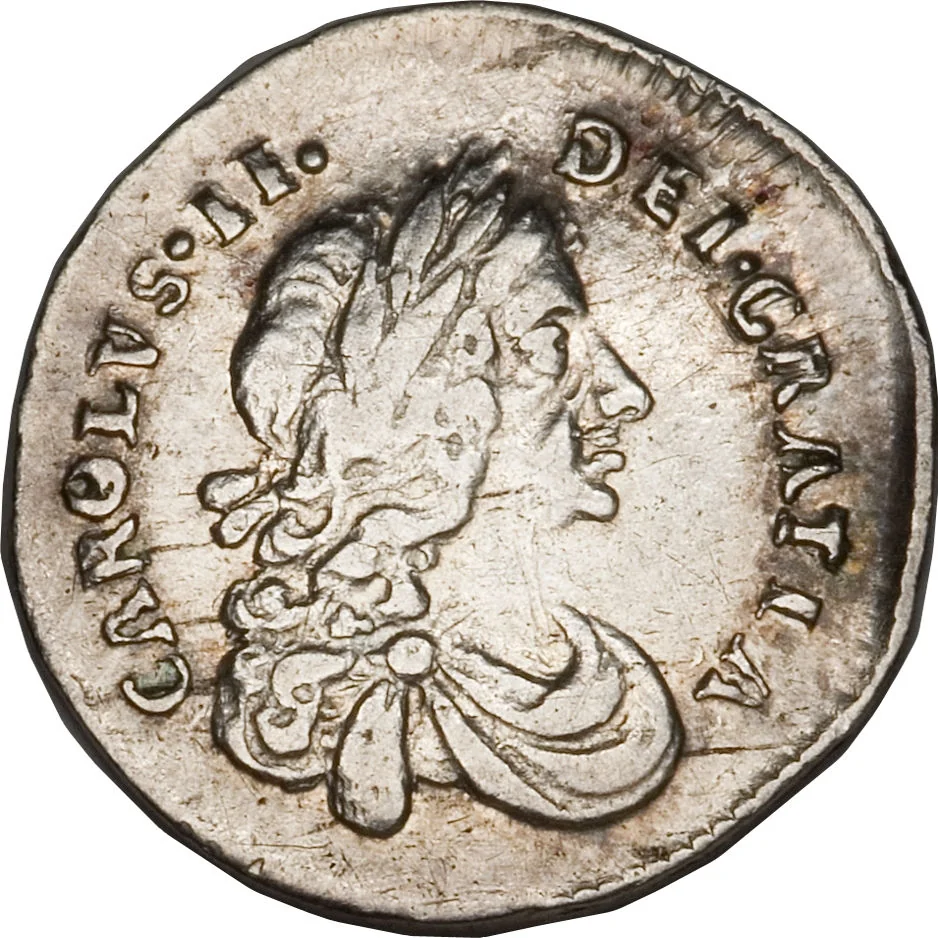
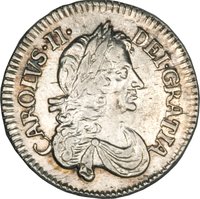
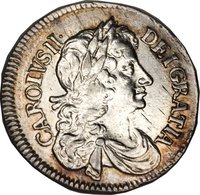
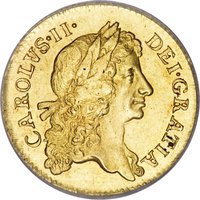
King Charles II laureate, draped bust right, with surrounding legend.
Inscription:
CAROLVS·II· DEI·GRATIA
Script: Latin
Engraver: John Roetier
Reverse
Description:
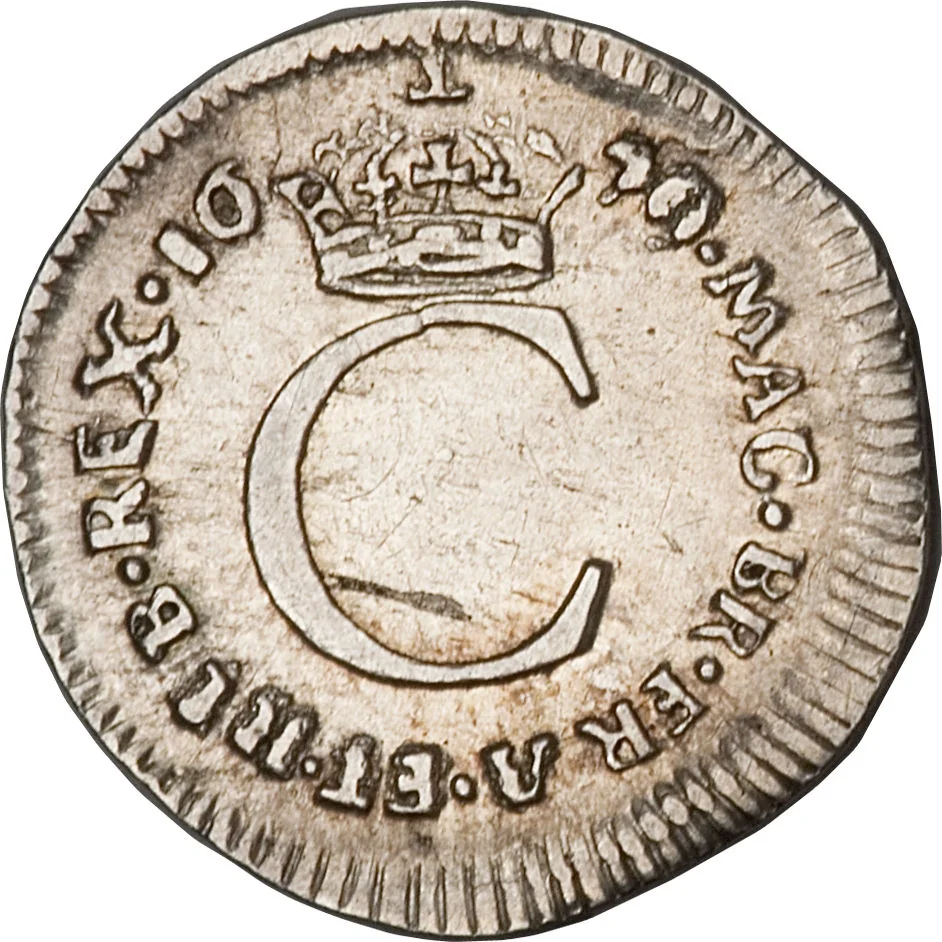
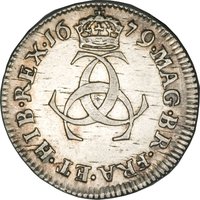
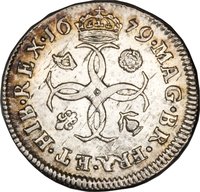
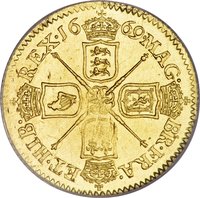
Crowned C divides date, value mark above, legend surrounds.
Inscription:
I
MAG·BR·FRA·ET·HIB·REX·16 70·
C
MAG·BR·FRA·ET·HIB·REX·16 70·
C
Script: Latin
Engraver: John Roetier
Edge
Mintings
| Year | Mint Mark | Mintage | Quality | Collection |
|---|---|---|---|---|
| 1670 | — | — | ||
| 1671 | — | — | ||
| 1672 | — | — | ||
| 1673 | — | — | ||
| 1674 | — | — | ||
| 1675 | — | — | ||
| 1676 | — | — | ||
| 1677 | — | — | ||
| 1678 | — | — | ||
| 1679 | — | — | ||
| 1680 | — | — | ||
| 1681 | — | — | ||
| 1682 | — | — | ||
| 1683 | — | — | ||
| 1684 | — | — |
Historical background
In 1670, England operated under a silver-based monetary system, but it was in a state of increasing strain. The official coin of the realm was the silver penny, with larger denominations like shillings and pounds being units of account. However, the currency in circulation was a chaotic mix of worn, clipped, and counterfeit silver coins, alongside gold guineas (first minted in 1663) and various foreign coins. This degradation severely undermined public confidence and hindered commerce, as the intrinsic silver value of a clipped coin was often less than its face value, leading to disputes and economic friction.
The core of the problem was "Gresham's Law" in action: bad money was driving out the good. People hoarded full-weight silver coins or melted them down for bullion, as the price of silver on the continent was higher than the face value of English coinage. This left the economy dependent on a degraded and unreliable circulating medium. Furthermore, the minting technology at the Royal Mint was outdated, making it easy to clip coins and nearly impossible to produce new ones with consistent weight and milled edges that would deter fraud.
King Charles II and his ministers, notably Sir Thomas Clifford, were acutely aware of this crisis, which threatened tax revenues and the stability of the Crown itself. The year 1670 fell within a period of intense deliberation that would ultimately lead to the great recoinage of 1696 under William III. While the most drastic reforms were still a generation away, the monetary instability of this era underscored the growing need for a strong, state-guaranteed currency to support England’s expanding trade and nascent financial system, paving the way for the eventual establishment of the Bank of England in 1694.
The core of the problem was "Gresham's Law" in action: bad money was driving out the good. People hoarded full-weight silver coins or melted them down for bullion, as the price of silver on the continent was higher than the face value of English coinage. This left the economy dependent on a degraded and unreliable circulating medium. Furthermore, the minting technology at the Royal Mint was outdated, making it easy to clip coins and nearly impossible to produce new ones with consistent weight and milled edges that would deter fraud.
King Charles II and his ministers, notably Sir Thomas Clifford, were acutely aware of this crisis, which threatened tax revenues and the stability of the Crown itself. The year 1670 fell within a period of intense deliberation that would ultimately lead to the great recoinage of 1696 under William III. While the most drastic reforms were still a generation away, the monetary instability of this era underscored the growing need for a strong, state-guaranteed currency to support England’s expanding trade and nascent financial system, paving the way for the eventual establishment of the Bank of England in 1694.
💎 Very Rare