

½ guinea – England
Add to wishlist
United Kingdom
Context
Years: 1669–1672
Country: United Kingdom
Issuer: England
Ruler: Charles II
Currency:
(1158—1970)
Demonetized: Yes
Material
References
KM: #
Numista: #27922
Value
Bullion value: $590.28
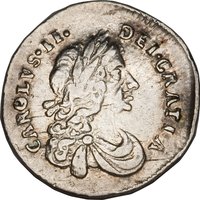
Obverse
Description:
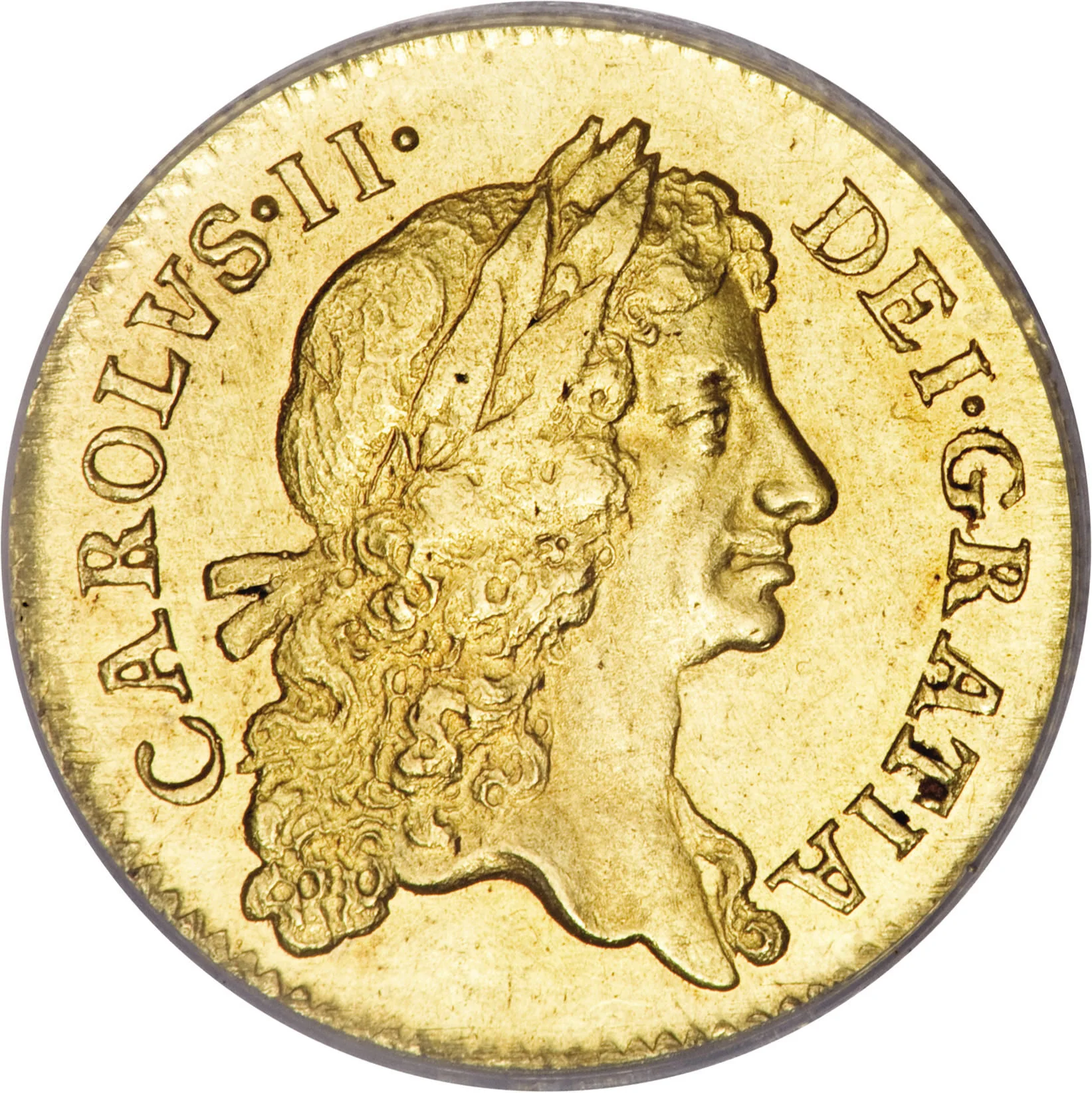
King Charles II bust right, pointed truncation with front lock of hair.
Inscription:
CAROLVS·II· DEI·GRATIA
Script: Latin
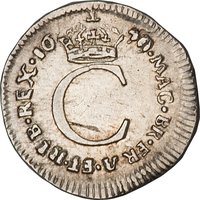
Reverse
Description:
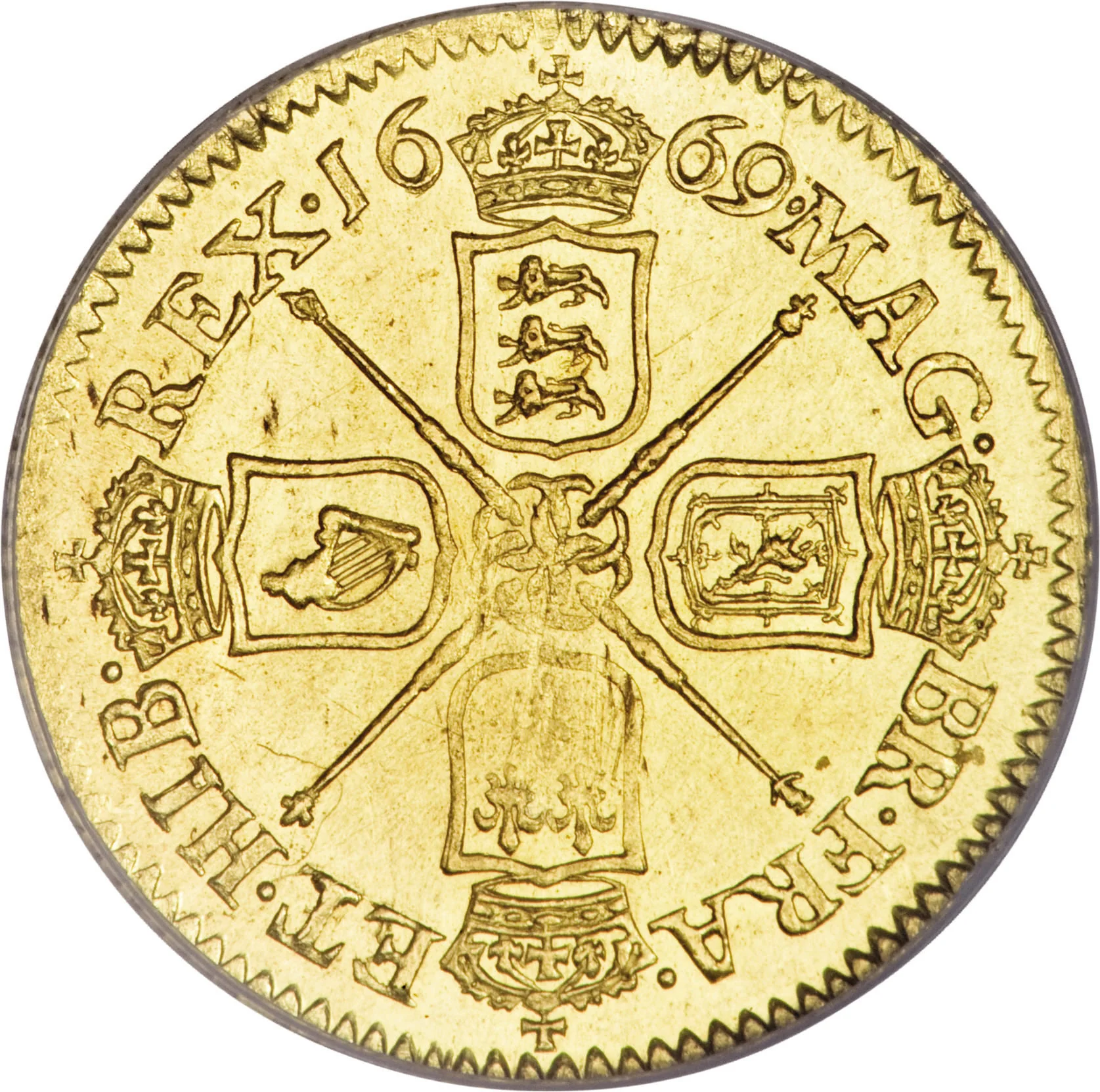
Crowned shields and interlinked C's flanked by sceptres, date above, legend around.
Inscription:
MAG· BR·FRA· ET·HIB· REX·16· 69·
Script: Latin
Edge
Mintings
| Year | Mint Mark | Mintage | Quality | Collection |
|---|---|---|---|---|
| 1669 | — | — | ||
| 1670 | — | — | ||
| 1671 | — | — | ||
| 1672 | — | — |
Historical background
In 1669, England’s currency system was in a state of transition and vulnerability, operating under a bimetallic standard of gold and silver. The official coin of the realm, the silver pound sterling, was facing a severe crisis due to clipping and counterfeiting, which drastically reduced the silver content and weight of circulating coins. This debasement eroded public trust and disrupted commerce, as the intrinsic value of a coin fell below its face value, leading to hoarding of good-quality coins (Gresham’s Law in action) and causing widespread economic uncertainty.
The root of this problem lay in the technical limitations of the mint. The hammered coinage produced at the Tower of London had irregular, soft edges that were easily clipped or filed. While the government was aware of the issue, a comprehensive solution had not yet been implemented. Earlier attempts, like issuing milled coins during the Commonwealth, had failed to gain permanence. Consequently, in 1669, the currency was a chaotic mix of worn, clipped hammered coins and a limited number of newer, more precise milled coins, creating a dysfunctional monetary environment that hampered trade and state finance.
This deteriorating situation set the stage for the great recoinage of the 1690s. The events of 1669 can thus be seen as part of a prolonged monetary crisis that underscored the urgent need for modernization. The eventual solution, championed by figures like Sir Isaac Newton as Warden of the Mint, would be the widespread introduction of machine-milled coinage with marked edges to prevent clipping, a reform that began in earnest in the following decades and established a more stable and reliable currency system.
The root of this problem lay in the technical limitations of the mint. The hammered coinage produced at the Tower of London had irregular, soft edges that were easily clipped or filed. While the government was aware of the issue, a comprehensive solution had not yet been implemented. Earlier attempts, like issuing milled coins during the Commonwealth, had failed to gain permanence. Consequently, in 1669, the currency was a chaotic mix of worn, clipped hammered coins and a limited number of newer, more precise milled coins, creating a dysfunctional monetary environment that hampered trade and state finance.
This deteriorating situation set the stage for the great recoinage of the 1690s. The events of 1669 can thus be seen as part of a prolonged monetary crisis that underscored the urgent need for modernization. The eventual solution, championed by figures like Sir Isaac Newton as Warden of the Mint, would be the widespread introduction of machine-milled coinage with marked edges to prevent clipping, a reform that began in earnest in the following decades and established a more stable and reliable currency system.
✨ Legendary