

½ Crown – United Kingdom
United Kingdom
Context
Years: 1731–1741
Issuer: United Kingdom 
Ruler: George II
Currency:
(1158—1970)
Demonetization: 31 December 1969
Material
References
KM: #Click to copy to clipboard574
Numista: #13104
Value
Bullion value: $39.84
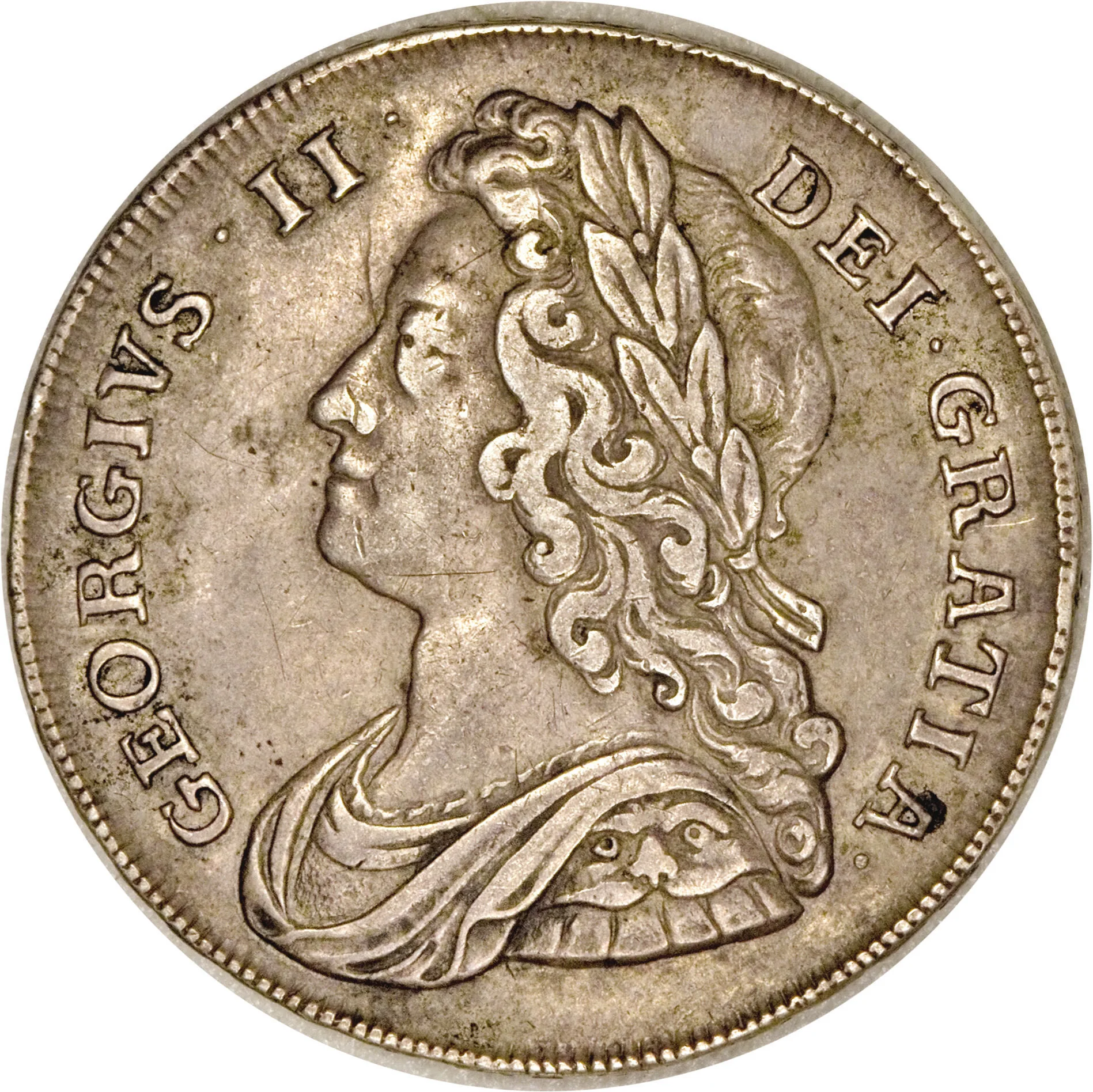
Obverse
Description:
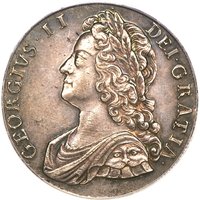
Young laureate and draped bust of George II left, encircled by legend.
Inscription:
GEORGIVS · II · DEI · GRATIA ·
Script: Latin
Engraver: John Croker
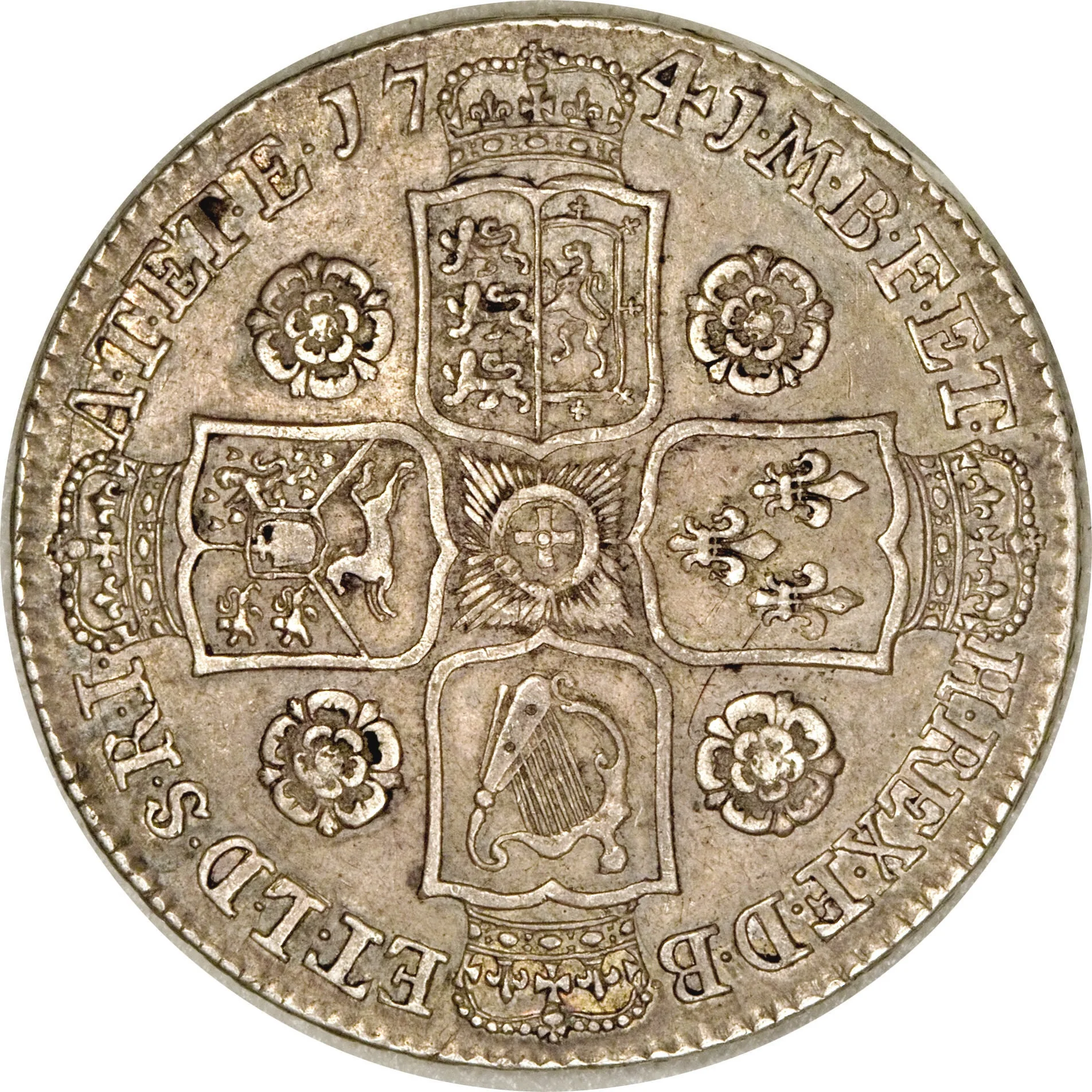
Reverse
Description:
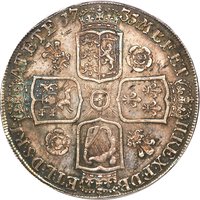
Crowned cruciform shields, central Garter star, date above, legend around. Varieties exist.
Inscription:
·M·B·F·ET H·REX·F·D·B ET·L·D·S·R·I A·T·ET·E·17 41·
Script: Latin
Engraver: Johann Ochs
Edge
Regnal year in words
Legend:
ANNO REGNO D. QVARTO
Mintings
| Year | Mint Mark | Mintage | Quality | Collection |
|---|---|---|---|---|
| 1731 | — | — | ||
| 1732 | — | — | ||
| 1734 | — | — | ||
| 1735 | — | — | ||
| 1736 | — | — | ||
| 1739 | — | — | ||
| 1741 | — | — |
Historical background
In 1731, the United Kingdom operated under a bimetallic monetary system, with both gold and silver serving as legal tender. The foundation was the silver penny, but the century prior had seen a significant shift toward gold, particularly after Sir Isaac Newton, as Master of the Royal Mint, set the gold guinea's value at 21 silver shillings in 1717. This official ratio slightly overvalued gold against its continental market value, leading to the gradual but persistent outflow of full-weight silver coinage through trade and melting. Consequently, while the economy was officially bimetallic, in practice the domestic circulation was becoming increasingly reliant on gold for larger transactions.
The state of the circulating coinage was a major problem. The silver in circulation was predominantly worn, clipped, and counterfeit, having deteriorated significantly since the last major recoinage in 1696. Trust in the shilling was low, and small change for everyday transactions was chronically scarce. This shortage crippled local trade and wages, forcing many towns and merchants to issue their own private tokens or rely on cumbersome barter. Meanwhile, the gold coinage, though in better condition, was dominated by the guinea, a coin whose value in shillings was often a subject of dispute and fluctuation, causing confusion in commerce and accounting.
This unstable currency environment existed within the context of the early Hanoverian period, a time of growing financial sophistication. The Bank of England, founded in 1694, issued paper notes, but these were largely confined to London and used for high-value transactions between merchants. For the vast majority of the population, the physical coin was paramount, and its poor state was a daily hindrance. The situation in 1731 was therefore one of quiet crisis, building pressure for the monetary reforms that would eventually culminate in the Great Recoinage of 1774 and the ultimate move toward a gold standard later in the century.
The state of the circulating coinage was a major problem. The silver in circulation was predominantly worn, clipped, and counterfeit, having deteriorated significantly since the last major recoinage in 1696. Trust in the shilling was low, and small change for everyday transactions was chronically scarce. This shortage crippled local trade and wages, forcing many towns and merchants to issue their own private tokens or rely on cumbersome barter. Meanwhile, the gold coinage, though in better condition, was dominated by the guinea, a coin whose value in shillings was often a subject of dispute and fluctuation, causing confusion in commerce and accounting.
This unstable currency environment existed within the context of the early Hanoverian period, a time of growing financial sophistication. The Bank of England, founded in 1694, issued paper notes, but these were largely confined to London and used for high-value transactions between merchants. For the vast majority of the population, the physical coin was paramount, and its poor state was a daily hindrance. The situation in 1731 was therefore one of quiet crisis, building pressure for the monetary reforms that would eventually culminate in the Great Recoinage of 1774 and the ultimate move toward a gold standard later in the century.
💎 Extremely Rare