

1 Farthing – United Kingdom
United Kingdom
Context
Years: 1730–1739
Issuer: United Kingdom 
Ruler: George II
Currency:
(1158—1970)
Demonetization: 31 December 1869
Material
References
KM: #Click to copy to clipboard572
Numista: #13102
Obverse
Description:
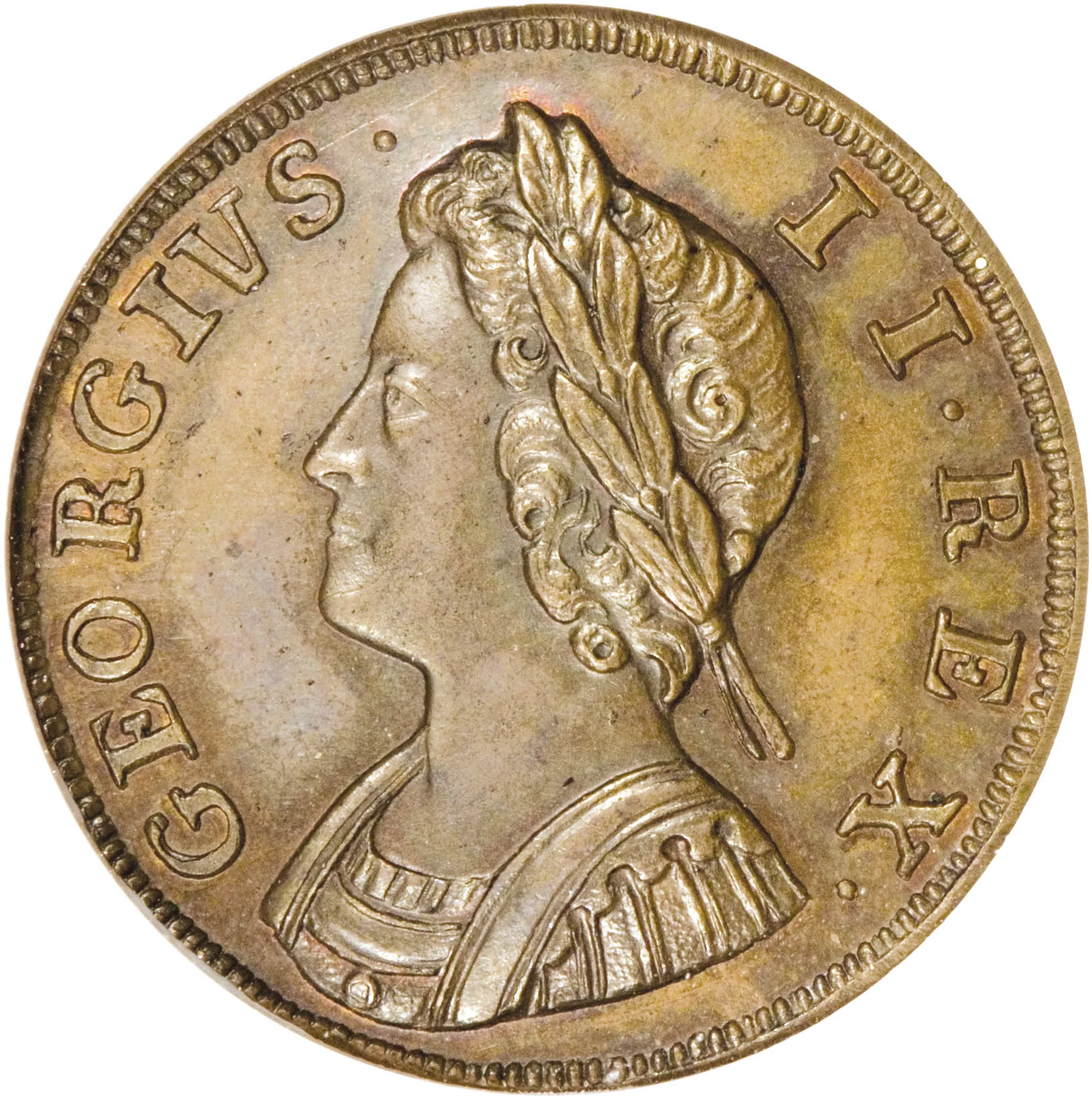
Young laureate King George II facing left in armor, legend surrounding.
Inscription:
GEORGIVS · II·REX·
Script: Latin
Engraver: John Croker
Reverse
Description:
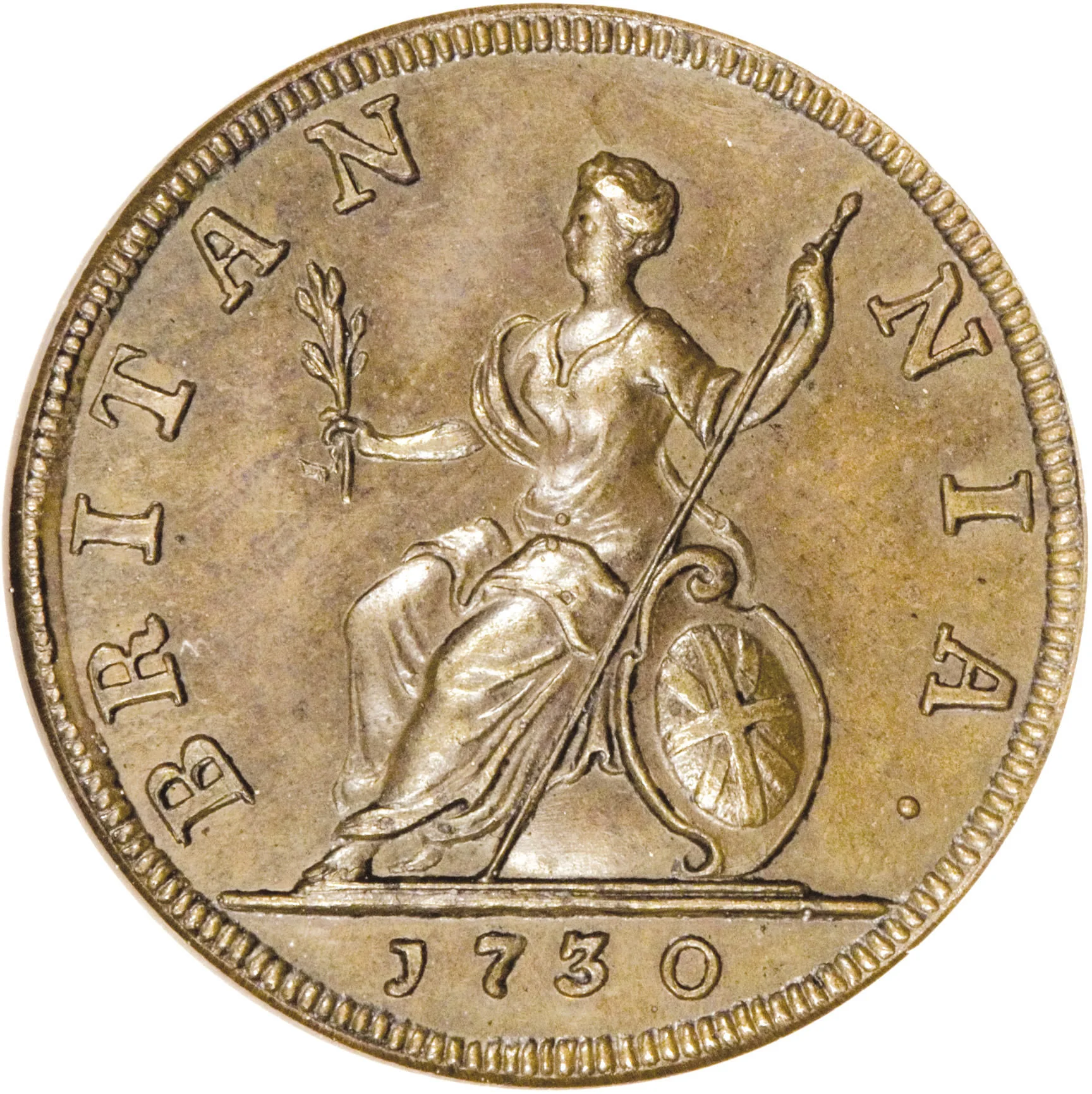
Britannia seated left, holding trident and olive branch, Union Jack shield beside her, legend around, date below.
Inscription:
BRITAN NIA ·
1730
1730
Script: Latin
Edge
Plain
Mints
| Name | Mark |
|---|---|
| Royal Mint (Tower of London) | — |
Mintings
| Year | Mint Mark | Mintage | Quality | Collection |
|---|---|---|---|---|
| 1730 | — | — | ||
| 1731 | — | — | ||
| 1732 | — | — | ||
| 1733 | — | — | ||
| 1734 | — | — | ||
| 1735 | — | — | ||
| 1736 | — | — | ||
| 1737 | — | — | ||
| 1739 | — | — |
Historical background
In 1730, the currency situation in Great Britain was defined by the aftermath of the Great Recoinage of 1696, which had successfully restored confidence in the silver coinage after a period of severe clipping and counterfeiting. The recoinage, masterminded by Sir Isaac Newton as Warden of the Mint, had established a robust gold standard in practice. The principal coin was the gold guinea, officially valued at 21 shillings, but its market value in silver often fluctuated above this, causing ongoing complications. Silver coinage, while now reliable, was in chronically short supply for everyday transactions, as the fixed mint price of silver meant it was more profitable to export bullion to Europe. This shortage led to a reliance on a patchwork of local tokens, promissory notes, and foreign coins for smaller commerce.
The monetary system was technically bimetallic, but it operated under an effective gold standard because the legal ratio between gold and silver undervalued silver at the Mint. Consequently, full-weight silver coins were routinely melted down or exported, leaving the circulating silver currency often worn or lightweight. This created a persistent problem for trade and wages, as the poor and those conducting daily business struggled with insufficient small change. The gap was partially filled by the notes of the Bank of England (founded in 1694), but these were primarily high-denomination instruments used by merchants and the state, not the general populace.
Overall, the currency landscape of 1730 was one of stability at the top tier, with sound gold coin and established credit mechanisms, but marked by inconvenience and improvisation at the retail level. The system’s reliance on gold, while securing Britain’s financial credibility, had inadvertently crippled its silver circulation. This situation would persist for decades, fostering further experimentation with provincial banknotes and tokens, until the widespread adoption of low-denomination paper money and eventual reforms in the late 18th and early 19th centuries.
The monetary system was technically bimetallic, but it operated under an effective gold standard because the legal ratio between gold and silver undervalued silver at the Mint. Consequently, full-weight silver coins were routinely melted down or exported, leaving the circulating silver currency often worn or lightweight. This created a persistent problem for trade and wages, as the poor and those conducting daily business struggled with insufficient small change. The gap was partially filled by the notes of the Bank of England (founded in 1694), but these were primarily high-denomination instruments used by merchants and the state, not the general populace.
Overall, the currency landscape of 1730 was one of stability at the top tier, with sound gold coin and established credit mechanisms, but marked by inconvenience and improvisation at the retail level. The system’s reliance on gold, while securing Britain’s financial credibility, had inadvertently crippled its silver circulation. This situation would persist for decades, fostering further experimentation with provincial banknotes and tokens, until the widespread adoption of low-denomination paper money and eventual reforms in the late 18th and early 19th centuries.
🌱 Fairly Common