

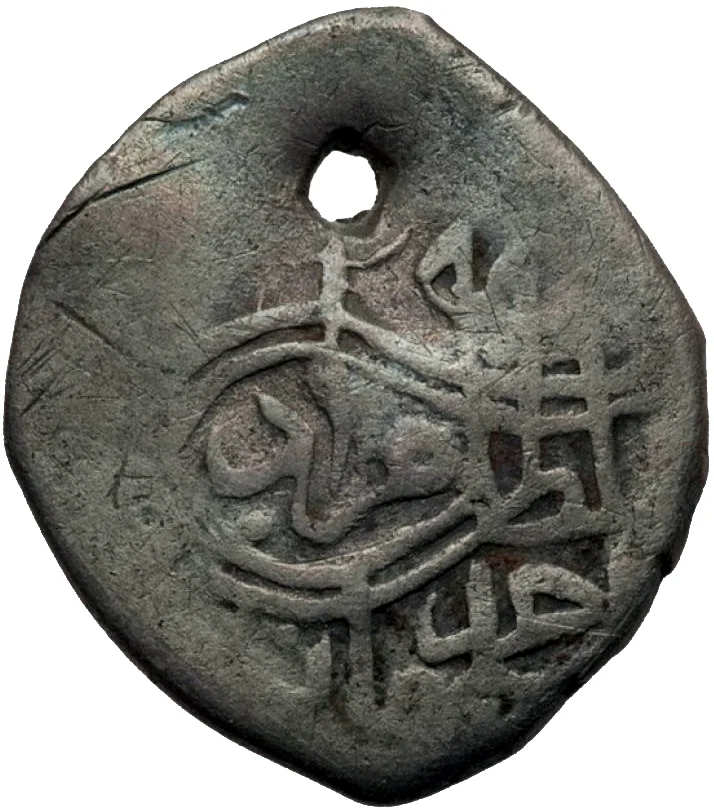
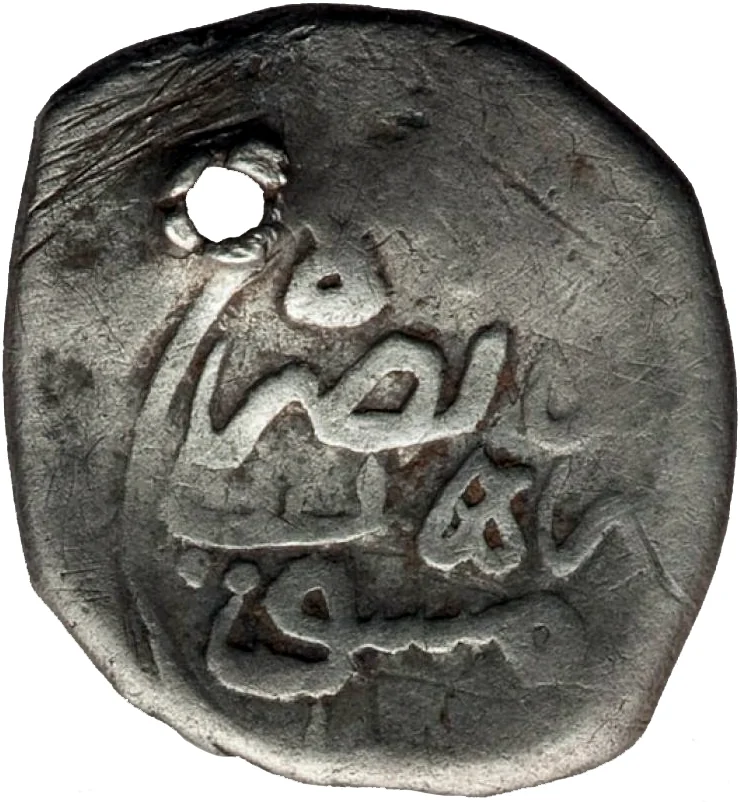
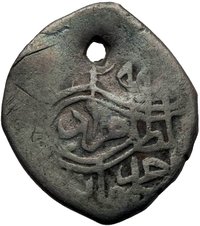
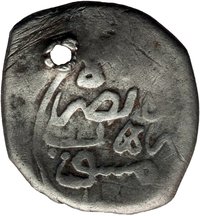
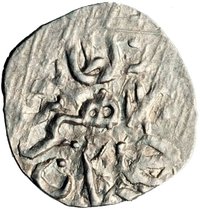
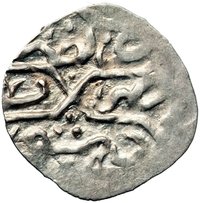
1 Dirhem – Damascus Eyalet
Syria
Context
Year: 1623
Islamic (Hijri) Year: 1032
Country: Syria 
Issuer: Damascus Eyalet
Ruler: Murad IV
Currency:
(1516—1687)
Demonetized: Yes
Material
Diameter: 18 mm
Weight: 1.98 g
Silver weight: 1.98 g
Shape: Irregular round
Composition: Silver
Magnetic: No
References
KM: #Click to copy to clipboard48
Numista: #103087
Value
Bullion value: $5.66
Mints
| Name | Mark |
|---|---|
| Damascus | — |
Mintings
| Year | Mint Mark | Mintage | Quality | Collection |
|---|---|---|---|---|
| 1623 | — | — |
Historical background
In 1623, the currency situation in Damascus Eyalet, a crucial Ottoman province encompassing modern-day Syria, Lebanon, Jordan, and parts of Palestine, was characterized by severe monetary instability and devaluation. The primary unit of account was the silver akçe, but its value had been dramatically eroded by decades of imperial debasement, a process where the state reduced the silver content of coins to fund its extensive military campaigns and budgetary shortfalls. This period fell within the wider "Great Debasement" of the Ottoman Empire, causing price inflation (a "price revolution") and economic distress that directly impacted trade, tax collection, and daily transactions in Damascus, a major hub on the caravan routes.
The circulation was a chaotic mix of officially minted but debased Ottoman coins and a flood of foreign silver, particularly Spanish reales (pieces of eight) from the New World, which entered through Mediterranean trade. These foreign coins, often of higher and more reliable silver purity, circulated alongside the local currency, creating a dual system where large transactions were increasingly conducted in stable foreign specie. This further undermined confidence in the official Ottoman currency. The provincial government in Damascus faced the practical challenge of collecting taxes, traditionally assessed in akçe, while its real value fluctuated wildly, squeezing both the authorities and the tax-paying populace.
Local authorities and merchants had to constantly navigate this complex environment through money changers (sarrafs), who assessed the actual metallic value of individual coins, a process known as "ayar checking." The instability disrupted the traditional agrarian and commercial economy of the eyalet, contributing to social unrest and increasing the financial autonomy of local power brokers, including Janissary garrisons and provincial governors, who often hoarded sound currency. Thus, the currency situation in 1623 was not merely a financial issue but a symptom of deeper imperial strains, directly affecting governance and economic life in one of the empire's most important provinces.
The circulation was a chaotic mix of officially minted but debased Ottoman coins and a flood of foreign silver, particularly Spanish reales (pieces of eight) from the New World, which entered through Mediterranean trade. These foreign coins, often of higher and more reliable silver purity, circulated alongside the local currency, creating a dual system where large transactions were increasingly conducted in stable foreign specie. This further undermined confidence in the official Ottoman currency. The provincial government in Damascus faced the practical challenge of collecting taxes, traditionally assessed in akçe, while its real value fluctuated wildly, squeezing both the authorities and the tax-paying populace.
Local authorities and merchants had to constantly navigate this complex environment through money changers (sarrafs), who assessed the actual metallic value of individual coins, a process known as "ayar checking." The instability disrupted the traditional agrarian and commercial economy of the eyalet, contributing to social unrest and increasing the financial autonomy of local power brokers, including Janissary garrisons and provincial governors, who often hoarded sound currency. Thus, the currency situation in 1623 was not merely a financial issue but a symptom of deeper imperial strains, directly affecting governance and economic life in one of the empire's most important provinces.

✨ Legendary